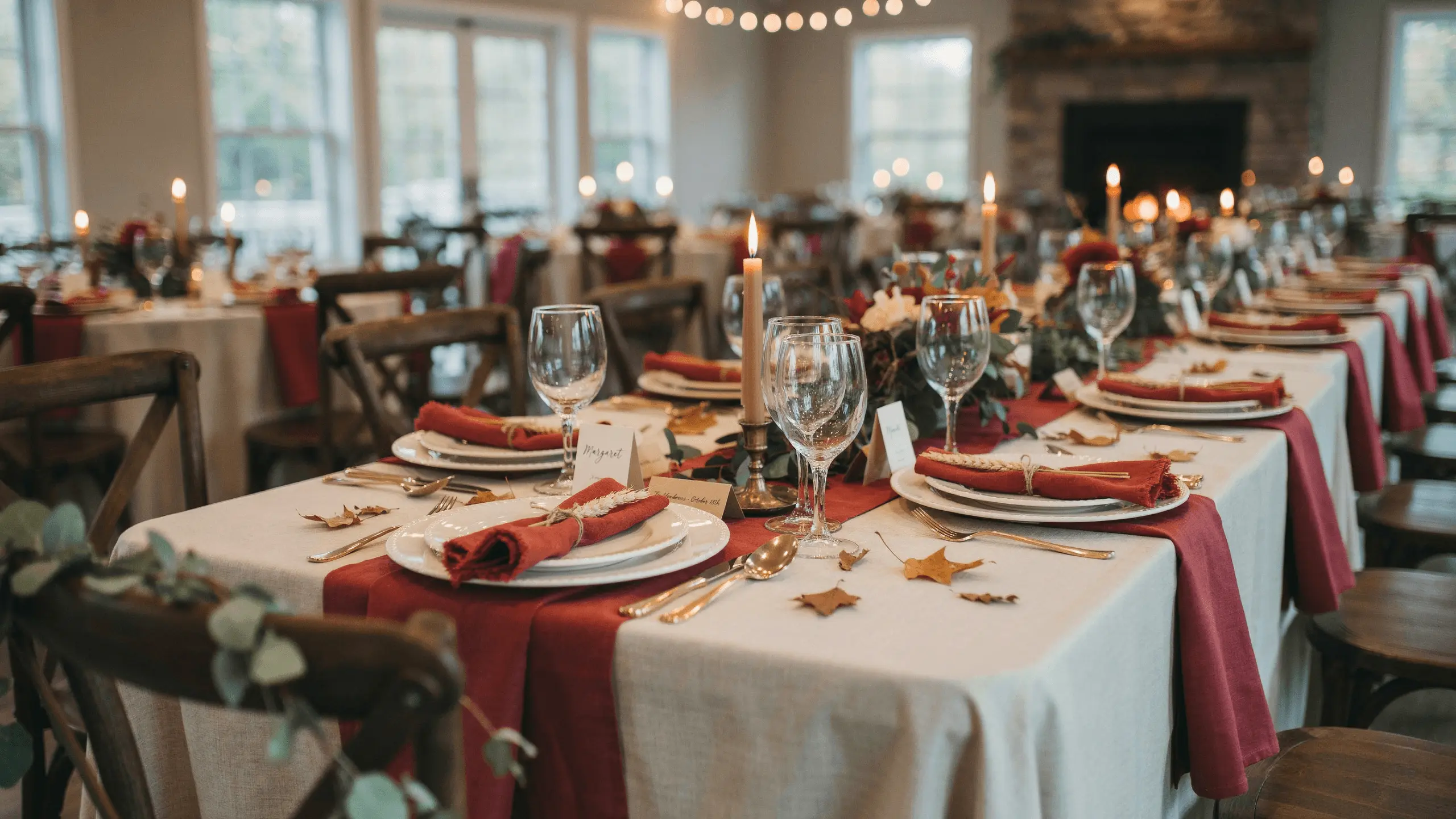
Fall Wedding Table Decor: Everything Except the Centerpiece
This post contains affiliate links, which means I may earn a small commission if you buy something through them, at no extra cost to you.
Fall wedding table decor gets budgeted backward. The centerpieces get most of the planning hours and about a third of the tabletop spend.
Everything under and around them costs more: linens, napkins, chargers, flatware, glassware, cards. That’s the half nobody prices until the rental quote lands well above the guess.
So this fall wedding table decor guide skips the centerpiece on purpose.
It’s covered in a centerpiece guide sorted by style and budget, and for the eight-tops most fall receptions use, in a breakdown of centerpiece proportions for 60-inch rounds. Everything else in fall wedding table settings is here.
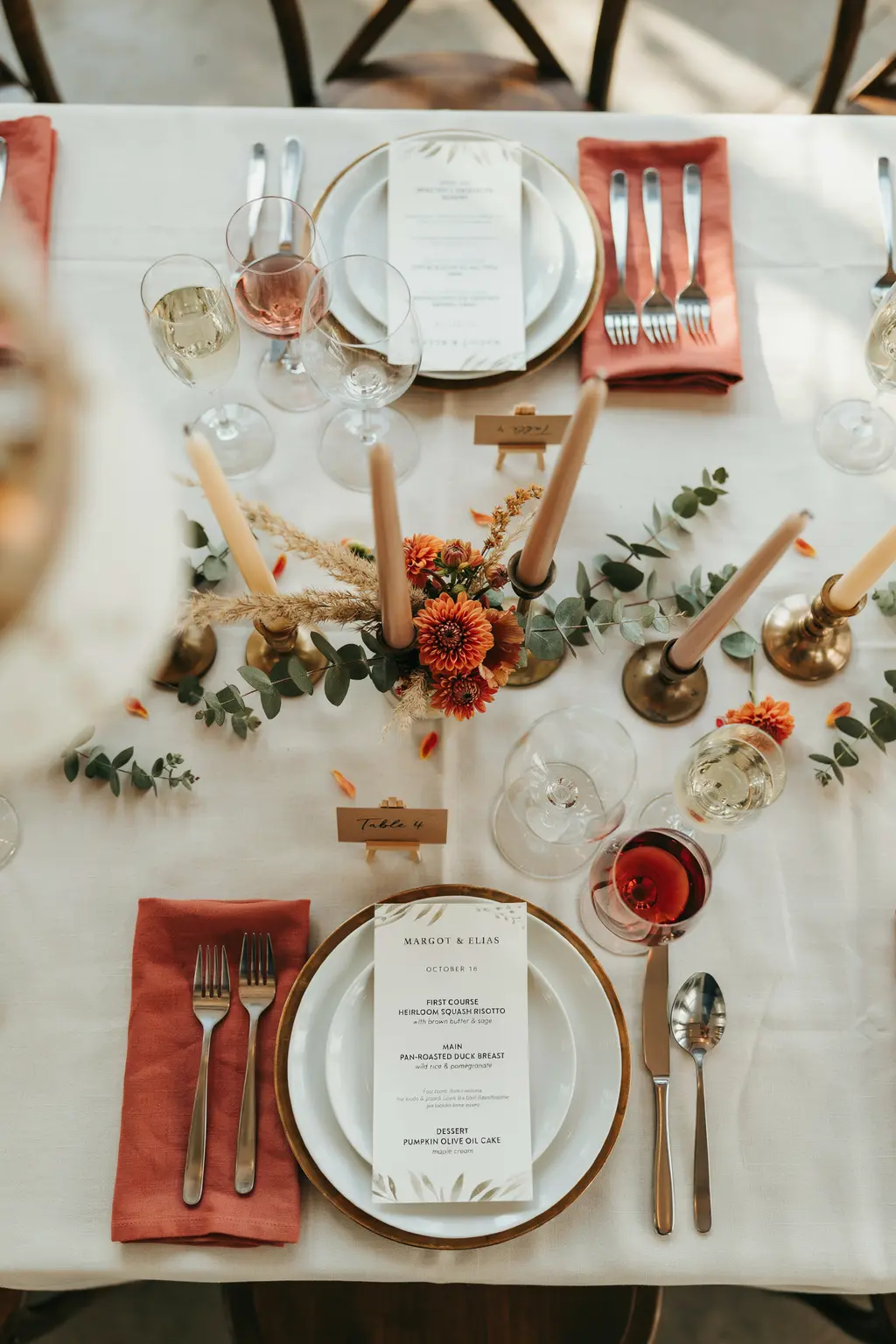
What you’re building toward is the guest who walks in at dusk and slows down. Ivory linen falling all the way to the floor, rust napkins, amber glass holding the candlelight, no table legs in sight.
The spring version of the same table is in the spring tablescape guide. The whole-reception picture lives in the fall wedding decor hub.
Fall Wedding Table Decor Starts With Linen Arithmetic, Not Taste
A tablecloth size is one calculation: table width plus twice the drop. Rental tables are 30 inches tall, so a floor-length cloth on a 60-inch round is 60 plus 60, a 120-inch round. Your color scheme gets no vote in it.
Every other size in the catalog stops somewhere less flattering. The 108-inch cloth on that same round lands six inches off the floor and puts the legs and the plastic clamp in every wide shot. The 90-inch one lands in laps.
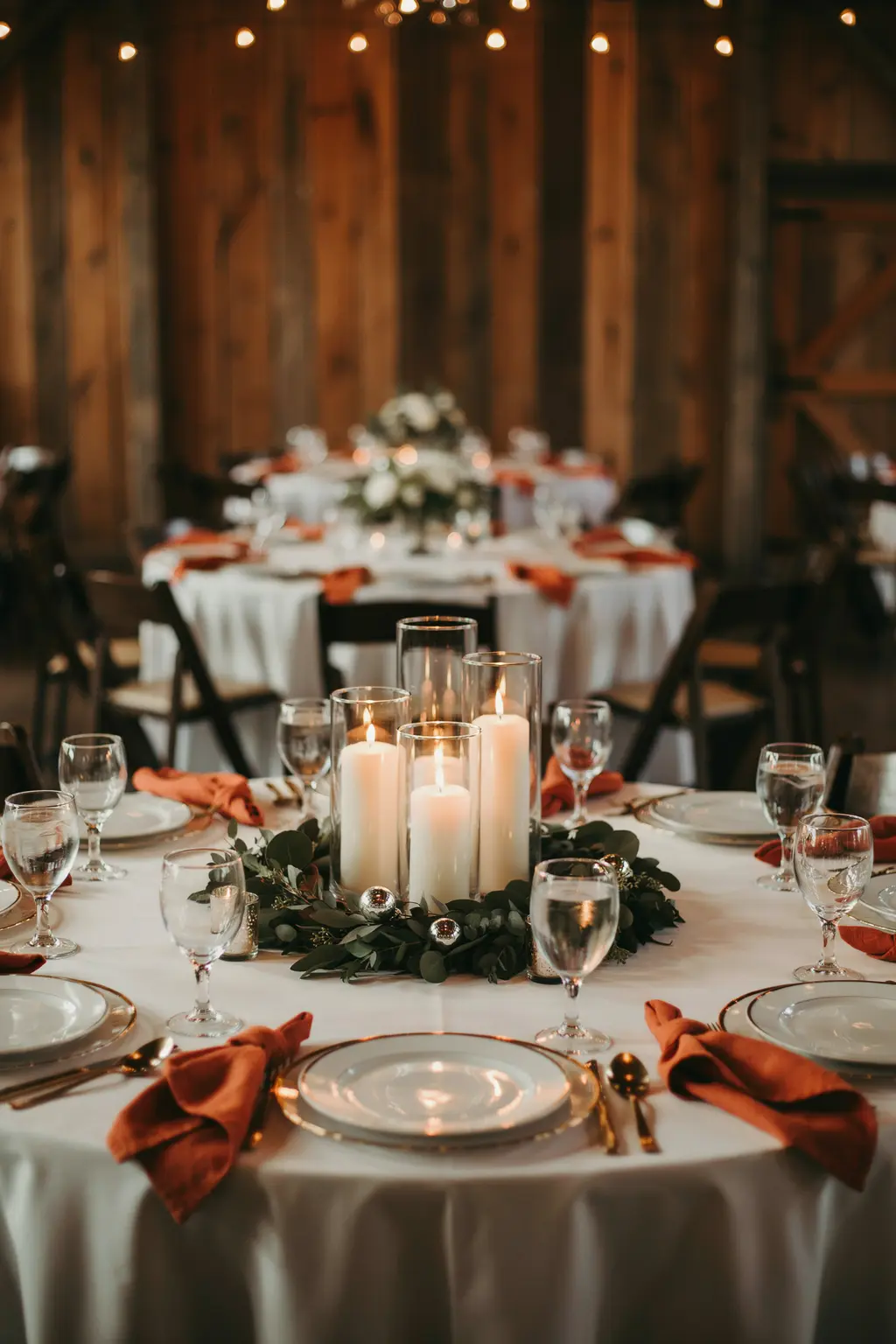
For the 8-foot banquet tables caterers use for the buffet and the head table, floor length is 90 by 156. The 90 by 132 you’ll find first in the catalog is sized for a 6-foot table, and on an 8-footer it leaves a bare foot at each end.
Texture matters more than color once you’re past a few tables. Slubbed poly-linen and washed cotton hold the low afternoon light. Flat satin polyester turns shiny and blue-white after four o’clock in October, which is exactly when everyone sits down.
(If I could press only one thing the week before, it’d be the rounds. A fold crease across a 120-inch cloth shows in every wide shot, and no amount of candlelight softens it.)
| Table size | Settings that fit | Floor-length cloth | Shorter drop option | Runner |
|---|---|---|---|---|
| 48-inch round | 6 | 108-inch round | 90-inch round, 21-inch drop | 12-inch round mat |
| 60-inch round | 8 | 120-inch round | 108-inch round, 24-inch drop | 14-inch round mat |
| 72-inch round | 10 | 132-inch round | 120-inch round, 24-inch drop | 16-inch round mat |
| 6-foot banquet, 72 x 30 | 6 to 8 | 90 x 132 | 60 x 102, 15-inch drop | 84 to 96 inches |
| 8-foot banquet, 96 x 30 | 8 to 10 | 90 x 156 | 60 x 126, 15-inch drop | 108 to 120 inches |
| 8-foot farm table, 96 x 40 | 8 to 10 | usually left bare | none | 108 to 120 inches |
Rent the Cloths, Buy the Runners
Linens are the one line where renting wins outright. A floor-length cloth rents for about what a bad polyester one costs to buy, and it arrives pressed and goes back dirty. On the Monday after a wedding that’s worth more than the money.
Buy them instead and you own fifteen wrinkled squares of polyester and a laundry problem. Break-even is two weddings, and nobody has two.
Runners flip the math the other way. Cut your own and you get the exact texture you wanted, in the length you wanted, for less than one night’s rental. Fourteen yards of 54-inch home-decor fabric makes fifteen runners, cut in an hour on the living room floor.
Slubbed poly-linen fabric by the yard runs $9 to $14 a yard, and fraying a half inch at each edge hides a crooked cut and looks intentional.
Rental inventory is deep in the sizes everyone books and thin everywhere else. Ivory 120-inch rounds sit stacked three deep in most warehouses, while the 132s for 72-inch tables are down to four by August. Book odd sizes early.
Chargers Photograph Well and Are the First Layer You Can Cut
Chargers are the first thing I’d cut from fall wedding table decor. They photograph beautifully, and they’re the only layer a guest never touches.
What they buy you is the empty-table shot from cocktail hour, when the room is lit and nobody has sat down.
A ring of antique gold under every white plate is what makes that photograph look like a wedding instead of a banquet hall. Then they get cleared before the entrée, so you’re paying for forty minutes of table time.
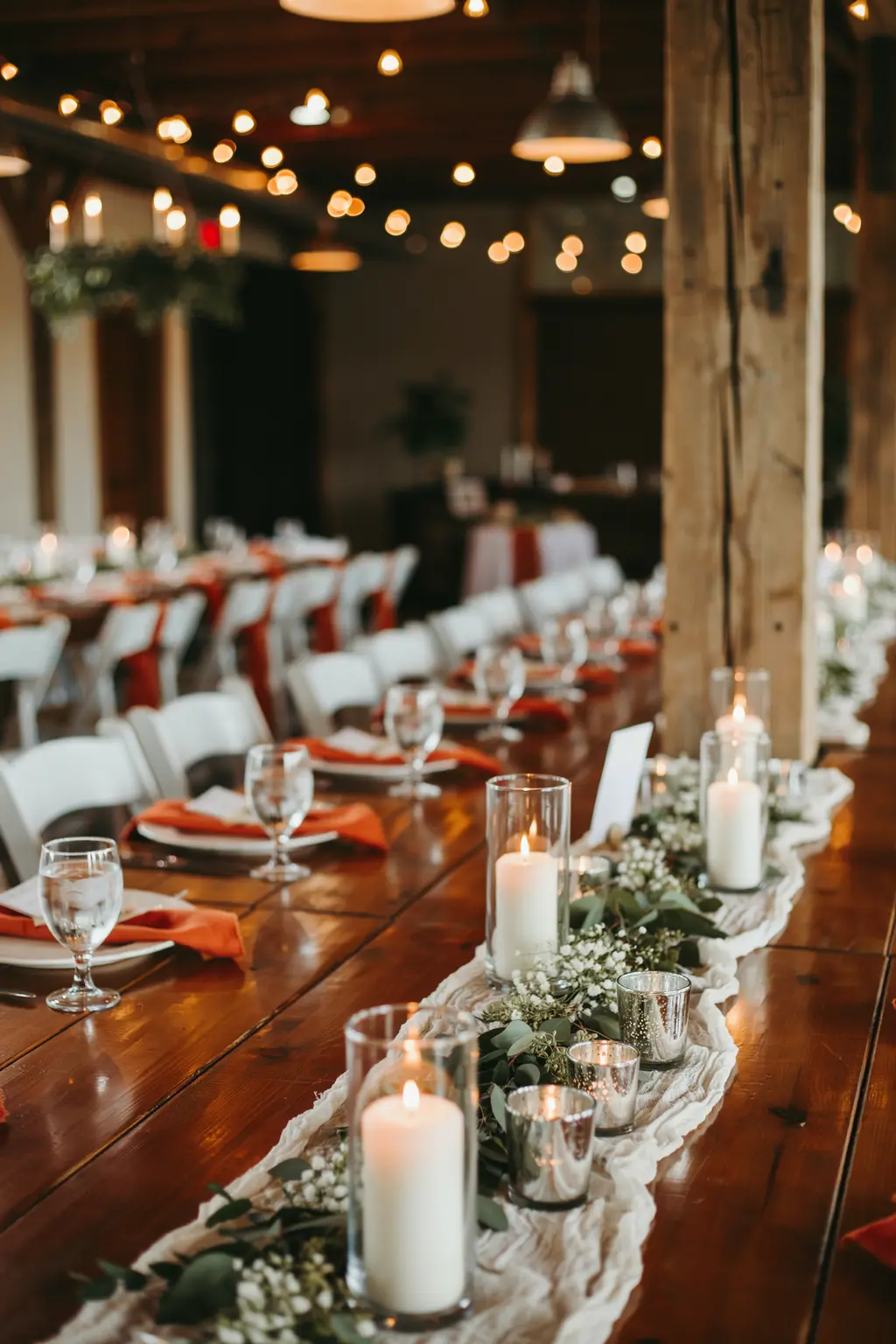
Standard is 13 inches. On a 60-inch round with eight seats, a charger and a glass cluster fit with room to spare. Push that round to ten and the chargers touch. Ten at a 60-inch round works only without them.
For autumn, the finishes that hold up are antique gold, walnut or acacia wood, hammered brass, smoked amber glass. Rented ones are cheap per plate, though some caterers add a placement fee, so ask before you commit to 160 of them.
If you’d rather own them and sell them on afterward, antique gold charger plates run $30 to $60 for a set of twelve, one set per table.
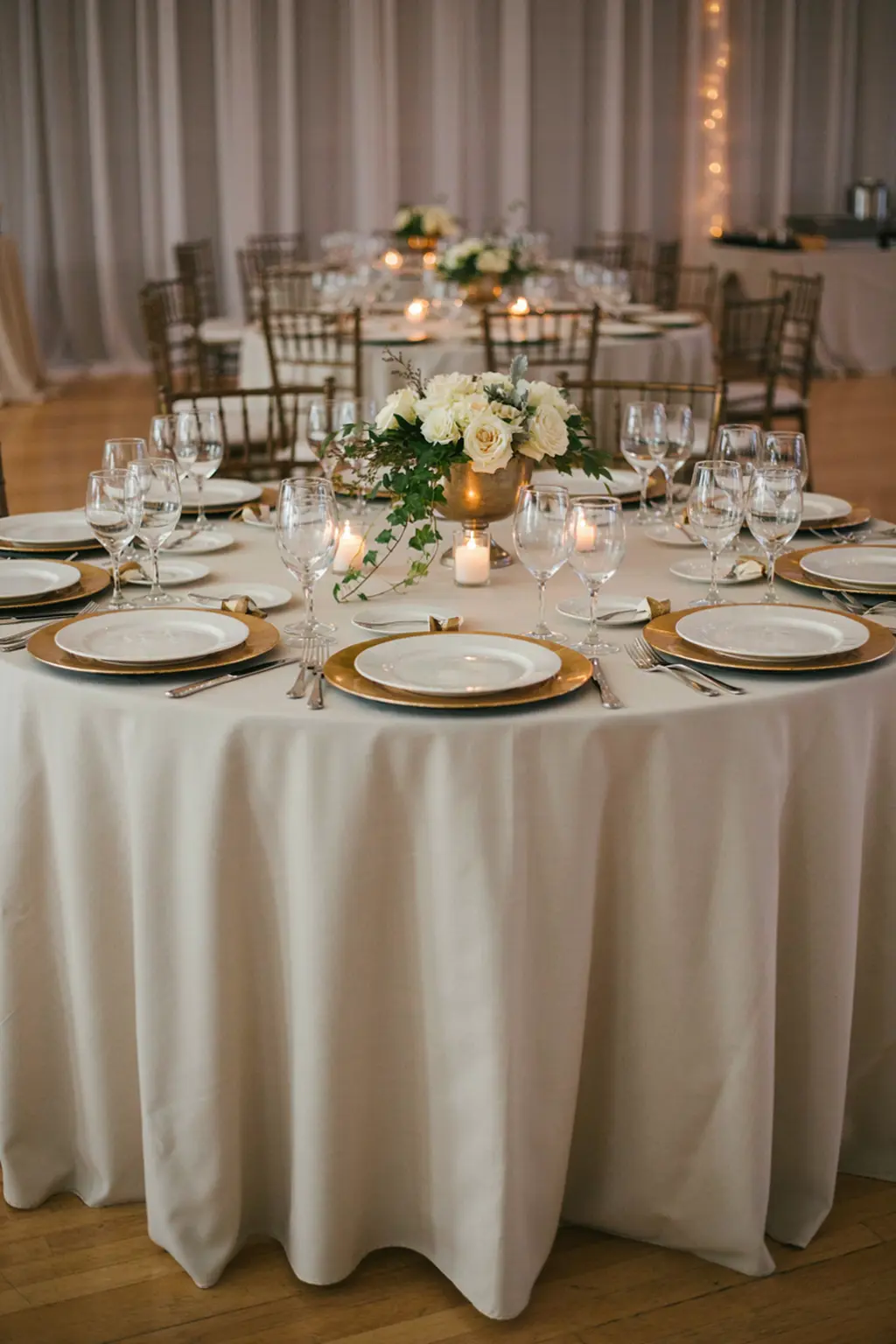
(Dropping chargers at a 90-guest reception saves a few hundred dollars, and I’d put that straight into the linens. Not everyone will agree with me on this one.)
Napkins Are the Cheapest Color on the Table
Napkins carry more color per dollar than any other layer in fall wedding tablescapes, and every guest picks one up.
Size first. Dinner napkins are 20 by 20 inches, and 22 by 22 drapes fuller over a charger. The 17-inch luncheon size is what banquet halls stock by default, and on a 13-inch plate it looks like a folded handkerchief.
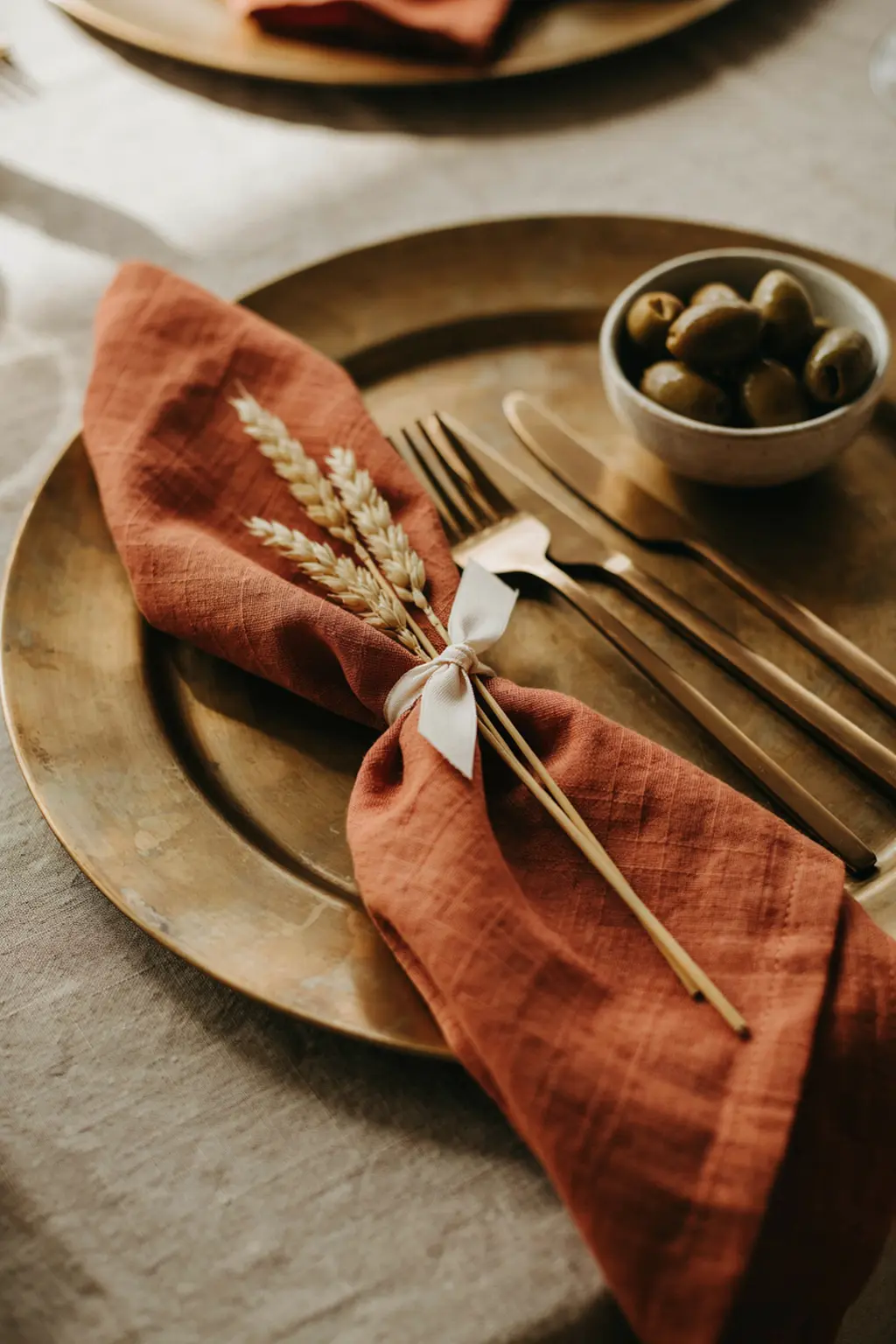
Rented napkins are cheap and they look it, because hotel stock is pressed flat and stays flat. Gauze photographs like fabric rather than paper, which is why a rust napkin draped loose across a gold charger looks expensive.
Rust cotton napkins are $28 to $45 for a set of twelve, so one set per table and you’re done.
There’s no correct fold, and the ones that photograph best are the loosest. A flat drape takes seconds. A ribbon with a dried wheat stem tucked under it takes long enough that doing it 120 times is somebody’s whole Friday afternoon, so decide that with your eyes open.
Order 10 percent over your guest count. Napkins go home in tote bags and into the trash with the chicken bones.
Escort Cards and Place Cards Do Two Different Jobs
An escort card sends a guest to a table. A place card sends them to a chair. Unless dinner is plated with meal choices, I’d buy one and skip the other.
Escort cards live at the entrance, one per guest, alphabetical by last name and never grouped by table.
This is the first thing anyone sees, before the room and before the flowers, and it’s the one piece of paper at your wedding that guests photograph on their own phones. Give it a whole table, some dried grasses, and outdoors, a plan for wind.
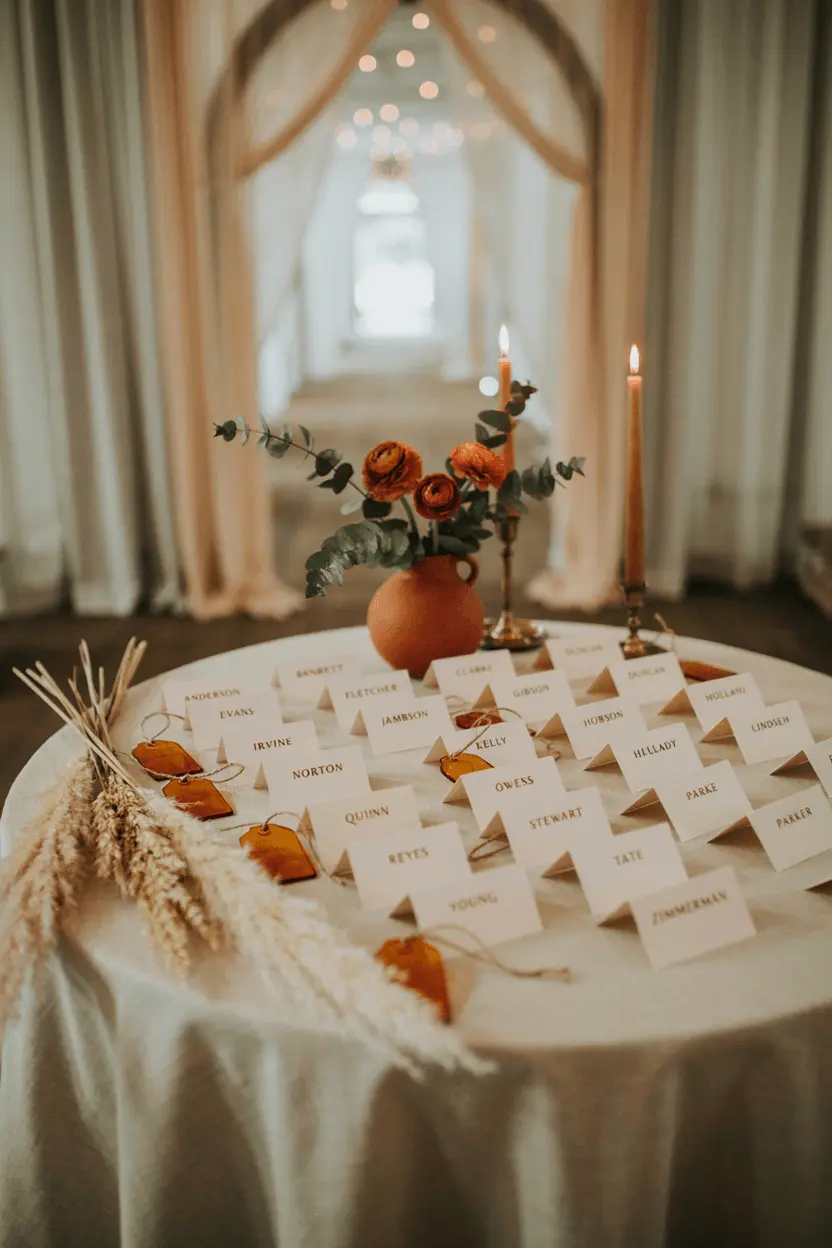
Fall formats that hold up: rust ink on bone cardstock, cut wood rounds, small amber glass hangtags, a mini pear with a tag pushed into the stem. Dried leaves curl overnight and the ink cracks along the fold.
Printing your own is the cheapest thing on this page, and 110 lb stock is heavy enough that a tented card stands up instead of slumping. Bone cardstock in 110 lb is $12 to $20 for a hundred sheets, at eight tented cards a sheet.
(Hand-lettering your own is the job that sounds charming in February and stops sounding charming somewhere around card 70.) Feel free to print the place cards and hire a calligrapher only for the escort display, which is the part guests photograph.
Flatware and Glassware Are Counted Per Piece, and That’s Where the Bill Grows
Rental invoices count flatware by the piece, so a five-piece setting at 120 guests is 600 pieces before anyone pours wine.
Five pieces:
- dinner fork
- salad fork
- knife
- teaspoon
- a dessert fork or spoon above the plate
Silver is house stock and it’s cheap.
Matte gold and matte black rent for roughly triple, which makes that swap the most expensive finish decision in fall wedding table decor. Whether it’s worth it depends on how much gold you’re already getting from the chargers.
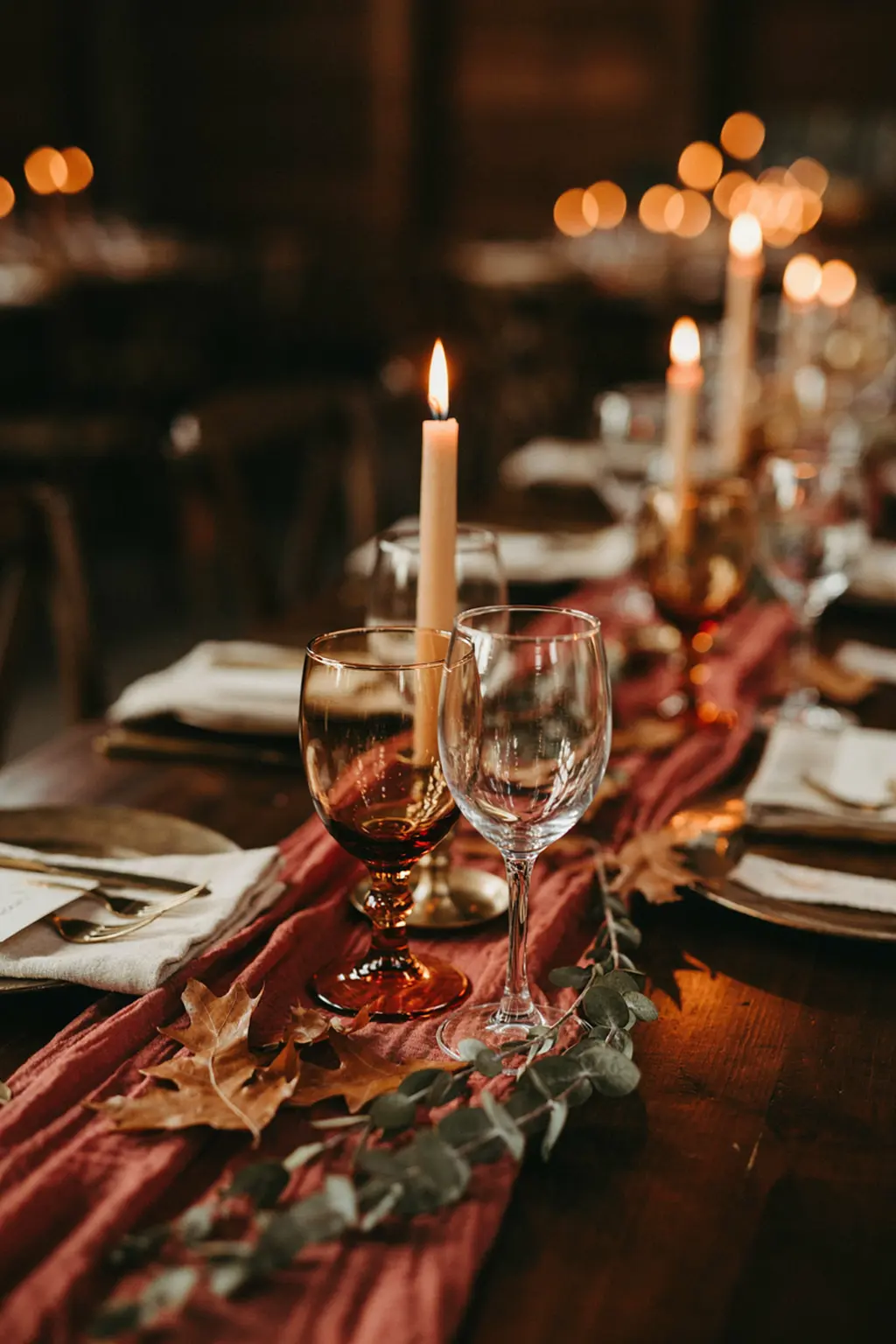
Glassware is two per guest at a minimum, water and wine, three with a poured toast. Amber, smoke and rust-tinted glass rent for about triple the clear ones.
The cheaper version of that look, and the one I’d choose anyway, is an amber water goblet beside a clear wine glass. The color lands where the candlelight hits it, and past the first course nobody is tracking which glass is tinted.
Order 10 percent over on glassware too. Two or three break per hundred, usually during the flip to dancing.
Table Numbers Have One Job: Seating 120 People in Eight Minutes
Table numbers are wayfinding in a nice outfit. If a guest at the door can’t read one from across the room, the rest of your fall wedding table decor doesn’t matter yet.
Numerals need to be at least 3 inches tall on a 5 by 7 card, standing about a foot above the tabletop. Double-sided matters at rounds.
A single-sided number means half of every table walks around to check, and fifteen tables of that turns a five-minute seating into a slow shuffle while the caterer waits.
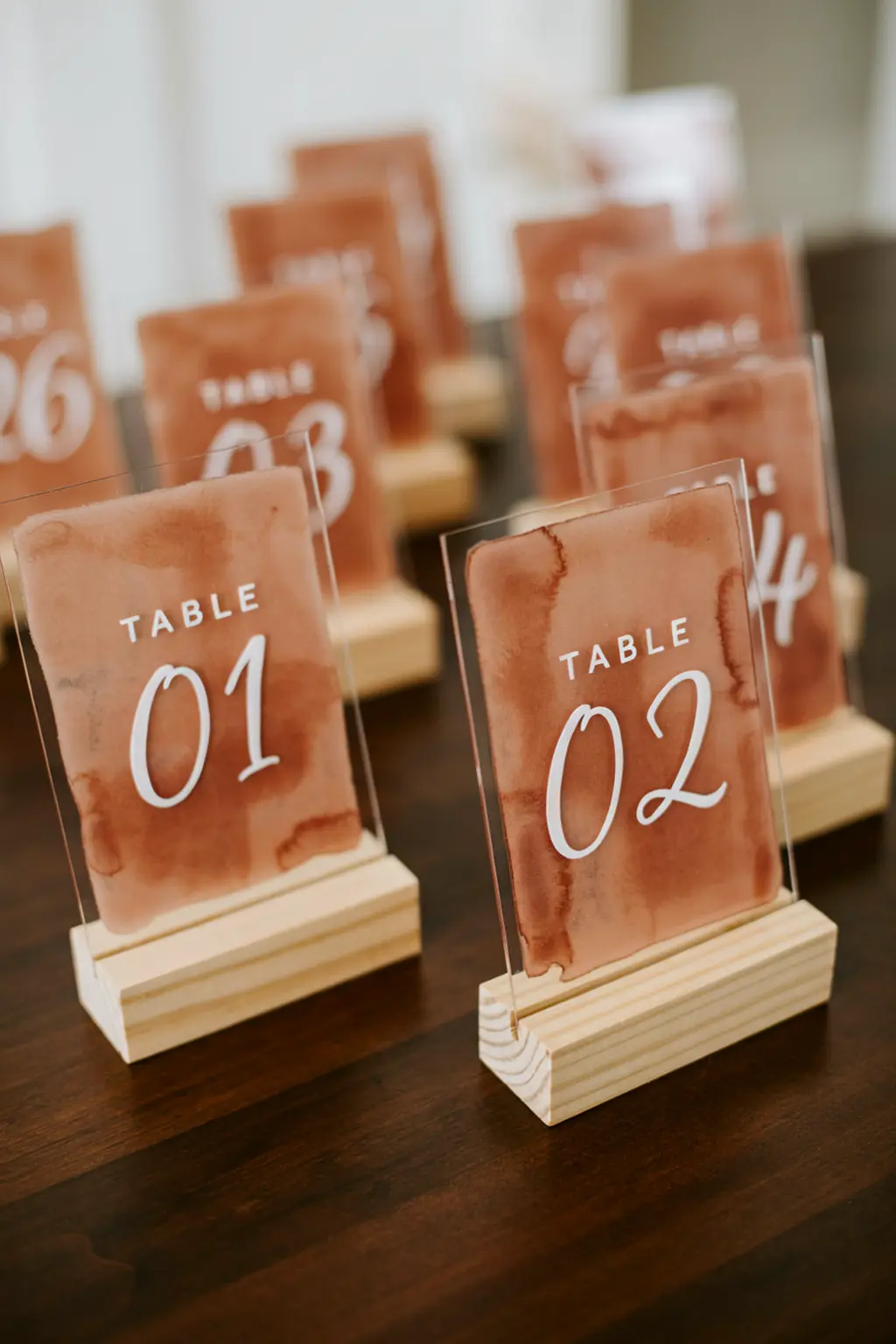
Rust or walnut ink on bone stock beats black in an autumn room. Acrylic with vinyl numerals holds up better than a printed card, which bends the first time somebody leans on it: double-sided acrylic table numbers run $35 to $70 for a set with stands, and one set covers twenty tables.
Numbers beat names. A card that says “Vineyard” instead of “7” means the guest has to find someone who knows which table Vineyard is.
(Named tables are the trend on this page I’d talk someone out of hardest, and no, I don’t care that they photograph better than a digit.)
Multiply Every Piece of Fall Wedding Table Decor Before You Fall in Love With It
Every choice on this page gets multiplied by your guest count. A $4 upgrade that feels like nothing in a shop is $640 at 160 guests. Price per guest, then price the room.
A complete non-floral setting comes to roughly $11.60 a guest, cloth and runner and table number included. At 120 guests that’s around $1,400 with delivery, and at 160 it climbs past $1,800.
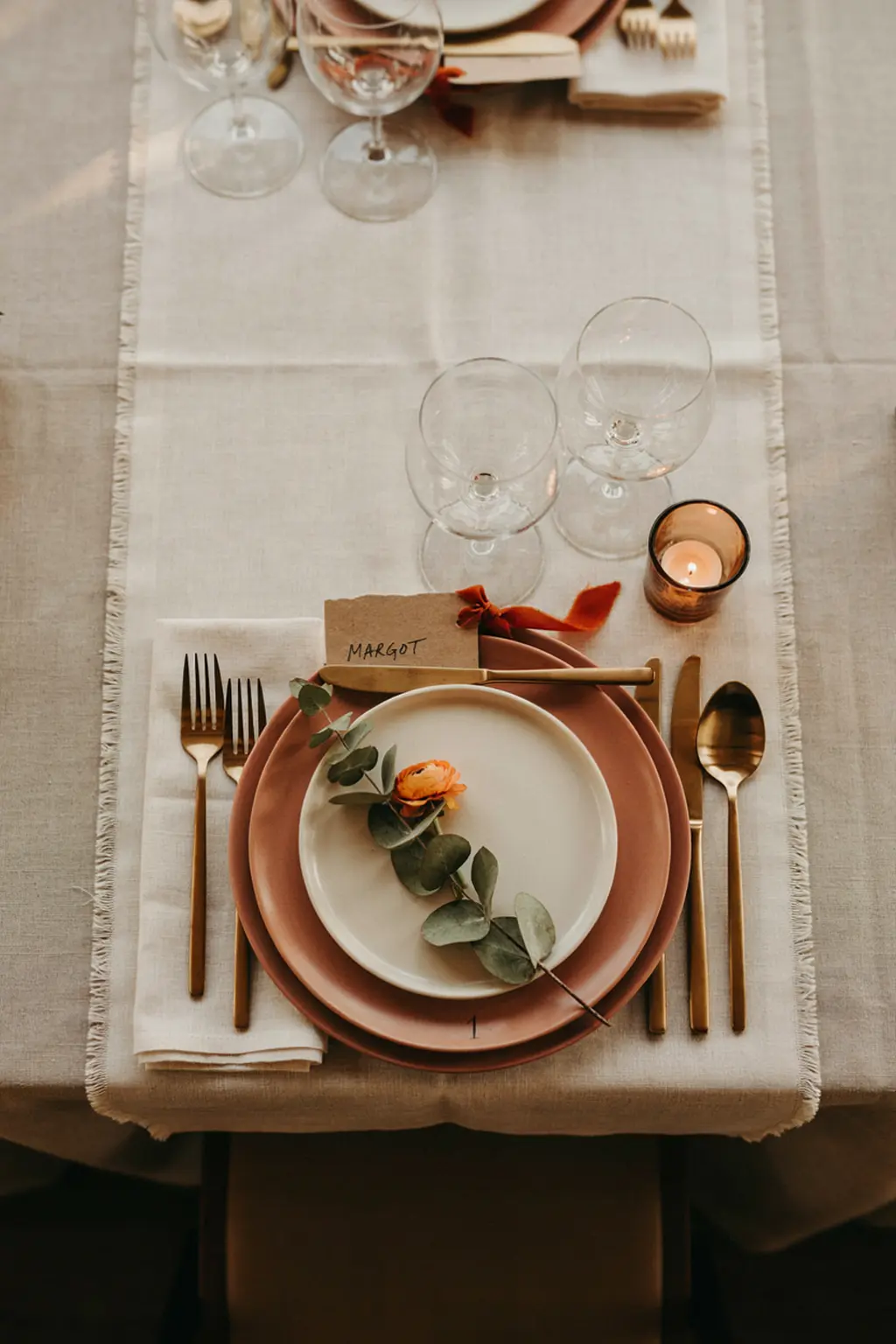
Centerpieces sit outside those numbers. Budget them with the guide that breaks centerpiece costs down by style, because floral is the line that moves most between 12 and 20 tables.
Labor scales too. Three people set eight tables in a bit over two hours, working off a printed count sheet. Fifteen tables is most of an afternoon, so recruit five people or start the morning before and let the linens hang overnight.
Four Things That Cost More Than They’re Worth
- Plate stacks you never eat from. A charger, a service plate and a salad plate at every seat is three rented pieces doing two pieces of work, and the caterer plates in the kitchen anyway. Fix: the charger plus whatever comes out of the kitchen, nothing in between.
- Colored glass on all three glasses. The color comes across from the water goblet alone. Fix: amber or smoke on the goblet, clear on the wine, the difference into linens. I’d still pay for amber goblets on a budget that says clear. Not fixing that one.
- Calligraphy on place cards. A guest holds a place card for four seconds, then it lives under a bread plate. Fix: pay for the escort display, print the place cards on the same stock.
- A printed menu at every seat. The most expensive paper on the table, and it leaves in a pocket. Fix: one menu per two seats, or a board at the entrance.
The Upgrade Path, One Layer at a Time
Set one full table, photograph it standing and sitting, then change exactly one layer and shoot it again. Standing height is what guests see walking in. Seated height is what they look at for three hours.
In order of return per dollar:
- Napkin first. A house-stock white luncheon napkin swapped for a rust gauze one costs a couple of dollars a head and changes every photograph of the table.
- Linen texture second. Slubbed poly-linen over flat satin kills the shine in low October sun.
- Table numbers third. A bent tent card upgraded to walnut and acrylic is small money, and it’s in every establishing shot of the room.
- Charger fourth, flatware fifth. The charger is a couple of dollars a head. Gold flatware is more than double that, which is why it goes last.
(At a dozen tables the first two upgrades come to about $190 all in, and that’s where I’d stop.) Don’t be afraid to stop after the second one. Two changed layers across fifteen tables looks deliberate. Five looks like a rental catalog fell open on the table.
Frequently Asked Questions
What size tablecloth do I need for a 60-inch round table?
A 120-inch round for floor length: table width plus twice the 30-inch drop. A 108-inch cloth stops six inches short and shows the legs.
How many people fit at a 60-inch round table?
Eight comfortably. Ten fits only without chargers, because at ten settings they overlap.
What size tablecloth fits an 8-foot banquet table?
Ninety by 156 inches. The 90 by 132 in most catalogs is sized for 6-foot tables and leaves a foot bare at each end.
How many napkins should I order for a wedding?
Guest count plus 10 percent. I’d rather store a dozen spares than come up one table short.
What’s the difference between escort cards and place cards?
Escort cards sit at the entrance and send a guest to a table. Place cards sit at the setting and send them to a chair. Most weddings need only escort cards, unless dinner is plated with meal choices.
Do I need chargers at a wedding?
No. They get cleared before the main course, though they do carry the empty-table photos from cocktail hour. They’re the first layer I’d cut, and I don’t think a guest would notice.
How long does it take to set 15 tables?
Most of an afternoon with three people. Pre-folding napkins into labeled bins at home takes a solid chunk off that, because nobody is counting on site.
Can I mix rented linens with things I bought?
Yes, and the cheapest version is rented cloths with bought runners and napkins. The one rule I’d hold to is checking bought pieces against the rental cloth in daylight, because ivory and white sit badly together.
What size should wedding table numbers be?
Numerals at least 3 inches tall on a card no smaller than 5 by 7, a foot above the table. Make them double-sided at rounds, or half of each table can’t read them from the door.
Which fall napkin colors photograph best?
Rust, terracotta, olive, oxblood and bone hold their color in low October light. Sage and pale blue drift grey once the sun is off the windows, which is about when most fall receptions sit down to eat.
Shop the Look
- Slubbed poly-linen fabric by the yard, fourteen yards for fifteen runners
- Antique gold charger plates, one set of twelve per table
- Rust cotton napkins, the cheapest color change on the table
- Bone cardstock in 110 lb for escort cards you print yourself
- Double-sided acrylic table numbers, because double-sided is the part that matters
Linens and gold tabletop pieces get thin between mid-September and early November, so order those first.
Set One Place, Then Copy It
Fall wedding table decor is six layers, in this order: cloth, runner, charger, napkin, flatware and glass, card and number. Sized right, an autumn wedding tablescape comes to about $11.60 a guest.
Do this before you order anything. Set one full place setting on your kitchen table, photograph it standing up and sitting down, and count the pieces you’d be multiplying by 120. My guess is you cut two on the spot, and it looks better for it.
Then the other 119 are copying, not deciding.