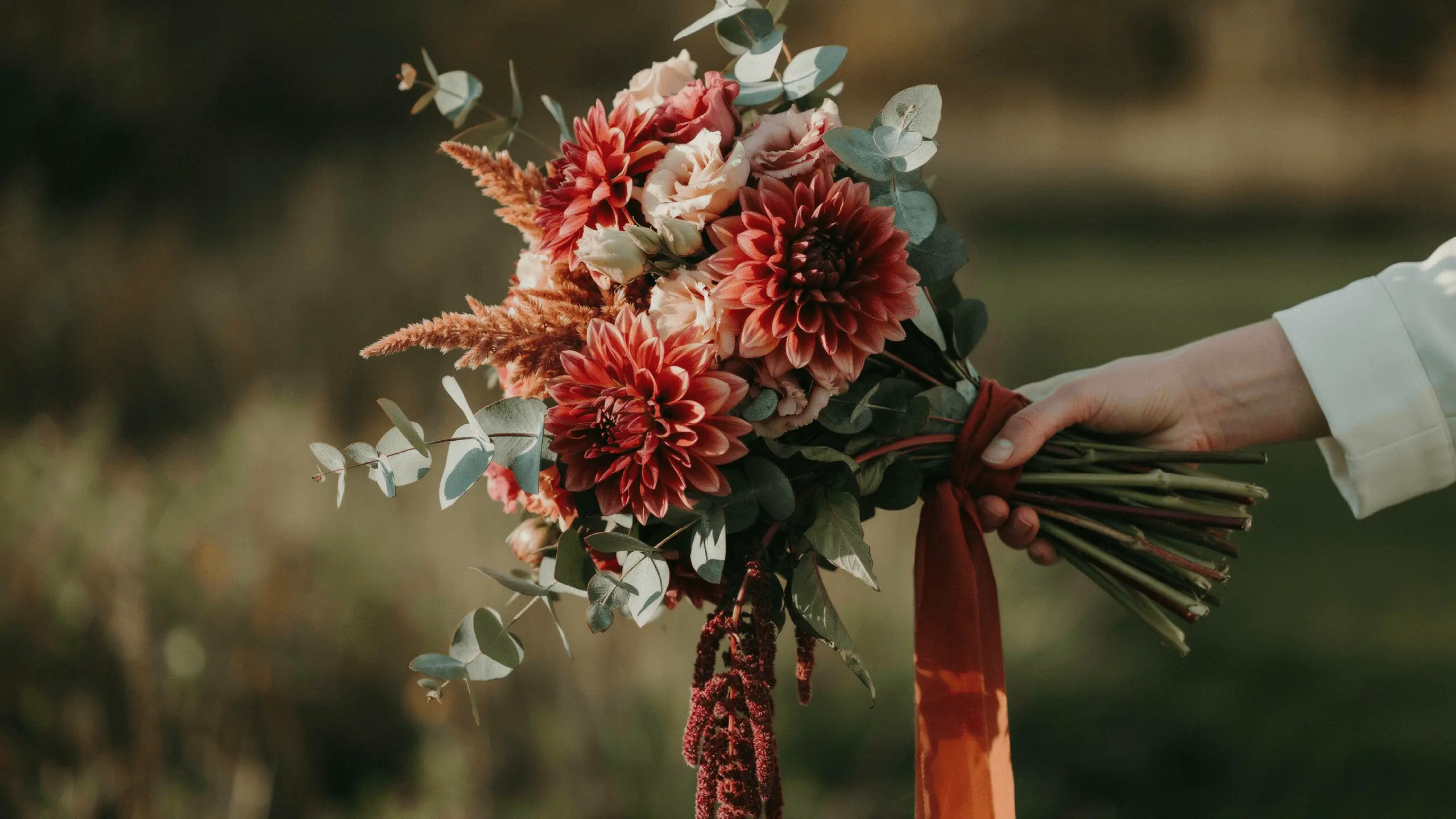
Fall Wedding Flowers That Are Actually in Season
This post contains affiliate links, which means I may earn a small commission if you buy something through them, at no extra cost to you.
Fall wedding flowers have a calendar problem: the dahlias on your October board were photographed in the first ten days of September, in a field that was under frost three weeks later. That gap is why so many brides get told “we can’t get that.”
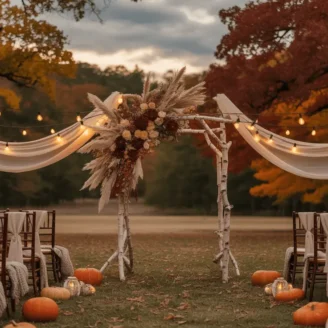
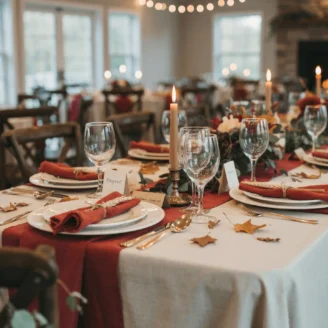
This guide covers fall wedding flowers and nothing else: what’s blooming the week you get married, what arrives by plane, what’s still standing at the last dance. Arranging them belongs to the centerpiece guide by style and budget and what works on a round table, the linens to everything on a fall table except the centerpiece, the frame you hang flowers on to the afternoon arch build.
What you’re after is a bouquet that looks cut that morning, an hour from the venue, in colors the room doesn’t wash out at dusk.
QUICK ANSWER
Fall wedding flowers split into two markets at your first frost date. Before it: dahlias, zinnias, celosia, amaranth, marigolds and mums, grown close to home and priced like it. After it, somewhere between mid-October and early November, the fields stop and you’re on greenhouse or imported stock at two to three times the price. Peonies, ranunculus and tulips in autumn all arrive by plane. Plan on 25 to 35 stems for the bridal bouquet.
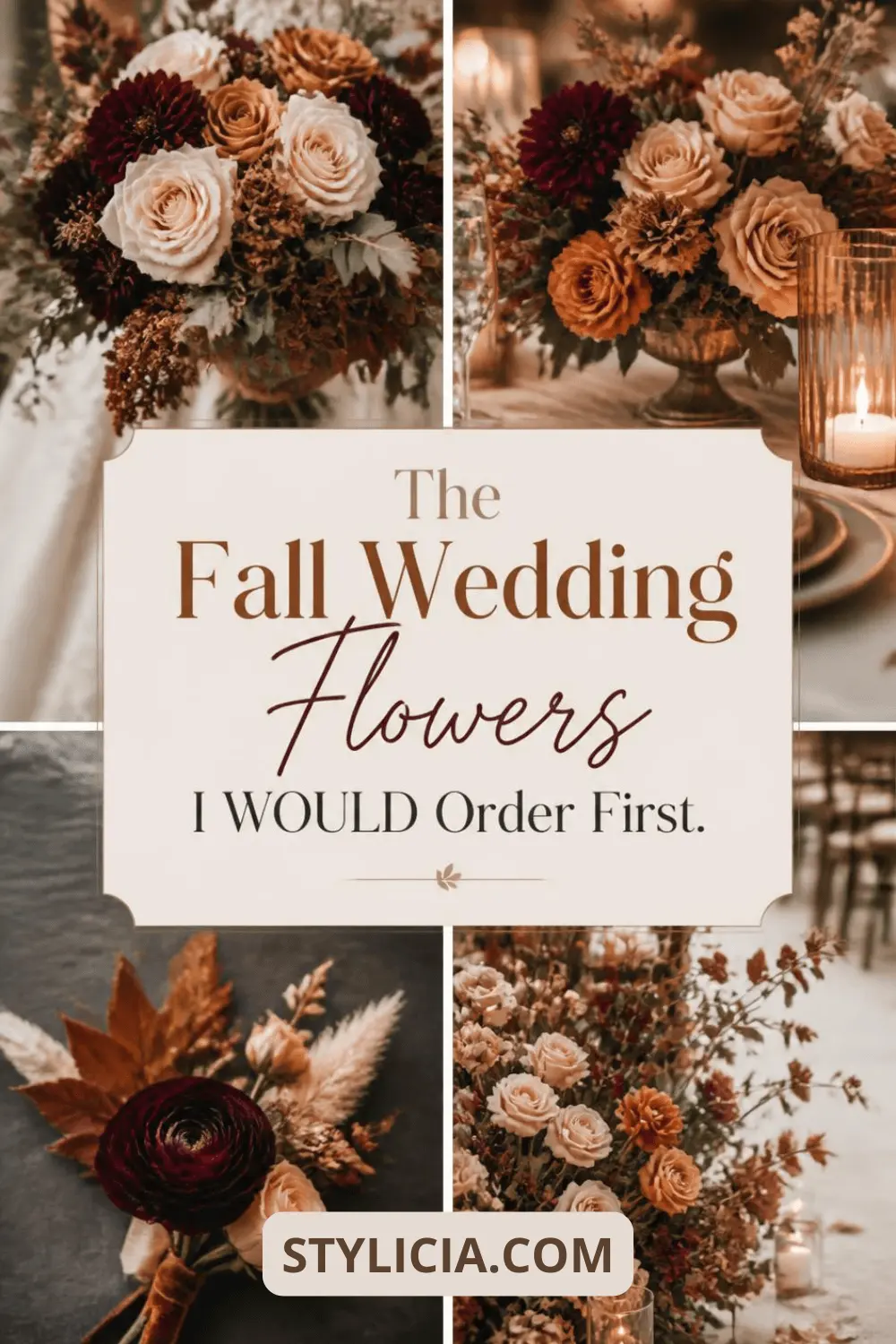
September, October, and November Are Three Different Flower Markets
Brides treat fall as one season. Growers treat it as three, and the divider is your local first-frost date.
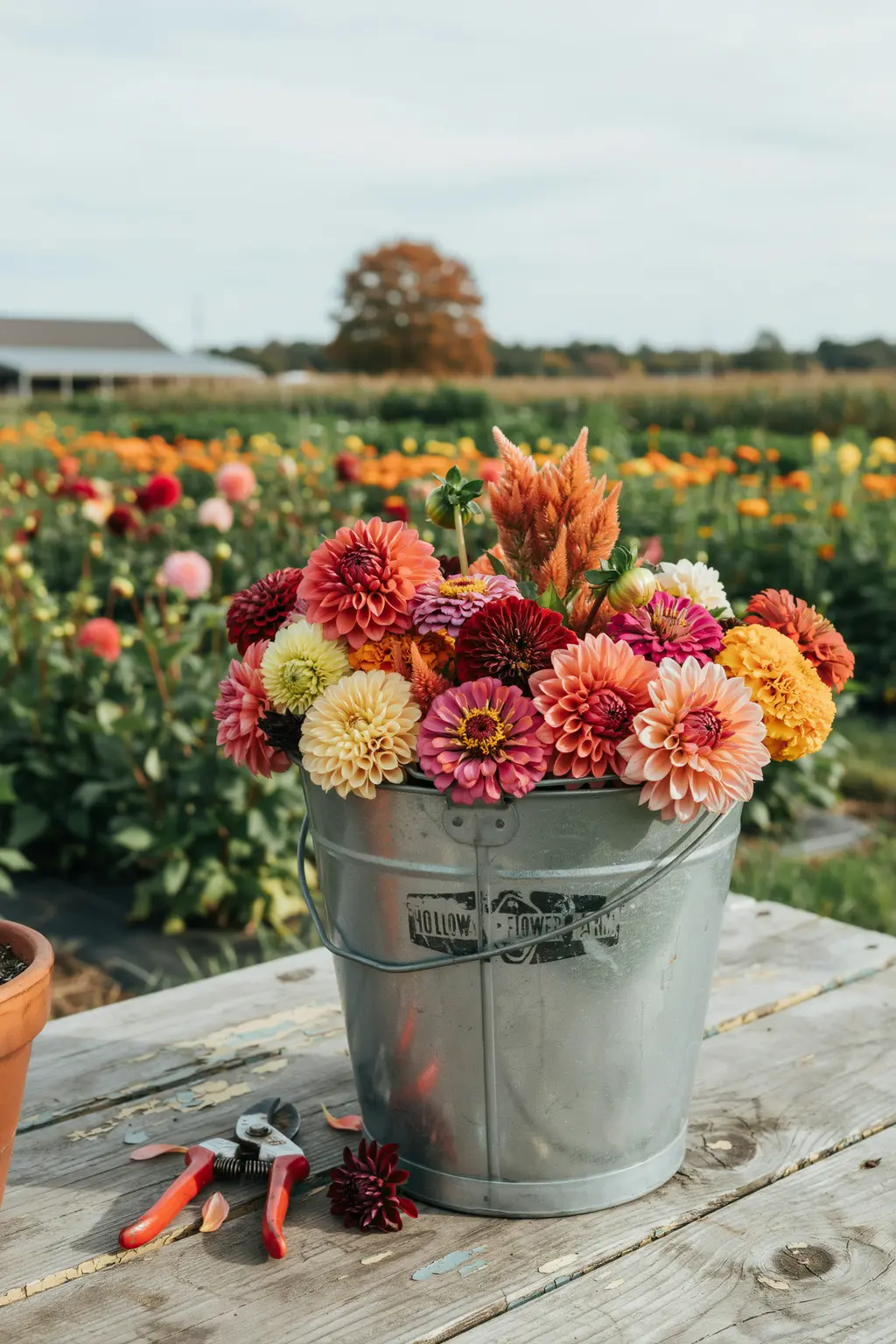
Early September through that frost is the richest flower window of the year. A farm will hand you a five-gallon bucket of mixed blooms for less than a florist charges for one arrangement. In season and cheap right now: dahlias, zinnias, celosia, amaranth, marigolds, cosmos, sunflowers, asters, lisianthus.
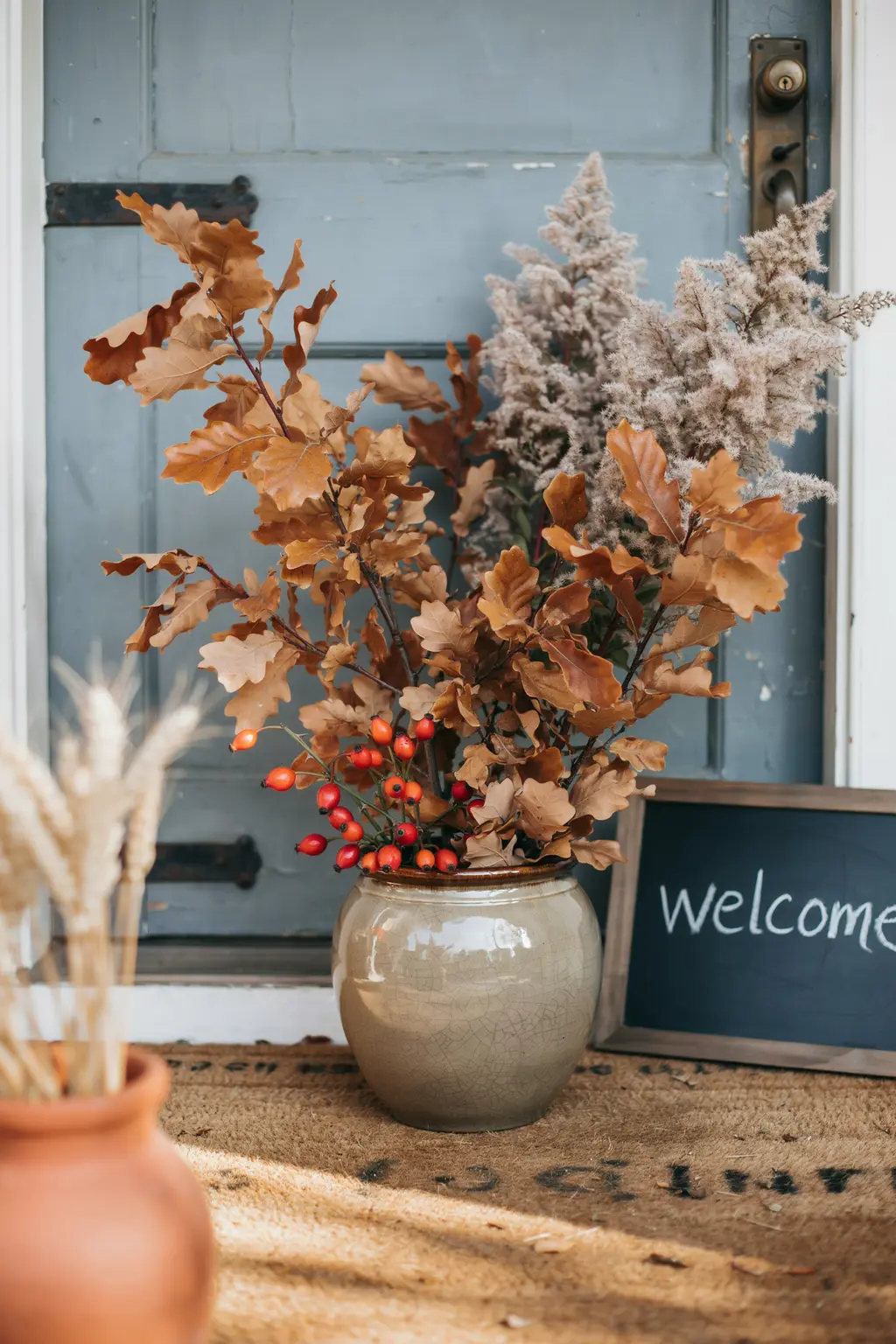
Plus branches, which nobody thinks to ask for. Smokebush, oak with the leaves already turned, rose hips still red on the stem. An armful in a crock by the door does more for an entrance than a hired arrangement.
Then the frost hits. In zone 5 that’s usually the second week of October, in zone 7 closer to November, and it ends dahlias and zinnias in about two days. (A field can be promising dahlias in July and have nothing standing by the last Saturday in October. This is the line I’d plan hardest around.)
After frost you’re in the greenhouse-and-import market: chrysanthemums, alstroemeria, carnations, lisianthus, standard roses, anemones from mid-November. Less romantic on paper. In a room lit by candles, nobody is auditing the list.
The Flowers on Your October Board Are Flown In From the Southern Hemisphere
Four flowers show up constantly in autumn wedding photos. None of them grow in North America in October.
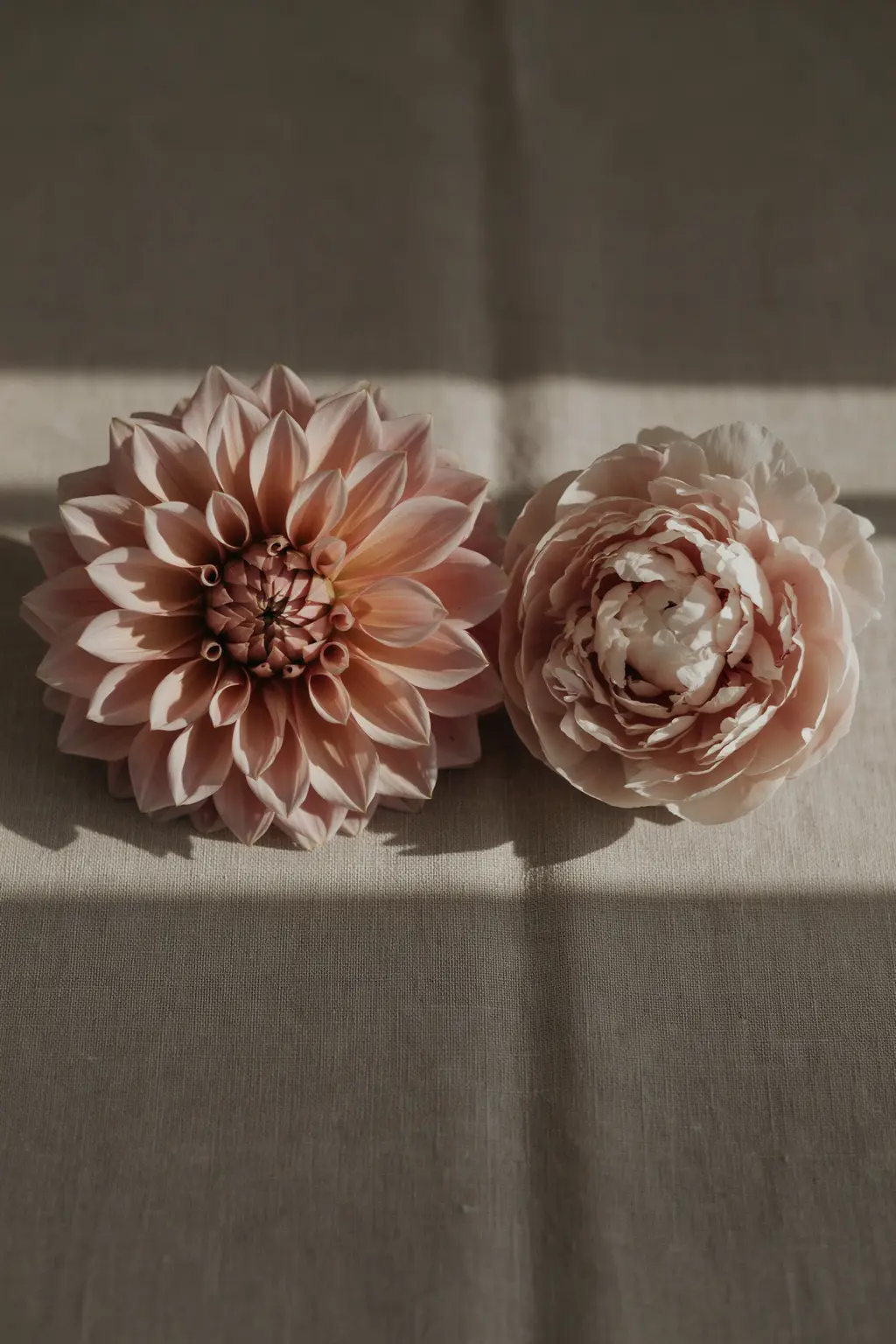
Peonies. Chilean and New Zealand stock lands late October through December, at roughly triple the June price. Thirty of them is a $300 bill before anything else goes in the bouquet.
Ranunculus. California field ranunculus starts in January. Anything in October came off a plane, and you pay for the seat.
Tulips. Dutch greenhouse stock runs year-round, so tulips aren’t hard to get. They also keep growing in a warm room, so the arrangement you built at four o’clock is a different shape by dinner.
Garden roses. Available all year from Ecuador, but the named English varieties cost several times what a standard rose in the same color does.
A lookalike solves most of it. A fully open cafe au lait dahlia does the visual work of a blush peony: same size, same ruffled center, same soft edge going translucent in late light. Feel free to put one real peony in the bridal bouquet and nowhere else. That’s where I’d spend it, because the bouquet is the only arrangement anyone sees from two feet away, and it’s in her hands in every photograph of her face.
Dried Flowers Are the Only Part of Your Order You Can Buy in July
Everything fresh arrives in the last three days before the ceremony. Dried material can sit in a closet since midsummer, and that’s the appeal: one line of the order that is bought, paid for, and cannot fail on you.
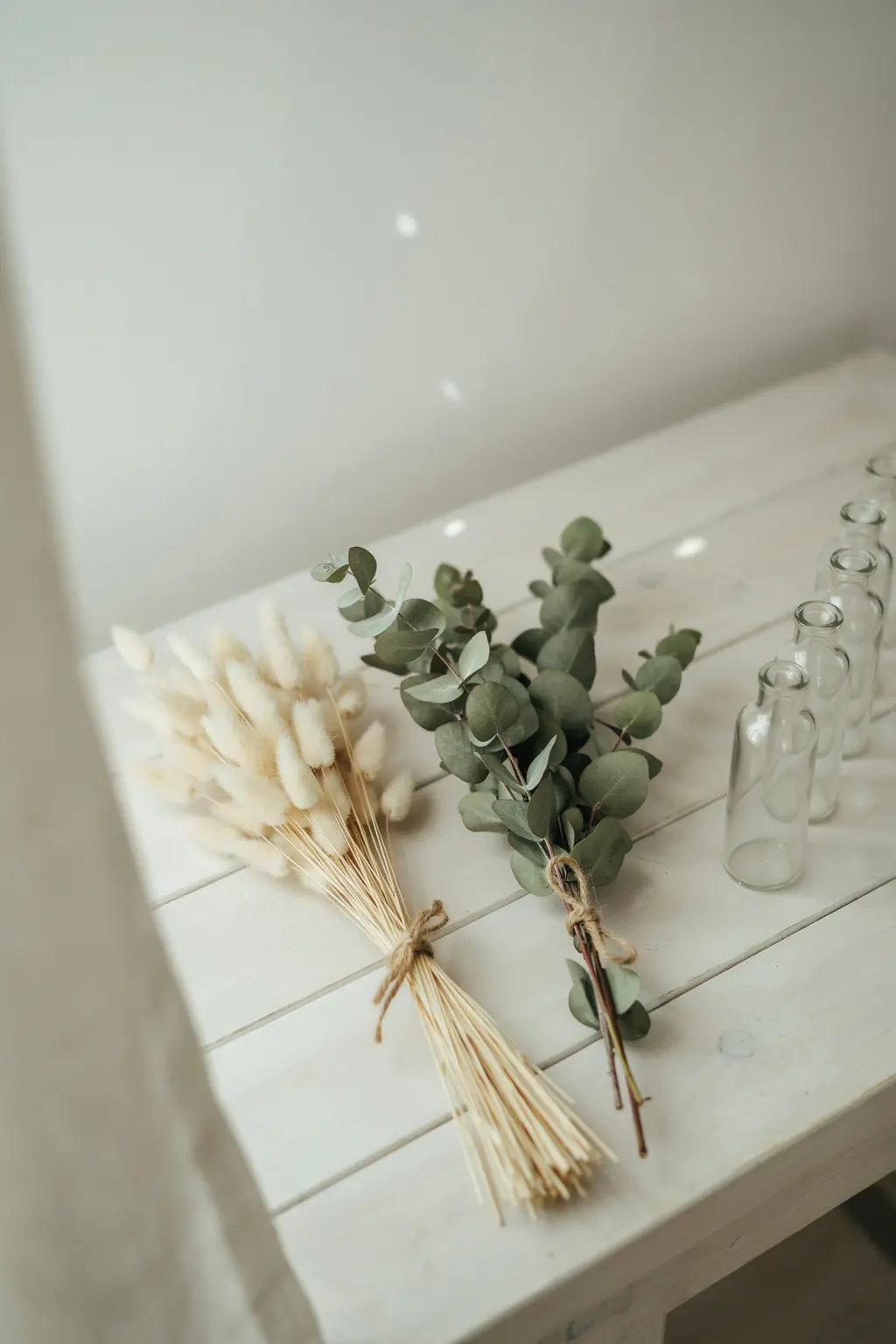
It also holds where fresh gives out. Bud vases on a hot tent table. A boutonniere hugged forty times. Anything in sun from noon on.
Bunny tail grass and preserved eucalyptus are the two I’d buy first, because they stay soft-looking instead of going brittle and they photograph pale against rust. Dried bunny tail grass and preserved eucalyptus run about $12 to $30 a bunch, and three bunches cover a bouquet plus a long row of bud vases.
The catch is texture. An all-dried bouquet goes matte in photographs and sheds pale bits down a dark dress all night. Mostly fresh with about a third dried gets you the light in the petals and the durability at once. That’s the ratio I’d tie for a dried flower wedding.
(Drying your own celosia takes the better part of a month, and a good share of the stems shatter when you move the bundle. I’d buy it dried.)
BUDGET PICK:
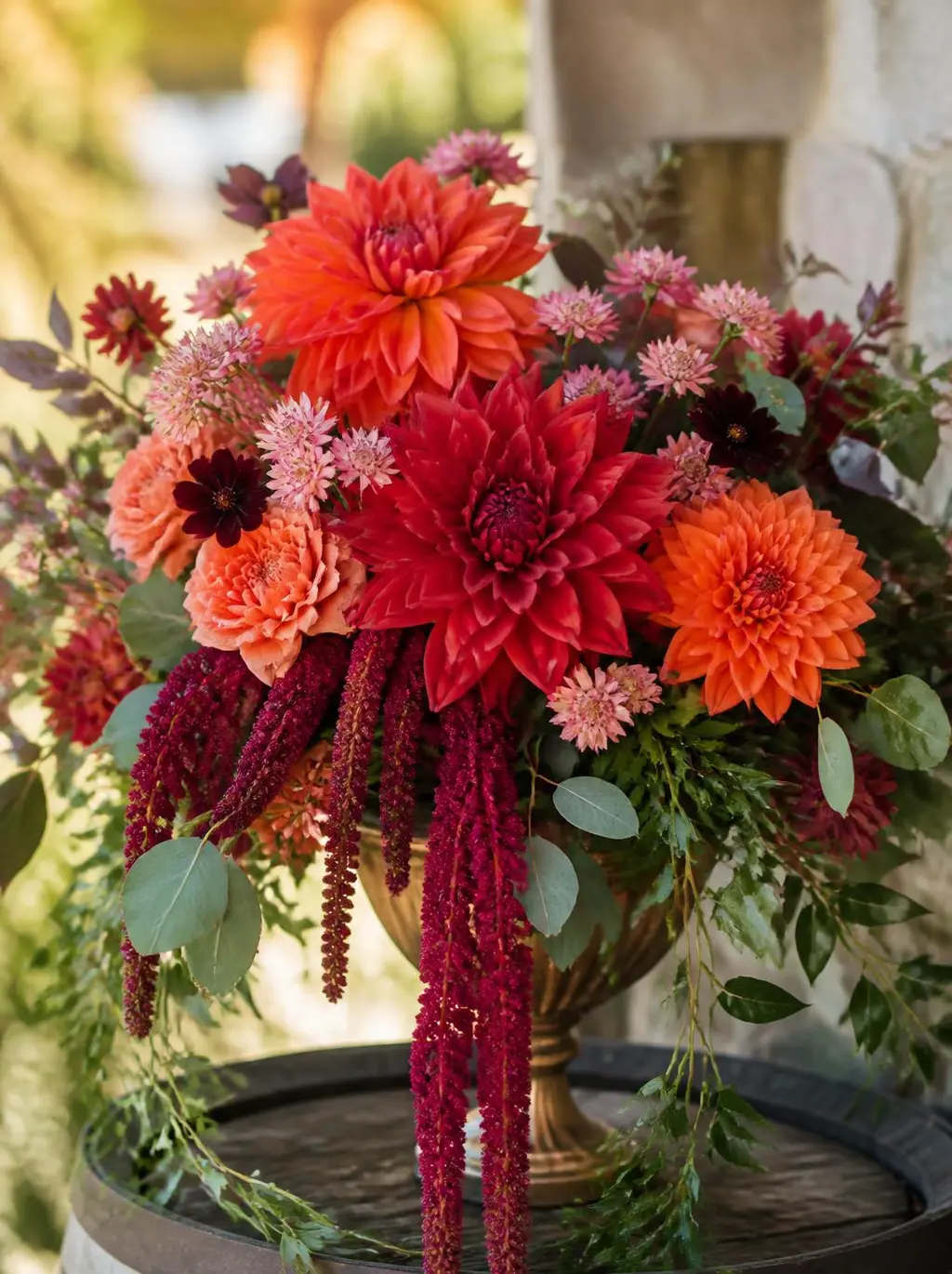
Marigolds. Around a dollar a stem in September, in the burnt orange everyone wants in October, and they hold all day out of water. Packed tight and low in a footed bowl, so the orange sits as one block instead of scattered dots, they look expensive and cost less than baby’s breath.
A Bridal Bouquet Eats More Stems Than Anyone Guesses
Fall wedding bouquets are bigger in the hand than they look on a screen. A bridal bouquet at the size you’re picturing takes 25 to 35 stems. Most people picture twelve, and twelve looks like it came from the back cooler of a grocery store.
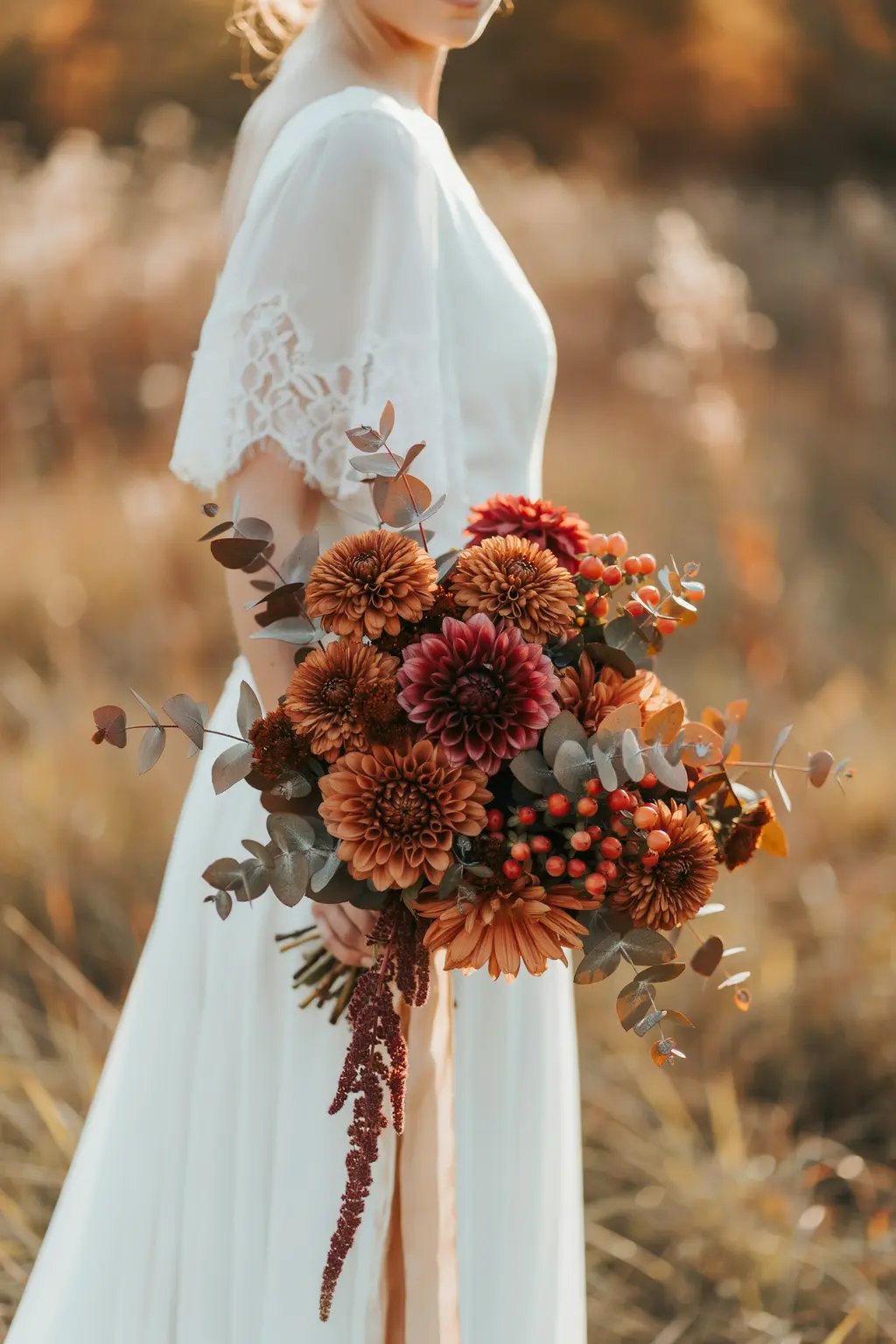
The proportion that works, without counting: a handful of big open faces like dahlias or disbud mums, about twice as many smaller blooms behind them, a generous fistful of texture such as amaranth or hypericum berries, greenery in last. Bridesmaid bouquets are a smaller version of the same handful, not a different recipe.
What that looks like when she picks it up: wide, a little loose, heavy at the bottom, something trailing past the edge so the outline is never a circle. Held at the hip rather than the waist, which is where the good photographs come from.
If you’re tying it yourself, the binding is what fails, usually while someone is hugging her. Wrapping the stems in waterproof floral tape under the ribbon holds a hand-tied bouquet through the night: green waterproof floral tape is $7 to $12 for a two-pack, and one roll does the whole wedding party.
Hold Time Is the Number Nobody Asks the Florist About
Ceremony at three, last dance at eleven. That’s eight hours, and fall wedding flowers spend most of it out of water in a warm hand.
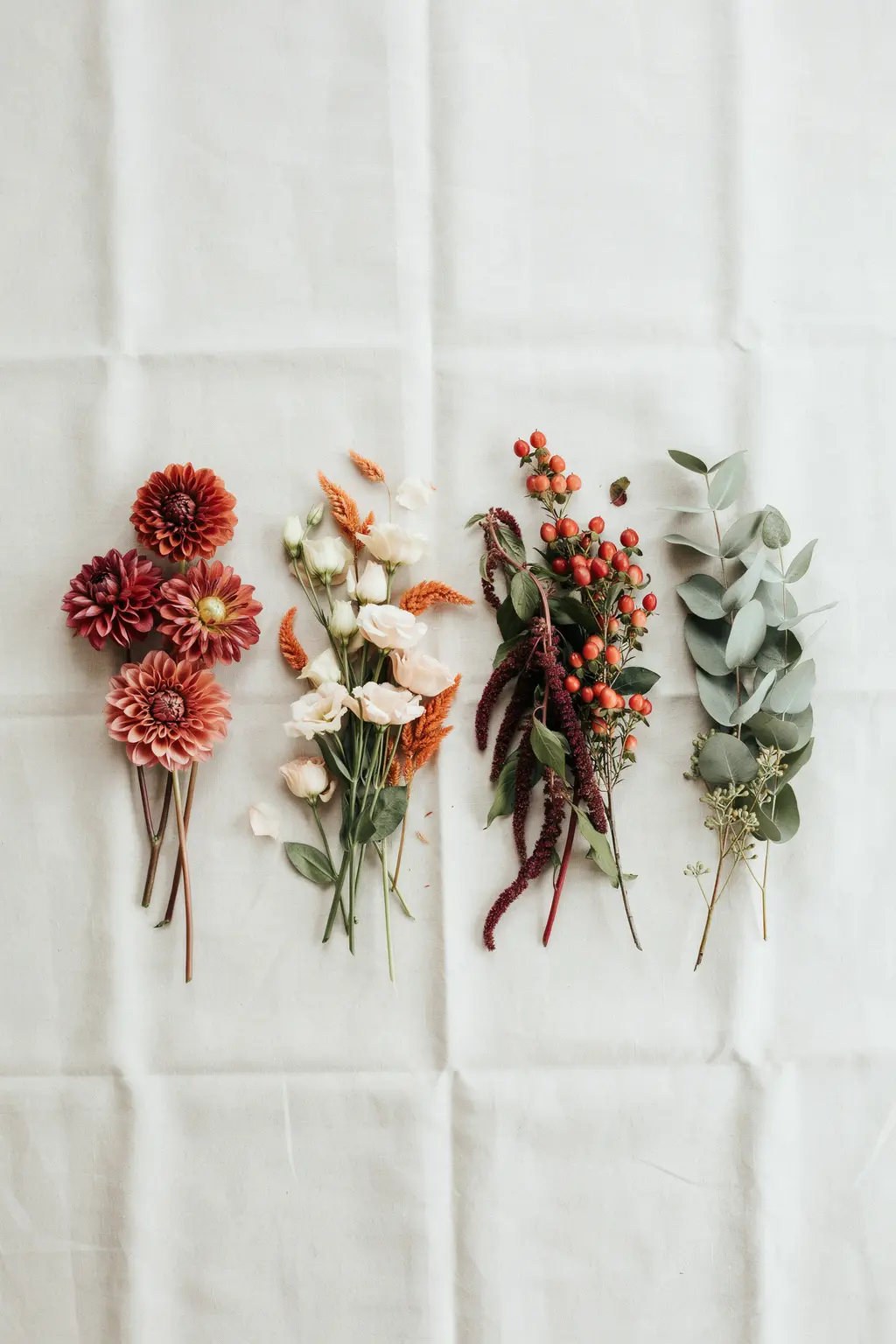
Hollow-stemmed flowers fail first. A dahlia seals its own stem within minutes of being cut, so it collapses in a bouquet while the same flower sits perfectly happy in a vase two feet away.
| Variety | When it’s in season (US) | Rough cost per stem | Out of water |
|---|---|---|---|
| Dahlia | Sept to first frost | $2.00–$4.00 | back in water after photos |
| Hydrangea (field) | Sept–Oct | $4.00–$8.00 | needs water all evening |
| Lisianthus | Sept–Nov | $2.00–$4.00 | most of the evening |
| Amaranth | Sept–Oct | $2.00–$4.00 | most of the evening |
| Celosia | Sept–Oct | $1.50–$3.00 | the whole evening |
| Marigold | Sept–Oct | $0.75–$1.50 | the whole evening |
| Chrysanthemum | Sept–Nov | $1.50–$3.00 | all night |
| Carnation | year-round | $0.80–$1.75 | all night |
| Seeded eucalyptus | year-round | $2.50–$5.00 | all night |
| Dried grasses, wheat | buy any time | under $1.00 | indefinitely |
Read the last column as a staffing decision. If the bouquet is mostly dahlias, it goes back into water the moment the photographer lets her go, and somebody has to be handed that job by name.
A Warm Tent Kills Four Flowers on Your List
An October tent with the sidewalls down and two propane heaters running sits close to 80 degrees by eight in the evening, warmer than the afternoon outside it. (That gap is what I’d plan for, not the forecast.)
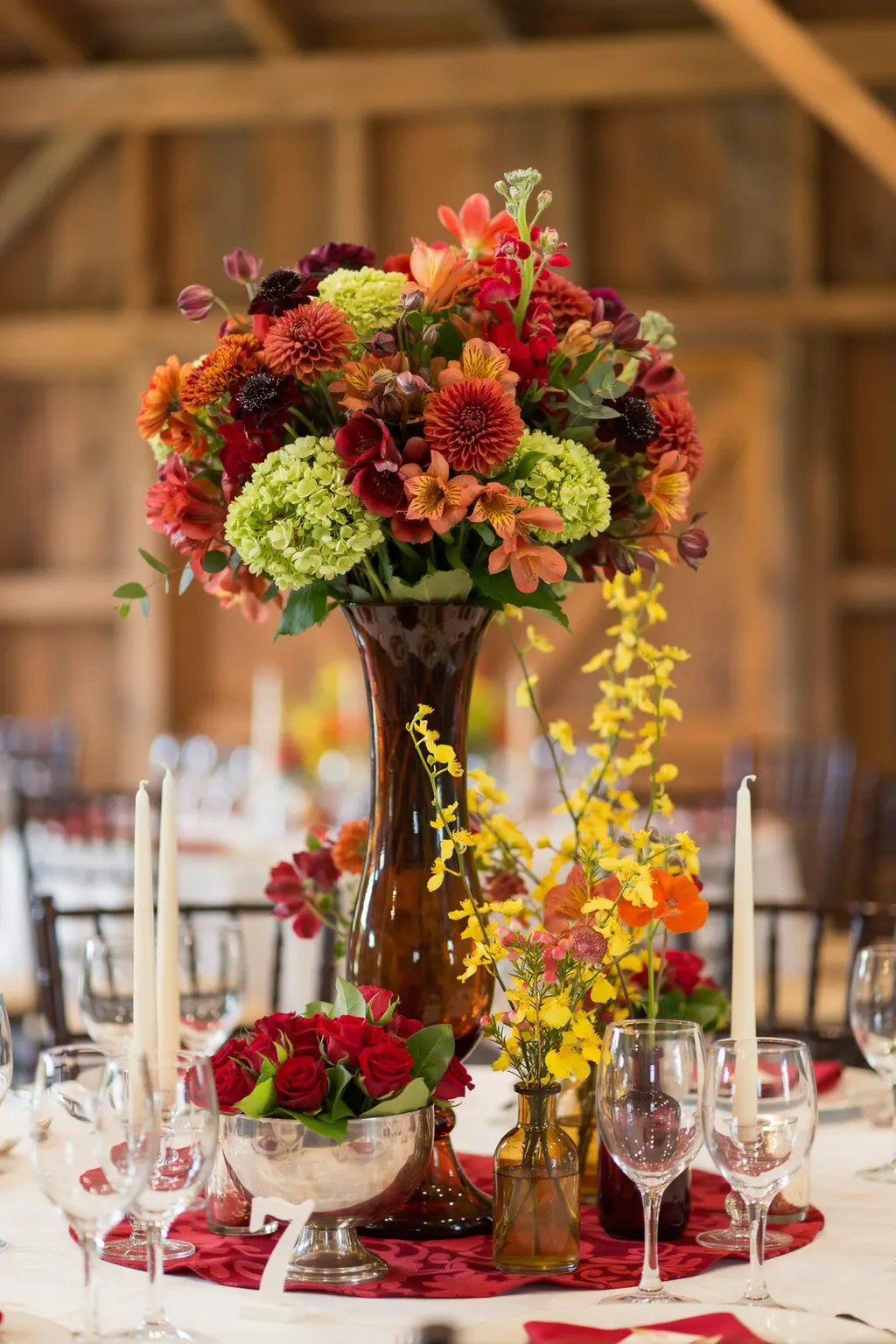
Four things fold in that heat. Dahlias go limp and brown at the petal edges. Hydrangea wilts unless its stem stays in water. Anemones open all the way, then drop petals into the bread basket. Tulips grow, lean toward the light and split.
What ignores it: chrysanthemums, carnations, celosia, marigolds, amaranth, hypericum berries, eucalyptus, everything dried. A tent full of celosia and berries at midnight looks the same as it did at five.
Two fixes cost nothing. Keep arrangements out of the tent until an hour before guests arrive, staged somewhere cool, and put the heat-sensitive ones in water rather than foam.
Anything wired into an arch or a garland has no water at all, which is why those brown first. A floral water tube buys each stem the whole evening: floral water tubes with caps cost $8 to $14 for a hundred, and a hundred covers an arch plus two garlands.
STYLICIA TIP:
Ask your florist one question: “What are you seeing in the cooler that week?” A florist choosing from Thursday’s market instead of a February order list gets better flowers for less. Give her a palette and three must-haves, then let her substitute.
Your Fall Wedding Flowers Calendar Runs Backward From the Frost Date
Every deadline counts backward from the wedding, and the autumn ones are tight because supply drops off a cliff instead of tapering.
- 8 to 12 months out. Book the florist. October Saturdays go first.
- Two months out. Order the imports: Chilean peonies, named garden roses, orchids. Standing orders, so they can’t be added late.
- Six weeks out. Buy all dried material. It doesn’t spoil, and you check the color in your hand instead of on a screen.
- A month out. Reserve farm buckets for DIY, and ask the grower what she’ll substitute if the field goes early.
- Three weeks out. Final counts to the florist, once guest numbers are locked.
- Ten days out. Confirm the farm order. This is the call where a good grower tells you the dahlias are finished and offers mums instead.
- The Wednesday before. Fresh flowers arrive. Process them the same day, leave them in a cool room to open, arrange on the Friday.
Kitchen scissors crush the stem ends, and crushed stems drink badly for the rest of their short lives. A bypass shear cuts clean through a woody branch and a hollow dahlia stem alike: Japanese bypass floral shears are $14 to $28, and one pair is enough if two of you trade off.
Don’t be afraid to leave a slice of the order as florist’s choice. It absorbs a frost surprise without a panicked phone call on the Thursday.
Cheap Fall Wedding Flowers Come From Substitution, Not Negotiation
You won’t talk a florist down on fall wedding florals. You can restructure the order and take about a third off the total, and every lever is a swap.
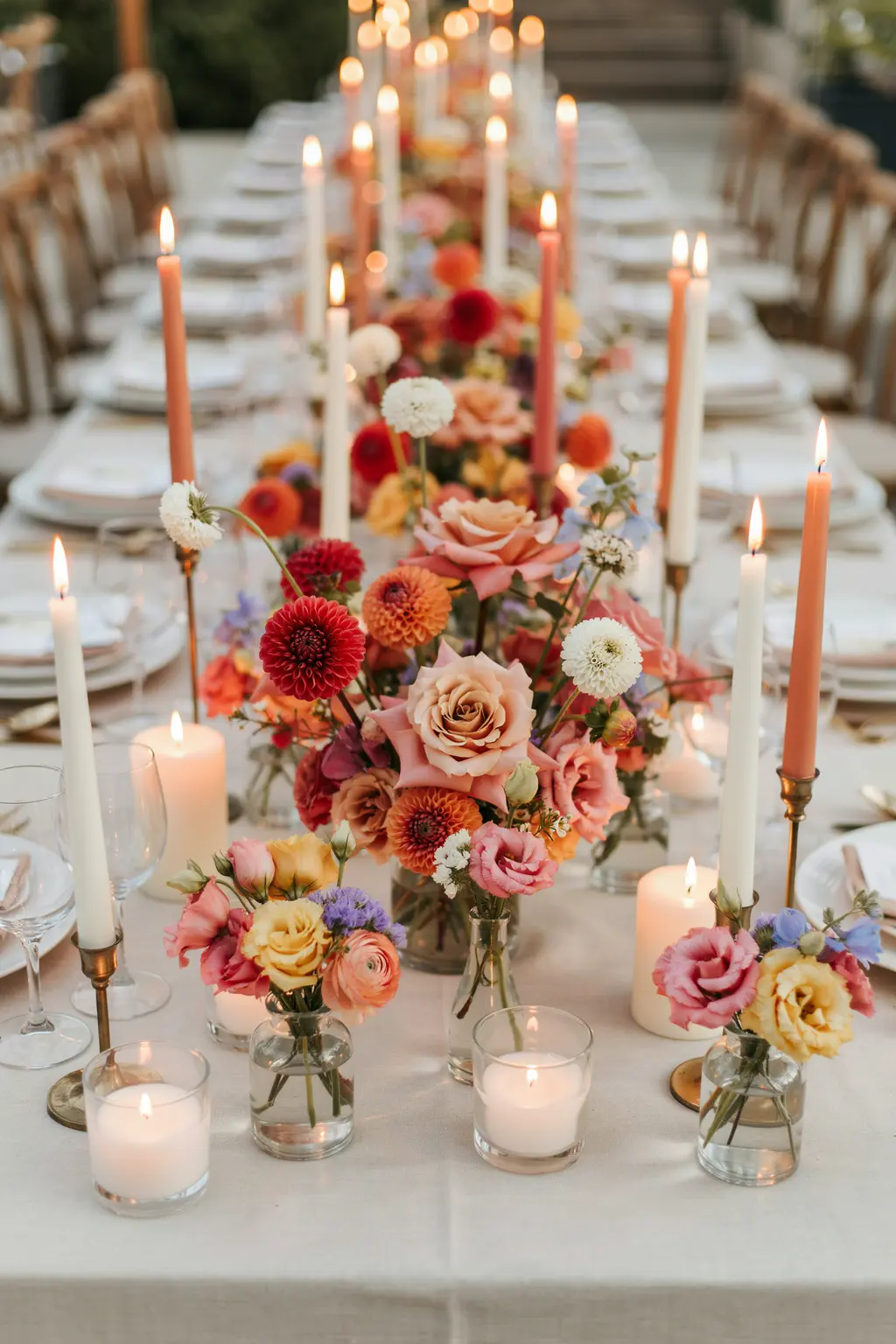
Swap the focal flower. A disbud mum does the round, dense job of a garden rose for a fraction of the price. Nobody at a wedding identifies a chrysanthemum. They see a big pale bloom and file it as a rose.
Swap volume for texture. Twenty stems of amaranth and grasses fill more space than twenty roses, for less.
Move the money forward. One generous bouquet beats mediocre flowers spread thin over every surface. Bud vases are the cheapest way to make a long table look planted rather than decorated: clear glass bud vases in bulk run $28 to $45 for two dozen, and three or four per table is the entire look.
Buy branches. Oak with the leaves turned, viburnum berry, rose hips, sometimes free from a neighbor’s yard for the asking. One four-foot branch does the work of fifteen stems and gives you height at a price nothing else touches. (Ask the day before, not the week before. Branches cut early drop their leaves on the way to the venue.)
Then reuse the ceremony flowers. Two aisle arrangements become the sweetheart table and the bar.
For the same math in the opposite season, how the spring flower budget breaks down covers volume per dollar. For the meadowy end of this palette, the wildflower approach for 2026 uses the same stems in a looser shape.
What Goes Wrong Between the Order and the Aisle
Six failures, in the order they turn up.
The frost took the field and nobody called. A grower’s dahlias ended two weeks ago and the email never went out. Fix: put the ten-day confirmation call on your calendar, not hers.
Flowers arrive closed and stay closed. Roses and lisianthus ship tight and need a couple of days somewhere warm. Fix: schedule delivery for Wednesday, never Friday.
The bouquet is heavier than expected. A full autumn bouquet with woody stems weighs about as much as a cat, and she’s holding it one-handed while the other hand holds a dress. Fix: ask for short stems below the binding point.
Foam pieces dry out before dinner ends. Foam holds a fixed amount of water and a warm tent pulls it out fast. Fix: water every piece again during the reception flip.
The color is right on screen and wrong in the room. Burgundy dahlias go nearly black under warm string lights, so the arrangement you loved at noon is a dark smudge by dinner. Fix: look at your sample at night, under the lighting you’re renting.
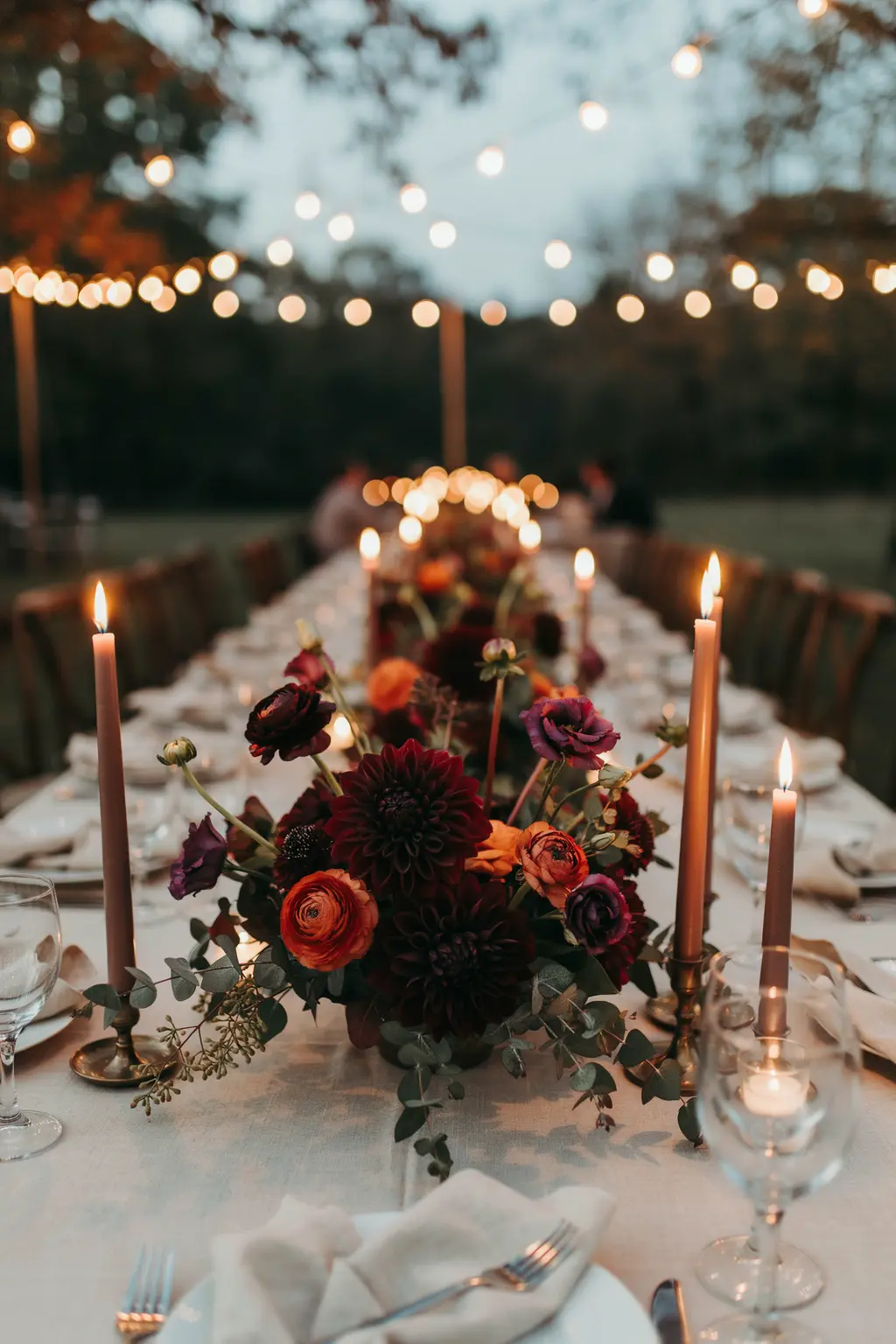
Half the order is the same texture. Twelve round flowers look like a supermarket bunch no matter what they cost. Fix: one third round, one third spiky, one third trailing.
Round flowers are what everybody reaches for first, and a bucket of them looks generous until it’s arranged.
If You Want to Push It Further
Change one element at a time, in the evening light you’ll actually have.
Push the color darker by one step. Swap burgundy dahlias for the near-black ones, Karma Choc or Rip City, in the bridal bouquet only. Everything else in the palette suddenly looks chosen rather than collected.
Add one seed pod or piece of fruit. Crabapple branches, small pears wired onto picks, poppy pods, dried cotton. Two or three per arrangement is the detail guests lean in and ask about.
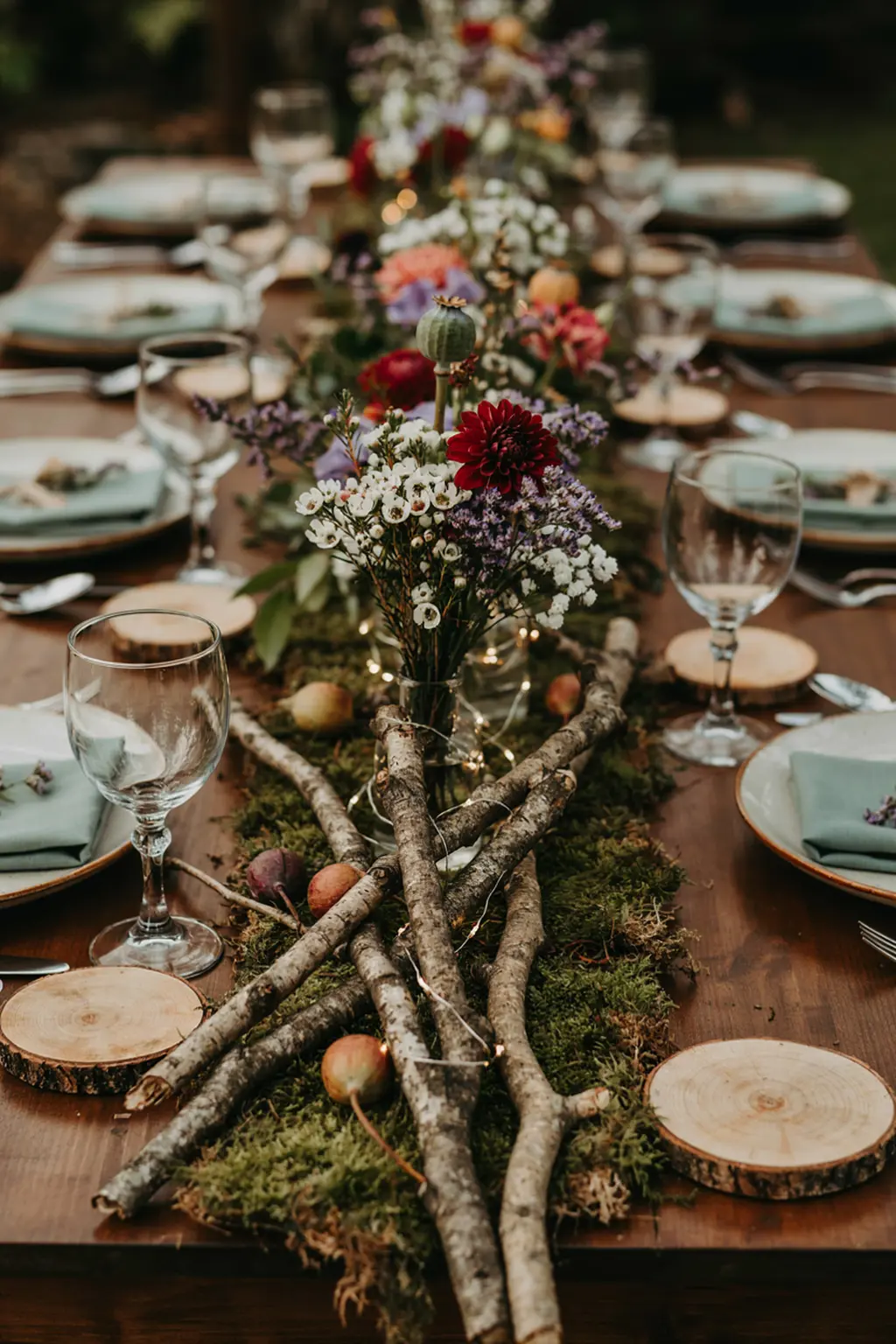
Let one thing trail past the edge. A long stem of hanging amaranth breaking the outline keeps a bouquet from looking like a shape. There’s no correct length for it, so cut it longer than feels right and take it back an inch at a time.
Frequently Asked Questions
What flowers are in season for an October wedding?
Before the first frost: dahlias, zinnias, celosia, amaranth, marigolds, cosmos, asters and lisianthus, plus berry branches and turned foliage. After frost: chrysanthemums, alstroemeria, carnations and roses.
How many stems do I need for a bridal bouquet?
Between 25 and 35 for the bouquet most brides have in mind. Bridesmaid bouquets are about half that handful each.
Are peonies available for a fall wedding?
Yes, from Chile and New Zealand, late October through December, at roughly triple the June price. I’d use three real ones and cafe au lait dahlias everywhere else.
When should I order fall wedding flowers?
Book the florist 8 to 12 months out for an October Saturday, place imported orders two months out, buy dried material six weeks out, final counts three weeks out.
Will my bouquet survive from a 3 p.m. ceremony to an 11 p.m. reception?
It depends what’s in it. Mums, celosia, carnations and berries go the whole night without water. A dahlia-heavy bouquet goes back in a vase the minute photographs are done.
Can I mix dried and fresh flowers in one bouquet?
Yes, and mostly fresh with about a third dried is the mix I’d tie. All-dried goes matte in photographs and sheds on a dark dress.
Can I buy fall wedding flowers at a farmers market?
For a small wedding, yes. Nine buckets of mixed stems from a grower outside town covers bud vases down a long table and two arrangements at the bar. Past about 80 guests I’d hand it to a florist.
What greenery works best for a fall wedding?
Seeded eucalyptus, olive, Italian ruscus, magnolia with the copper reverse showing, oak with the leaves turned. All last all night out of water, at a fraction of what blooms cost.
Shop the Look
- Dried bunny tail grass and preserved eucalyptus, the part of the order you can buy in July
- Green waterproof floral tape, so a hand-tied bouquet survives being hugged
- Floral water tubes with caps for anything wired into an arch or garland
- Japanese bypass floral shears for cuts that don’t crush a hollow stem
- Clear glass bud vases in bulk to spread three stems the length of a table
Prices move, so check the listings before you order.
Order the Greenery First
Fall wedding flowers come down to three questions: what’s blooming that week, what it costs, and whether it’s still standing at eleven at night.
If you do one thing this week, price greenery before flowers. It’s more than half the visual volume in most autumn arrangements, it lasts all night, and it costs a fraction of what blooms do. The flower budget is whatever’s left, and it goes further than you’d think.
For the rest of the fall look, start at the complete fall wedding decor guide.