Fall Outdoor Wedding Ideas for Weather You Can’t Control
This post contains affiliate links, which means I may earn a small commission if you buy something through them, at no extra cost to you.
A fall outdoor wedding at five in the afternoon in late October puts you in low gold light, with the turned trees behind the chairs lit from the side. The same hour in early November happens after sunset, in the cold, under whatever you rented. Same season, same line on the invitation, an hour and a half of daylight apart.
This guide covers the weather and site side only: light, cold, heaters, tents, a rain plan with a deadline, wind and ground. Guest counts and yard logistics belong to planning a small backyard wedding without losing your mind; styling belongs to how the whole fall look comes together.
Times and lows below are rough US averages near 40 degrees latitude, so look up your own town.
Quick Answer
Start the ceremony a little over two hours before sunset and the portraits land in golden light. Count on one propane patio heater per six to eight standing guests, and put a basket of throws at the ceremony entrance, not at the reception where people are already cold. Set your rain deadline at 10 a.m. two days out, because most tent companies need 72 hours’ notice.
A Fall Outdoor Wedding Loses Ninety Minutes of Light Between Labor Day and Halloween
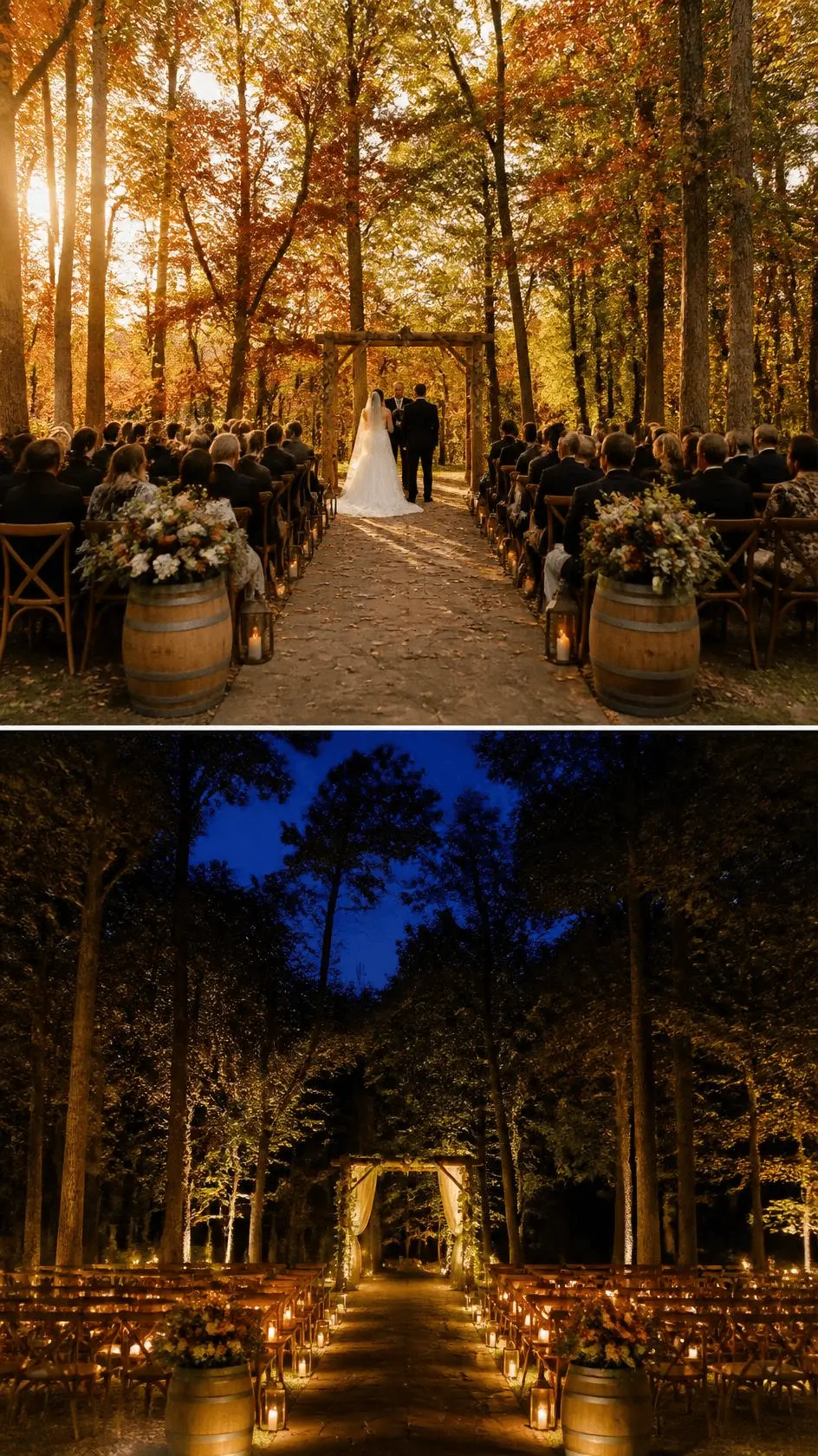
Your ceremony time is a light decision before it is a social one. Sunset slides an hour and a half earlier between the first weekend of September and the last of October, and then the clocks go back at the start of November and take another hour off overnight.
Golden hour is the last hour before sunset, and family formals eat half an hour on their own, so the ceremony has to be over well before the good light starts. Work backward from sunset and give yourself two and a quarter hours.
What that buys is the version everyone is actually picturing. The sun comes through the leaves instead of down onto them, one side of the aisle goes gold, and the treeline behind your guests turns the color of the light. Push the same ceremony an hour later and you get flash photography against a black field.
| Date | Light gone by | Average low after dark |
|---|---|---|
| Sept 5 | half past seven | upper 50s |
| Sept 20 | just after seven | low 50s |
| Oct 5 | half past six | upper 40s |
| Oct 20 | quarter past six | low 40s |
| Oct 31 | just after six | upper 30s |
| Nov 7, clocks back | just before five | mid 30s |
| Nov 21 | quarter to five | low 30s |
A mid-afternoon ceremony in November looks wrong on an invitation, and it is the only version where anyone sees your dress in daylight. Don’t be afraid to start earlier than feels social. The cocktail hour stretches to fill the gap, and guests take a longer party as generosity.
(Look your own date up in the sunrise and sunset tables at timeanddate.com rather than trusting any table, mine included. Two weeks either side of a row moves things more than you’d guess.)
Guests Feel the 9 p.m. Temperature, Not the Forecast High
On a clear October night the air drops fifteen degrees or so between sunset and the toasts. Guests who dressed for a warm afternoon are sitting in the low forties by the time anyone raises a glass, and a cloudless sky makes it worse, because cloud cover is what holds the day’s heat in.
The line I plan a fall outdoor wedding against: below 60, seated guests start shifting in their chairs within the hour. Below 50, they leave right after dinner.
(That is the number I’d watch, not the one on the forecast app. A pleasant six o’clock turns into a cold half past nine, and borrowed suit jackets are what fills the gap.)
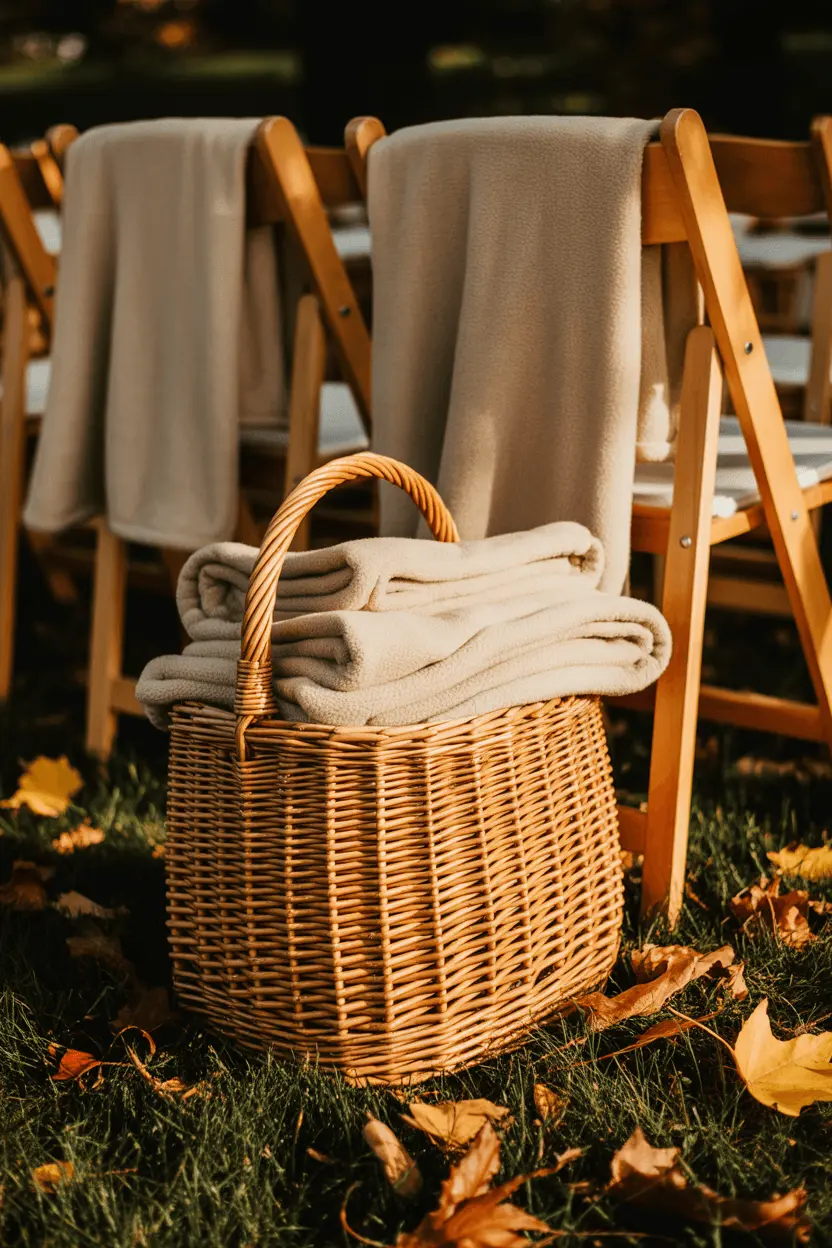
The fix that earns its cost is blankets, in a basket at the ceremony entrance rather than at the reception. Do it in one color and it stops looking like an apology: a stack of grey wool at the end of a row of wooden chairs before anyone sits down, then the same grey over half the shoulders in every photo of the vows.
Renting them costs more than owning them, so I buy. Plain fleece throws in one color come in bulk packs at roughly ten dollars each, and you want enough for about half the guest list at an evening ceremony.
After dark a cider urn beats a cold cocktail, and hand warmers matter most for the wedding party, outside for portraits an hour before anyone else.
There’s no correct temperature at which all of this becomes mandatory. If your low is mild and the ceremony is at four, a basket of throws and one heater by the bar is the whole plan.
Our Pick
Plain fleece throws in one color, bought rather than rented. They cost less than renting for a single night, they photograph as a set instead of a jumble, and the ones that walk home are the only favor anyone keeps.
One Patio Heater Covers Six to Eight Guests, and the Math Gets Expensive Fast
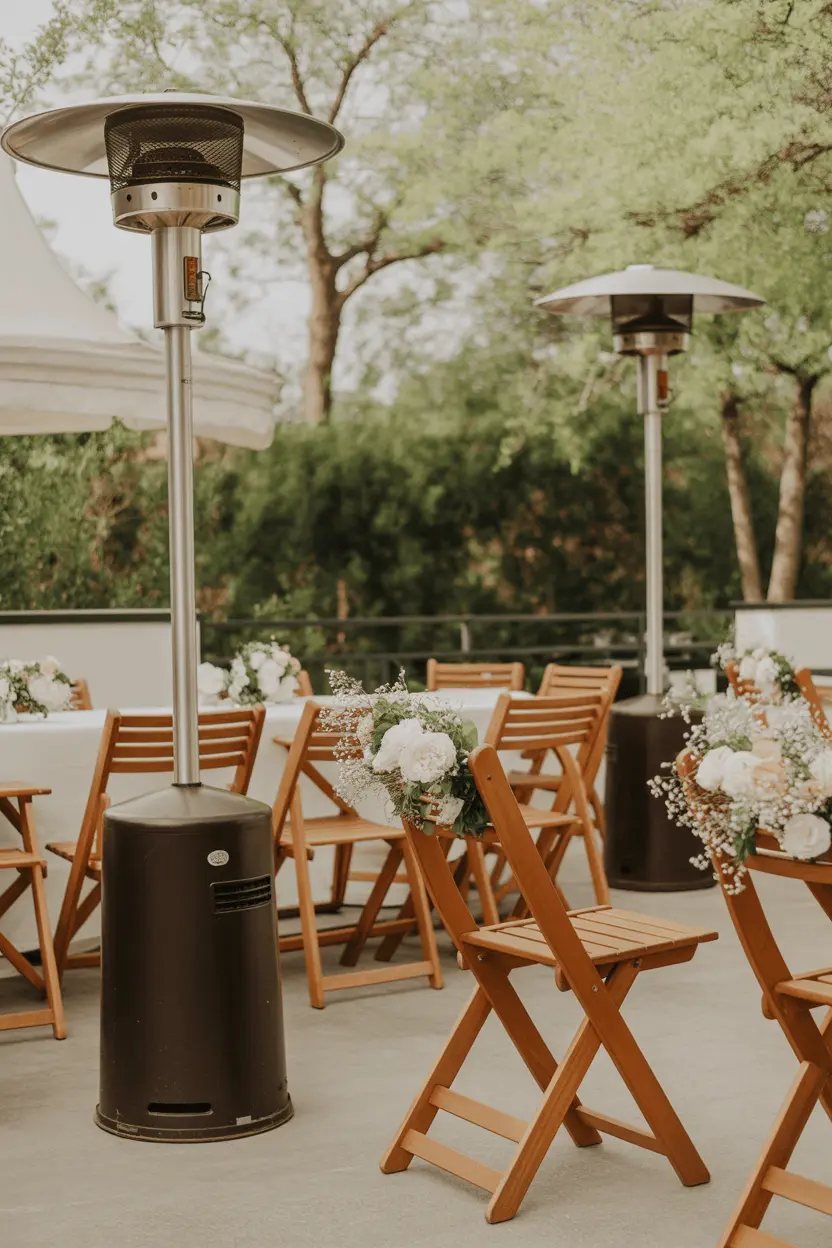
A standard mushroom patio heater warms a circle about fifteen feet across, which is six to eight standing guests. For a hundred guests on a lawn, honest coverage is a dozen or more, and almost nobody rents that many.
So stop heating the outdoors. Heat the places people stand still: the bar, the lounge, the edge of the dance floor, the path to the restrooms. Half a dozen there beat twelve scattered evenly, and they do decorative work while they’re at it, because a dark field with four warm columns of light in it looks like somewhere to walk toward.
Propane wins outdoors for one reason: no cords, no circuits, no generator to hide. Electric infrared makes sense under a tent with real power, and plenty of tent companies ban flame heaters under a low ceiling, so ask before you book.
For a smaller fall outdoor wedding in your own yard, buying beats renting the second time you use them. A propane mushroom heater runs $120 to $200 new, and two, one at the bar and one at the edge of the dancing, do more than four scattered across the grass.
Pro Tip
Order more propane than the rental company suggests. A tank runs around ten hours at full output, and heaters get turned to high early and left there. Two spare tanks is cheap insurance against the bar going cold at eleven.
A Tent Is a Building You Rent, and It Prices Like One
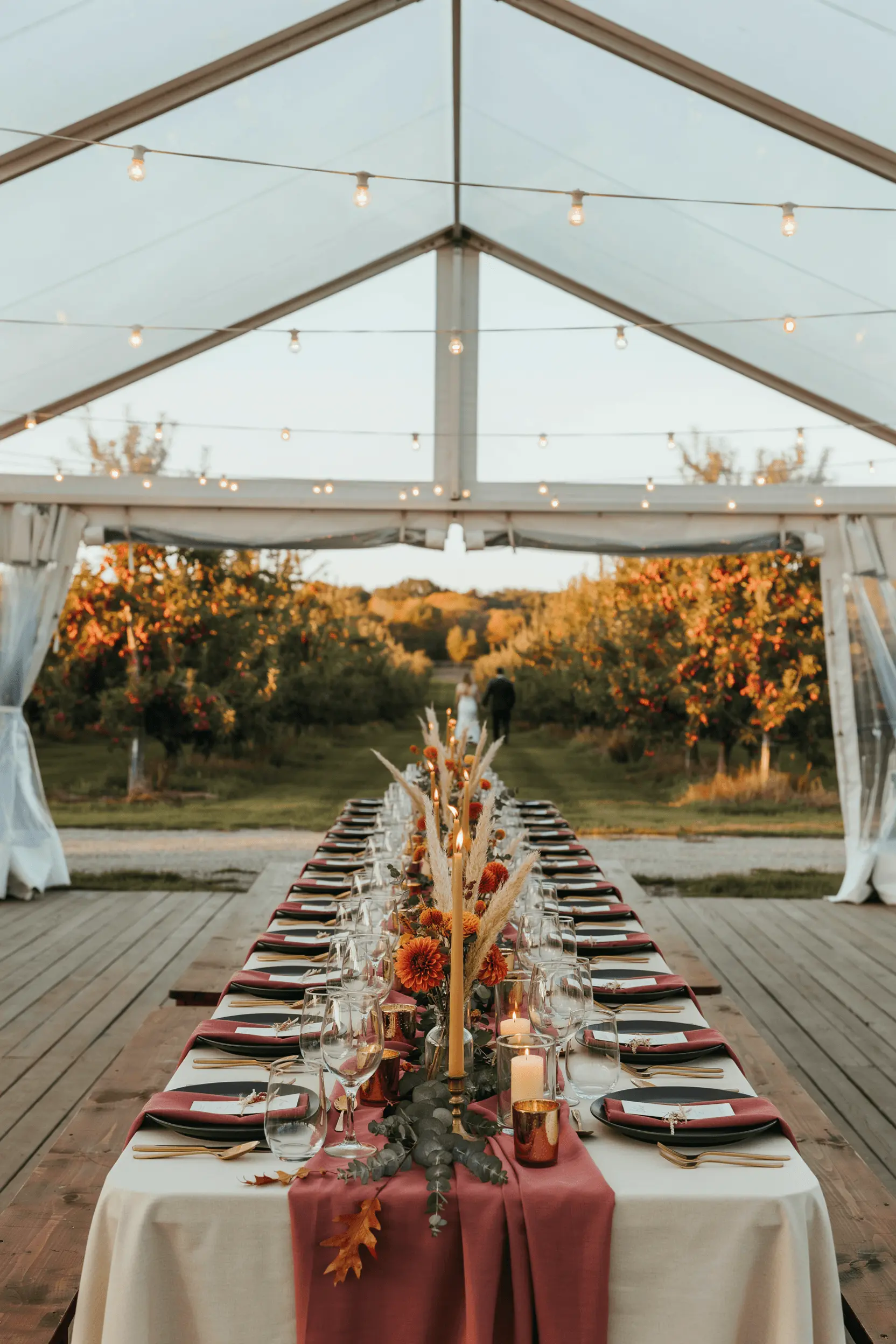
The tent is rarely the expensive part. Sidewalls, lighting and flooring are, and on a big footprint the floor alone can cost more than the canvas above it. Get two quotes, because the same size tent comes back hundreds of dollars apart in the same week, and the cheap one is usually the one with no walls.
Size it by function. A seated dinner with a dance floor wants twelve to fifteen square feet a guest, which is almost always a bigger tent than the one you first priced.
Open air is the cheapest and the best-looking, and it works into mid-October as long as there is a real backup within a short walk. Clear tops cost several times more and turn greenhouse by mid-afternoon.
The version worth picturing before you sign anything: sidewalls down, string lights on, candles running the length of the tables, a wool throw over the back of every other chair. That is a room, and people stay in a room. An open field at the same hour is where people say goodnight.
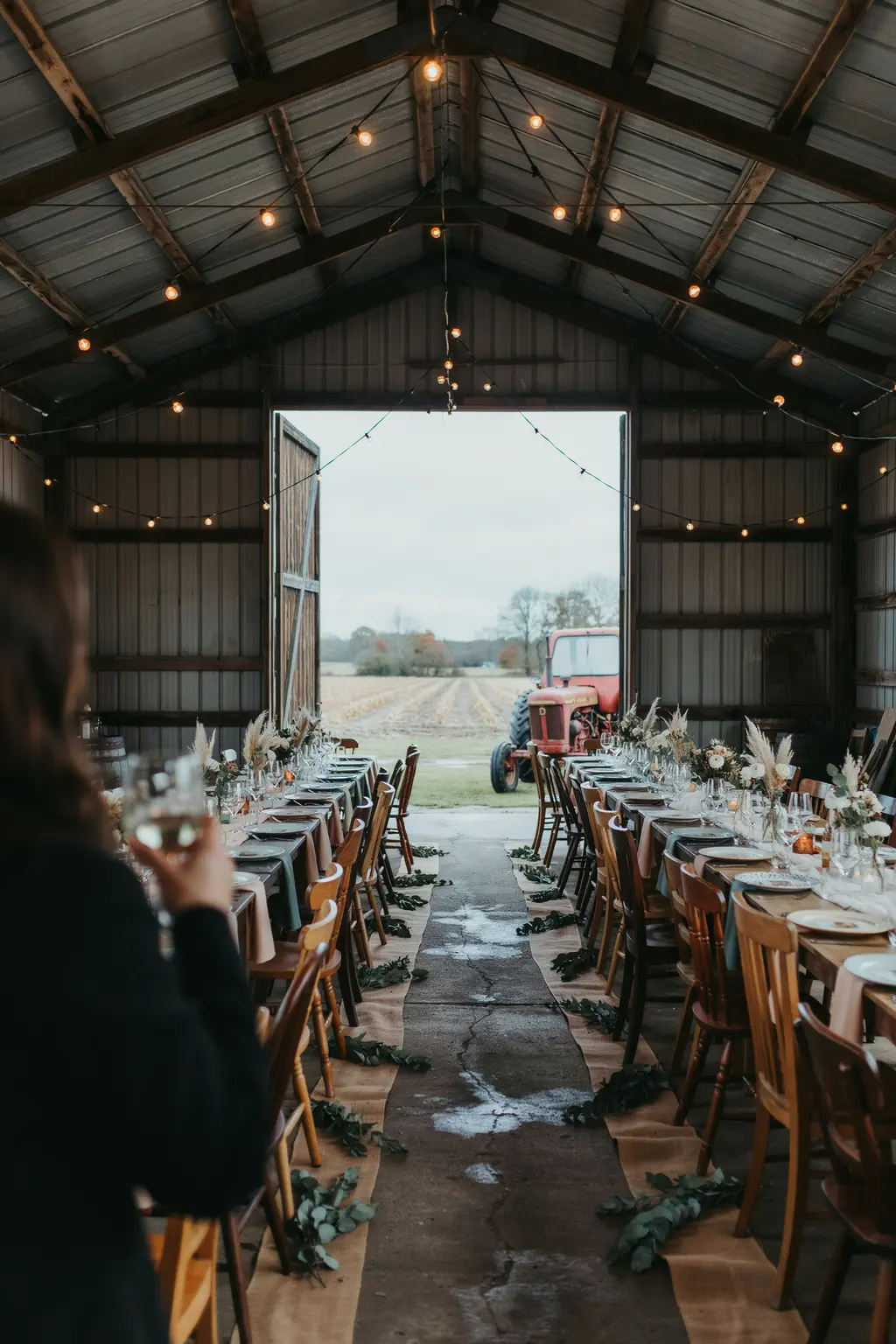
Feel free to skip the tent entirely if your site has a roof within a two-minute walk. My favorite version of a rain plan is a machine shed with the equipment pulled out and string lights run along the rafters.
Your Rain Plan Is a Place, a Time, and One Person’s Phone Number
Most fall outdoor wedding rain plans fail because they are a feeling rather than a document. Write down three things: where the ceremony moves, what hour the call gets made, and who makes it.
The hour belongs to the tent company. Most need 72 hours to add a tent to a fall Saturday, and a same-week tent carries a rush fee that can equal the tent. So the deadline is 10 a.m. two days out, which is also where the forecast turns trustworthy. Better than gambling on it: book a tent hold with a cancellation window and buy the option for a fraction of the price of the thing.
The person making the call should not be the couple. Hand it to your planner, your caterer, or one relentlessly practical friend, in writing.
(Ask your photographer what their own deadline is. Plenty of them have one written into the contract for the day before, and that is the hour the second light kit gets packed or doesn’t.)
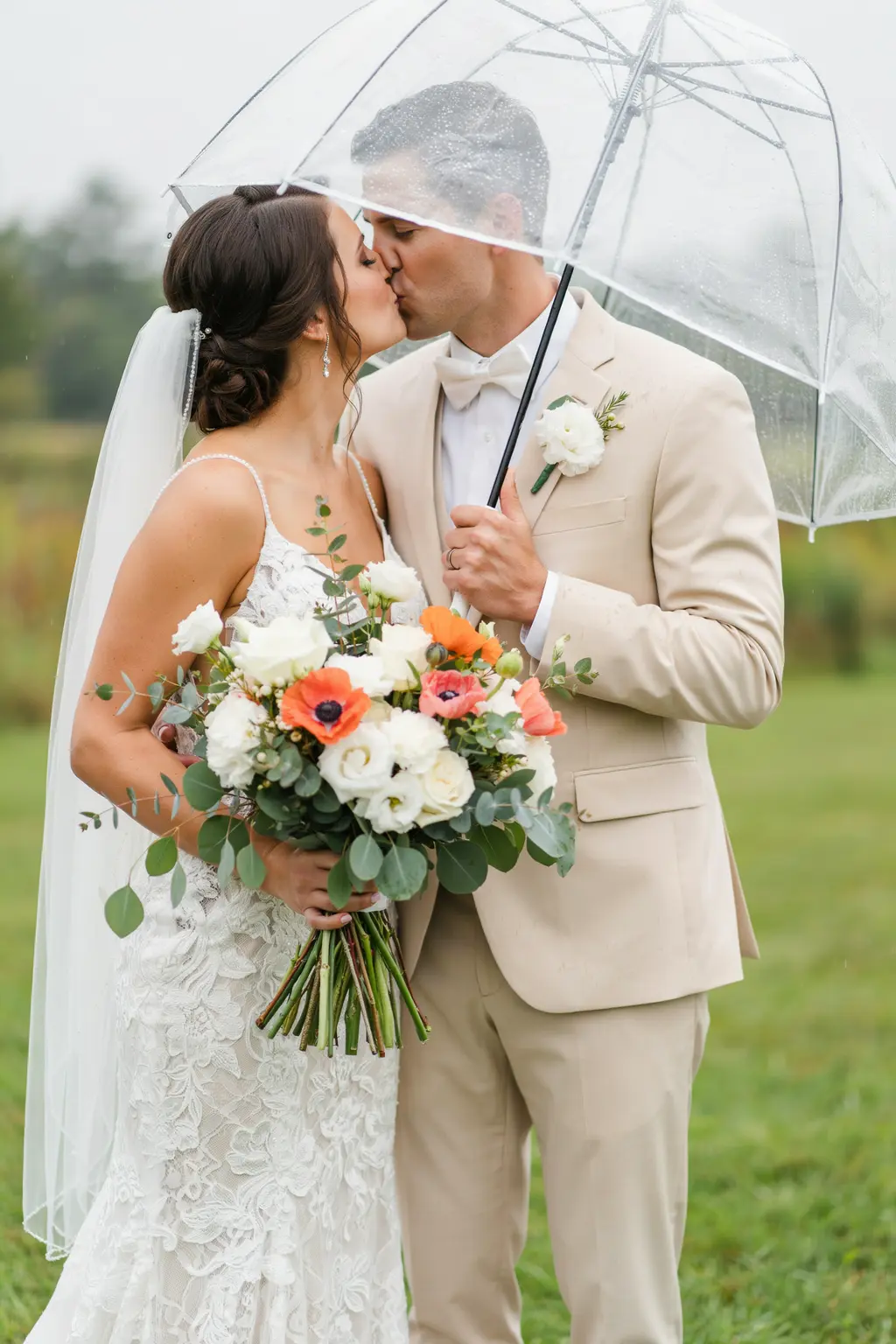
Rain itself is not the disaster version, as long as everyone is dry from the shoulders up. Matching umbrellas in a hundred hands look deliberate, and clear ones keep faces lit instead of shadowed. Clear bubble umbrellas run around twelve dollars each, and a dozen at the door covers the aisle party and the walk from parking.
Then rehearse the move once: where the chairs go, who carries them.
Wind Ends More Fall Outdoor Weddings Than Rain Does
Rain shows up a week out on a forecast. Wind arrives the morning of, and it takes out whatever you spent longest building.
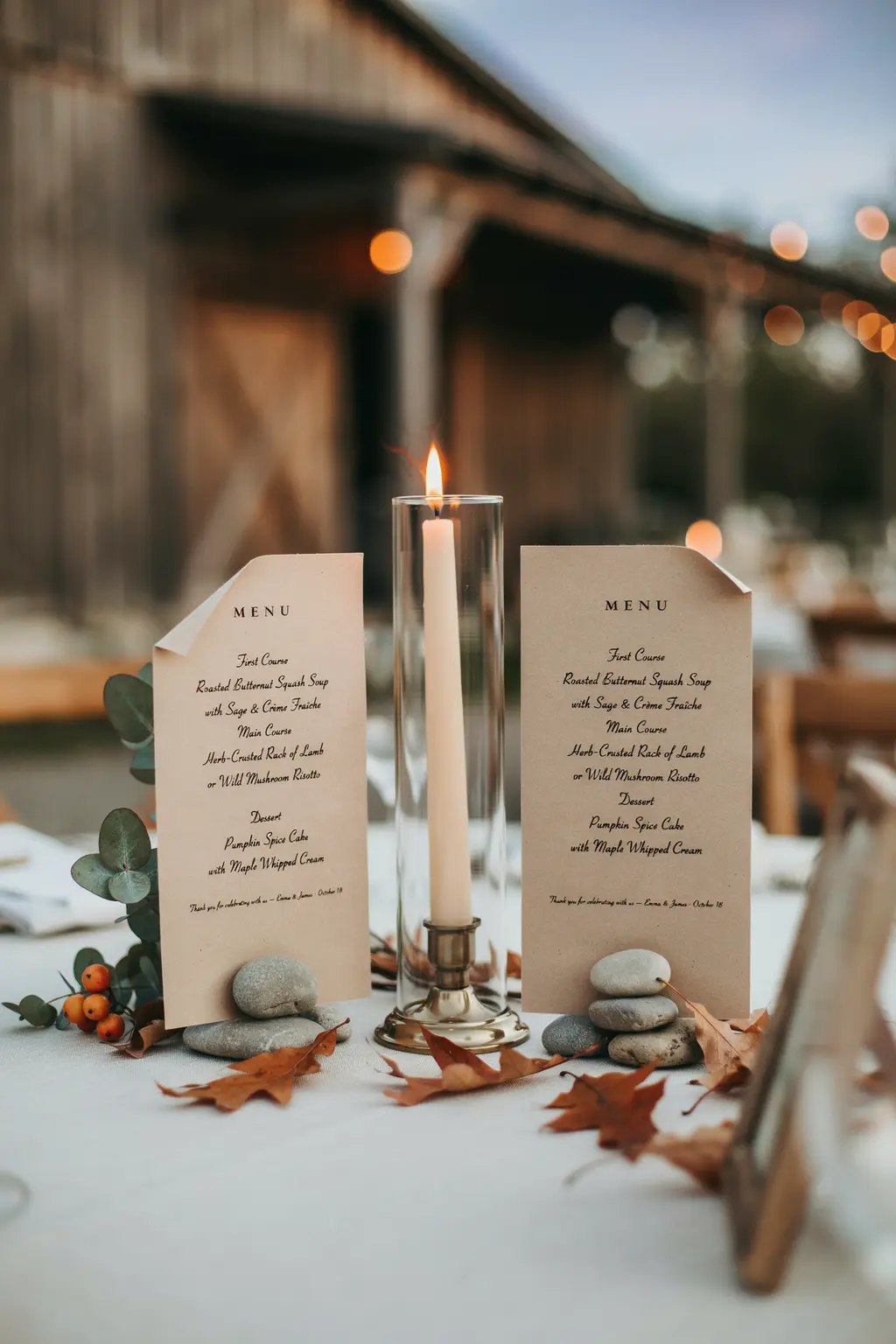
A light breeze lifts veils, programs and unweighted menus, so tape them down or set a stone on each. Once it is blowing steadily, taper candles are finished, aisle petals are finished, and an unweighted arch is a hazard. Anchor each leg with at least 40 pounds before a single stem goes on it. The frame itself is covered in the afternoon arch build.
Above that, sidewalls come down or go fully up, caterers stop lighting sterno, and a handheld mic picks up nothing but roar. Wireless lavaliers are the cheap save, and the vows are the one part of the day nobody can re-record.
One free fix: point the ceremony so the wind hits guests from behind and the couple from the side. Nobody squints, and nobody’s hair crosses their face in every photograph.
The Ground Decides Where Guests Actually Stand
Half an inch of rain in the two days beforehand turns mowed turf into something heels sink into, even if Saturday itself is dry and bright.
(I’d trust your own heels over any drainage promise a venue makes. Sink in the corner where sixty chairs are meant to go, and the chairs move uphill.)
Walk the site in the actual shoes. Keep the slope gentle under anything with a dance floor, because a tent on uneven ground turns into a flooring bill.
Heel protectors are the highest thank-you-per-dollar item on this page. Heel stoppers in assorted sizes cost a dollar or two a pair, and a basket of them at the top of the aisle covers a whole guest list for less than a centerpiece.
Plywood or track matting handles the path from parking, usually the only stretch that needs it. Skip the fabric aisle runner on grass. It bunches, it soaks, and it trips people in the ten seconds everyone is watching. Mow the aisle instead.
When It’s Dark by Dinner, the Reception Needs Its Own Light Source
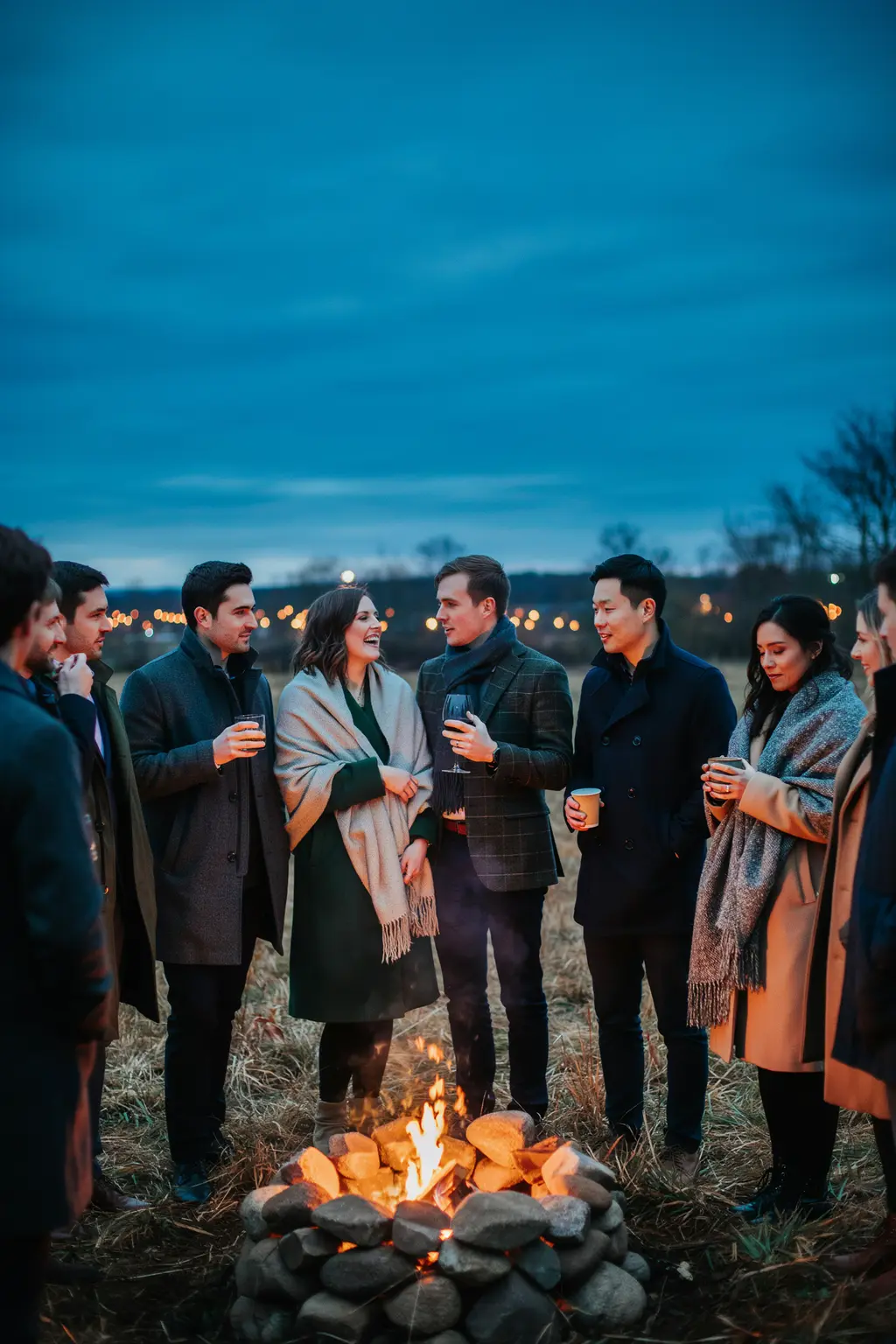
A November reception happens entirely after dark, so every photograph from dinner onward is lit by something you rented or bought. Aim lower and warmer than instinct says: dim by kitchen standards, generous by candlelight.
Warm string lights are most of that picture. Crossed overhead, they put a ceiling on an open field and hang like small suns in every wide shot, and under them the tables stop being furniture in the dark and become one lit room. Get the warm bulbs rather than the blue-white ones. Commercial-grade S14 string lights at 2700K run $25 to $45 a strand, and about six strands cover a tent that seats a hundred.
Light the path from parking too, since guests arrive in daylight and leave in the dark. Battery lanterns do it with no cord to bury.
Give your photographer one warm anchor to shoot against: a lit bar back, a cluster of candles at the sweetheart table, a fire pit with people standing around it in coats. The room-by-room version is in reception lighting that changes the whole room.
Six Fall Outdoor Wedding Weather Calls People Get Wrong
All six get made in the last three weeks, when everyone is tired.
Setting the ceremony time by the invitation instead of by sunset. A five o’clock October wedding sounds standard and leaves you no portrait light. Fix: work backward from sunset.
Planning to the forecast high. Guests experience the late evening number. Fix: budget comfort against the average low.
Renting more heaters instead of moving them. A dozen spread evenly heat nobody. Fix: half that many where people stand still.
Making the rain call the morning of. By then the tent is on a truck somewhere else. Fix: 10 a.m., two days out, in writing.
Assuming a clear sky is the good outcome. Clear nights lose heat fastest, and a flawless forecast is what puts an open field in the thirties by the toasts. Fix: buy heat against the low.
Buying the aisle runner. It bunches on wet grass and it is still on every September board. No fix I trust.
Your Rain Plan, One Variable at a Time
Once the tent is held and the time is set, change one thing at a time.
Move the ceremony half an hour. The cheapest variable you own. Earlier in late October buys better portrait light and a warmer aisle for one line on the invitation.
Shrink the outdoor footprint instead of heating it. Cocktails outside, dinner under cover. Halves the heater count and costs nothing that shows up in photographs.
Add one covered edge. A pop-up over the bar keeps the busiest square footage dry without a full tent.
Re-walk the ground after the next rain. If you sink, you have your answer without a forecast.
Move the deadline, not the plan. If the venue owns the backup space and no tent is involved, your decision hour slides to the morning of, and that flexibility is worth real money.
Frequently Asked Questions
What time should a fall outdoor wedding ceremony start?
Take your date’s sunset and subtract two and a quarter hours. That fits the ceremony, the formals and the portraits inside golden light. Mid-October lands around four, and after the clocks change it lands in early afternoon, which feels wrong and photographs beautifully.
How cold is too cold for an outdoor wedding?
Below 60 degrees, seated guests get restless inside an hour. Below 50, they leave after dinner. I’d plan against the late evening number, because a cold reception empties a dance floor faster than a bad playlist.
How many patio heaters do I need for 100 guests?
A dozen or more for even coverage, which nobody rents. Six at the bar, the lounge, the dance floor edge and the restroom path works better for half the money.
Do I need a tent for a fall wedding?
Not if you have covered space within a two-minute walk. A barn, a pavilion or a garage bay with the door up does the same job with no notice and no rush fee. Otherwise, hold a tent.
How much does a wedding tent cost?
Less than the sidewalls, lighting and flooring that go with it, which is the part people miss. Get two quotes and read what each one includes.
When do I have to make the rain call?
10 a.m. two days before, if a tent is involved, because most companies need 72 hours’ notice. If the backup is a building you already have, you can hold out until the morning of.
How do I keep guests warm at a fall outdoor wedding?
Blankets for about half the guest list, heaters where people stand still, hot cider instead of a cold cocktail. I buy the throws rather than renting, and I count on a few not coming back to the basket.
Will my heels sink into the grass?
If half an inch of rain fell in the previous two days, yes. Heel protectors cover the whole guest list for the price of a centerpiece, and matting handles the worst stretch.
Shop the Look
- Plain fleece throws in one color, enough for about half your guest list
- A propane mushroom heater or two, for the bar and the edge of the dancing
- Clear bubble umbrellas, a dozen by the door, so faces stay lit if it rains
- Heel stoppers in assorted sizes for the basket at the top of the aisle
- Commercial-grade S14 string lights at 2700K, about six strands for a tent that seats a hundred
Check current listings before buying, and confirm heater rules with your venue.
Book the Tent, Then Everything Else
A fall outdoor wedding comes down to three things: your date’s sunset, your date’s average low, and the hour you have to decide.
If you do one thing this week, get a tent quote with a hold and a cancellation window on it, even if you never use it. That deposit sets your rain deadline, which sets your ceremony time, which sets everything else.
Then look up your own sunset. It is almost always earlier than you guessed, and the day you are picturing (gold through the trees, blankets over the chairs, candles going on as the sky drops) is the one that starts earlier than feels normal.