Narrow Entryway Ideas That Open Up Small Spaces
Let’s be honest — narrow entryways are tricky little spaces. They’re often tight, awkward, and rarely get the design attention they deserve, even though they’re the very first thing you and your guests experience when entering your home. A poorly designed entryway can make the entire home feel smaller, darker, and more chaotic than it really is.
The good news is that narrow entryway ideas don’t require major renovations to work. With smart layout decisions, slim furniture, and a few visual tricks, even a small entryway or narrow hallway can feel open, intentional, and stylish. This guide focuses on small entryway ideas that create a big visual impact while keeping the space functional and clutter-free.
Small Entryway, Big Impact: Design Tricks That Open Up the Space
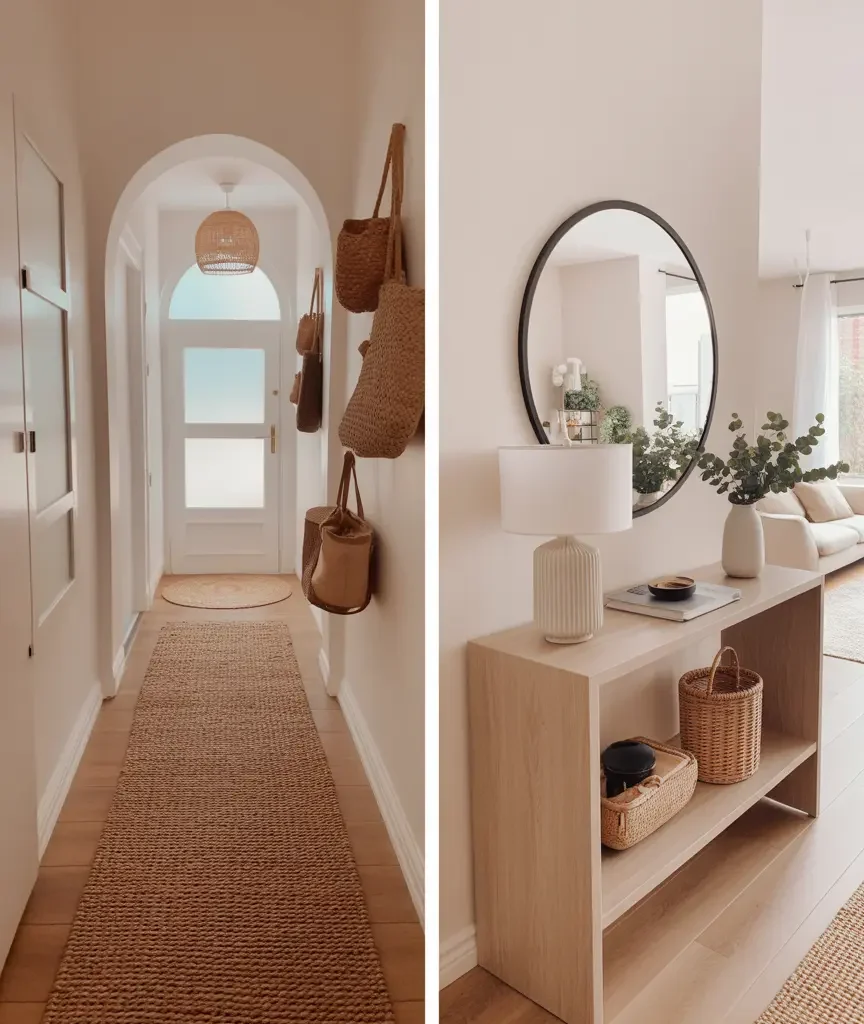
A narrow entryway should never be treated as an afterthought. Because it connects rooms and sets the tone for the rest of your home, its design directly affects how spacious and welcoming everything else feels. When done right, a small foyer can feel deliberate and elevated rather than cramped.
The key is to combine visual expansion techniques with practical solutions that support daily routines. These narrow hallway ideas focus on flow, proportion, and balance — not decoration for decoration’s sake.
1. Use Mirrors to Create Instant Depth and Light


Mirrors are one of the most effective narrow entryway ideas because they immediately change how the space is perceived. In a small entryway or narrow hallway, mirrors reflect light and visually double the width, helping to eliminate the tunnel-like feeling common in tight layouts. They are not just decorative accents, but essential tools in small space entryway design.
When placed strategically, mirrors can brighten dark corners, add depth, and make ceilings feel higher. This makes them especially valuable in small foyer ideas where natural light is limited.
How to Do It:
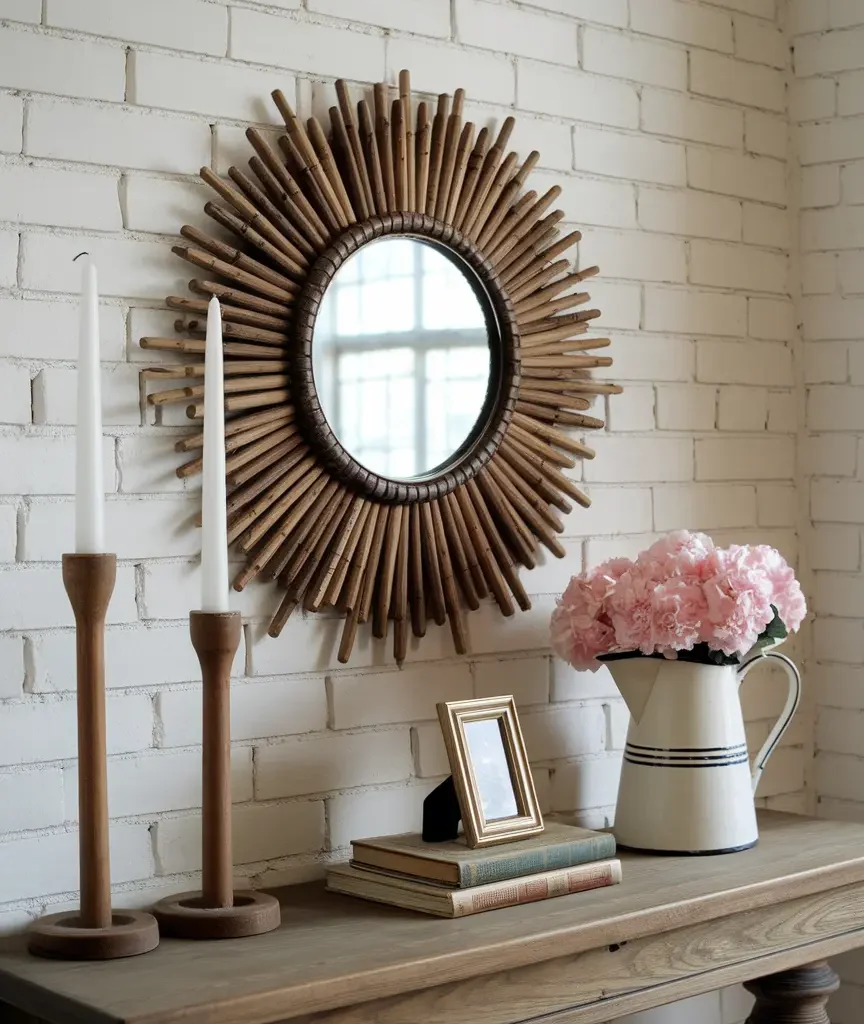
- Hang a large mirror horizontally to visually widen the hallway
- Use a tall vertical mirror to elongate the space
- Place mirrors opposite windows or light sources for maximum effect
Bonus Tip:
If your entryway includes stairs, adding a mirror near the landing opens up tight transitions and doubles as subtle staircase decor.
2. Choose Slim Entryway Furniture That Works Hard
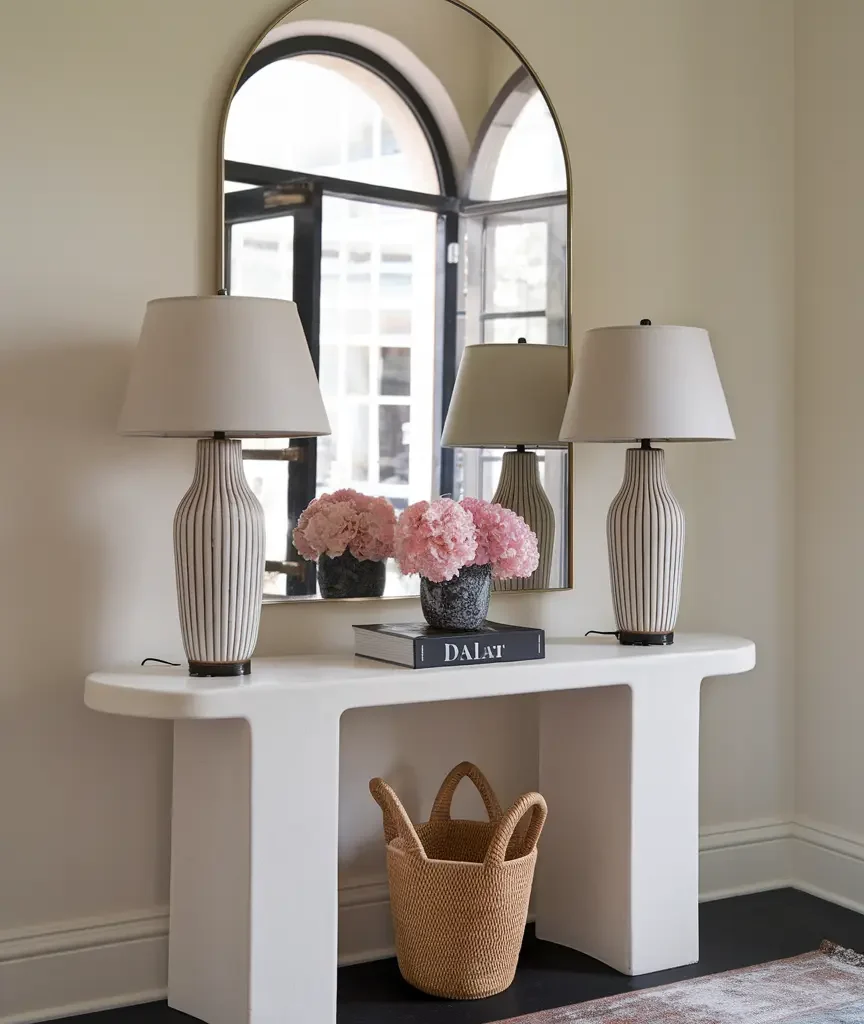
In narrow hallways, oversized furniture disrupts flow and instantly makes the space feel smaller. Slim entryway furniture allows you to maintain essential functions like storage and seating without overwhelming the layout. The goal is to support daily use while keeping the visual footprint light.
Furniture choices should prioritise proportion over trend. Narrow, leggy, or wall-mounted pieces help preserve walking space and make the floor feel more open — a critical element in small entryway decor.
What to Try:
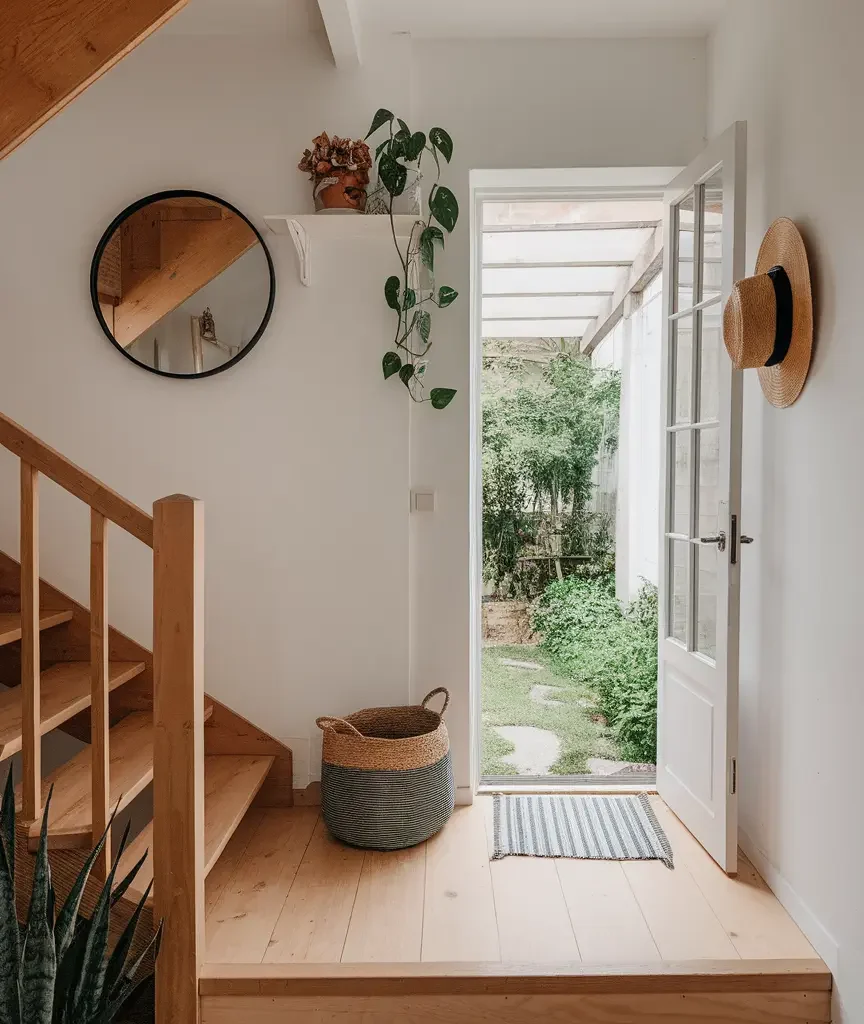
- Floating shelves instead of deep console tables
- Narrow benches with hidden storage underneath
- Furniture with visible legs to keep the space airy
Styling Tip:
Limit surface decor to two or three items to avoid visual clutter.
3. Layer Your Lighting for a More Spacious Feel
Lighting plays a crucial role in how large or small an entryway feels, yet it is often overlooked. A single overhead light creates harsh shadows and flattens the space, making narrow entryways feel even tighter. Layered lighting introduces depth, warmth, and dimension.
PRO TIP: By combining different light sources, you create a more welcoming atmosphere while visually expanding the hallway. This is especially important for entrance hall decor in homes with limited natural light.
How to Do It:

- Combine ceiling lights with wall sconces
- Add a small table lamp on a slim console or shelf
- Use LED strip lighting under floating furniture for subtle glow
Pro Tip:
Choose warm white bulbs (2700K–3000K) for a softer, more inviting feel.
4. Keep the Color Palette Light and Consistent
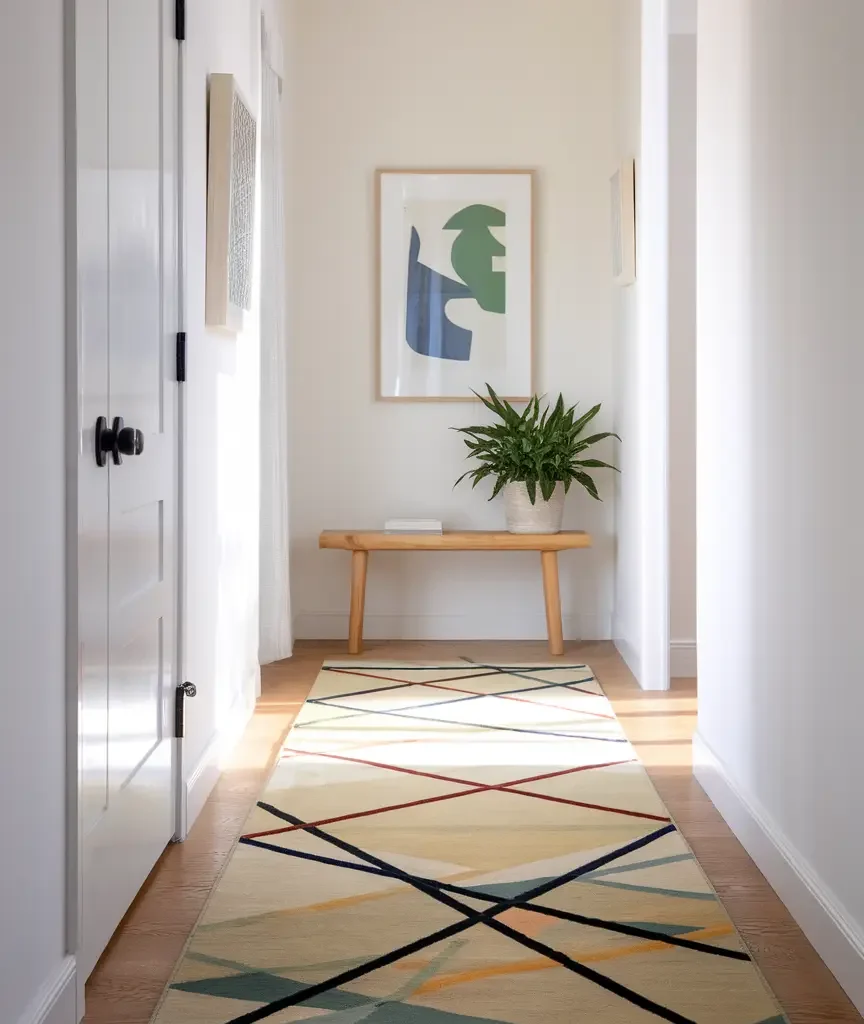
Color has a powerful effect on how a narrow entryway is experienced. Dark or contrasting colors can visually shrink a small space, while light, cohesive palettes help it feel more open and connected. For most small entryway ideas, simplicity works best.
A consistent color scheme reduces visual breaks and allows the eye to move smoothly through the space. This makes even a narrow hallway feel like part of a larger whole rather than a separate, cramped zone.
How to Choose:
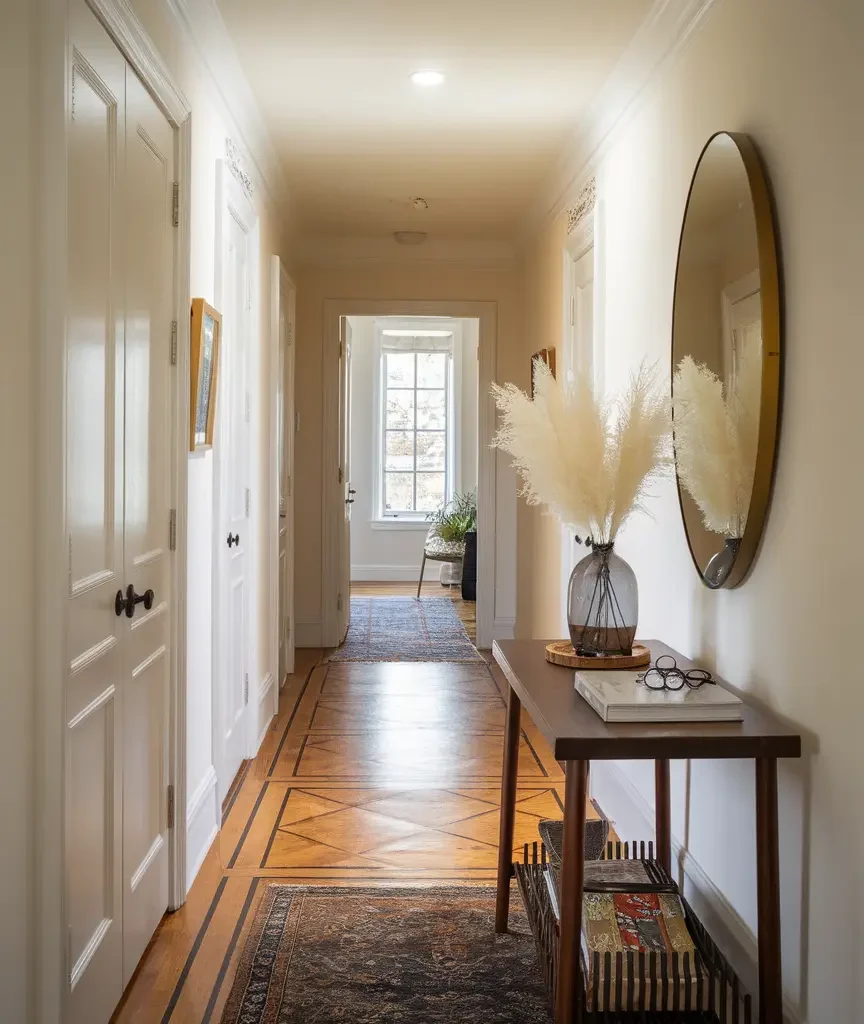
- Soft neutrals like warm white, greige, ivory, or pale taupe
- Tone-on-tone walls and trim for seamless flow
- Add depth through accessories instead of bold wall colors
5. Think Vertical: Use Walls for Storage and Style

When floor space is limited, vertical storage entryway solutions become essential. Using the walls effectively allows you to maintain function without cluttering the walkway. This approach is especially useful in apartment entryway ideas where square footage is minimal.
Vertical elements also draw the eye upward, helping narrow spaces feel taller and more balanced.
Smart Vertical Ideas:

- Wall hooks or peg rails for coats and bags
- Slim wall-mounted cabinets for everyday items
- Ladder-style shelving for decor and baskets
Styling Touch:
Pair vertical storage with tall mirrors or elongated artwork for visual harmony.
6. Use the Right Runner Rug to Stretch the Space

A rug might seem like a small detail, but in narrow hallway decor ideas, it plays a major role. The right runner visually elongates the space, adds warmth, and anchors the entryway as a defined zone. It also softens sound and makes the area feel more welcoming.
Choosing the wrong rug, however, can have the opposite effect — making the hallway feel chopped or cluttered.
How to Choose:

- Long, narrow runners that guide the eye forward
- Subtle stripes or linear patterns to enhance length
- Flatweave or low-pile rugs for easy movement
Designer Rule:
If it doesn’t serve a function or elevate the space, it doesn’t belong.
Common Mistakes That Make a Narrow Entryway Feel Even Smaller

One of the most frequent mistakes is overfurnishing. Bulky console tables, deep shoe cabinets, or oversized benches immediately block flow and make a narrow hallway feel cramped. In a small entryway, less furniture almost always results in a more spacious feel.
Another issue is ignoring lighting. Relying on a single overhead fixture creates shadows and flattens the space visually.
Other common narrow entryway mistakes to avoid:
- Using furniture that is too deep for the space
- Adding too many hooks, baskets, or wall accessories
- Choosing dark colors without sufficient lighting
- Placing decor on the floor instead of using vertical space
- Breaking visual flow with contrasting wall and trim colors
- Skipping a rug or using one that is too short or too wide
How to Choose Furniture by Entryway Width

Choosing the right furniture for a narrow entryway is less about style and more about proportions. Entryway width directly determines how much furniture you can safely and comfortably include without disrupting movement.
Understanding these basic width guidelines helps prevent costly mistakes and overcrowded layouts.
Entryways Under 80 cm (Very Narrow)
credit: Marina Trindade
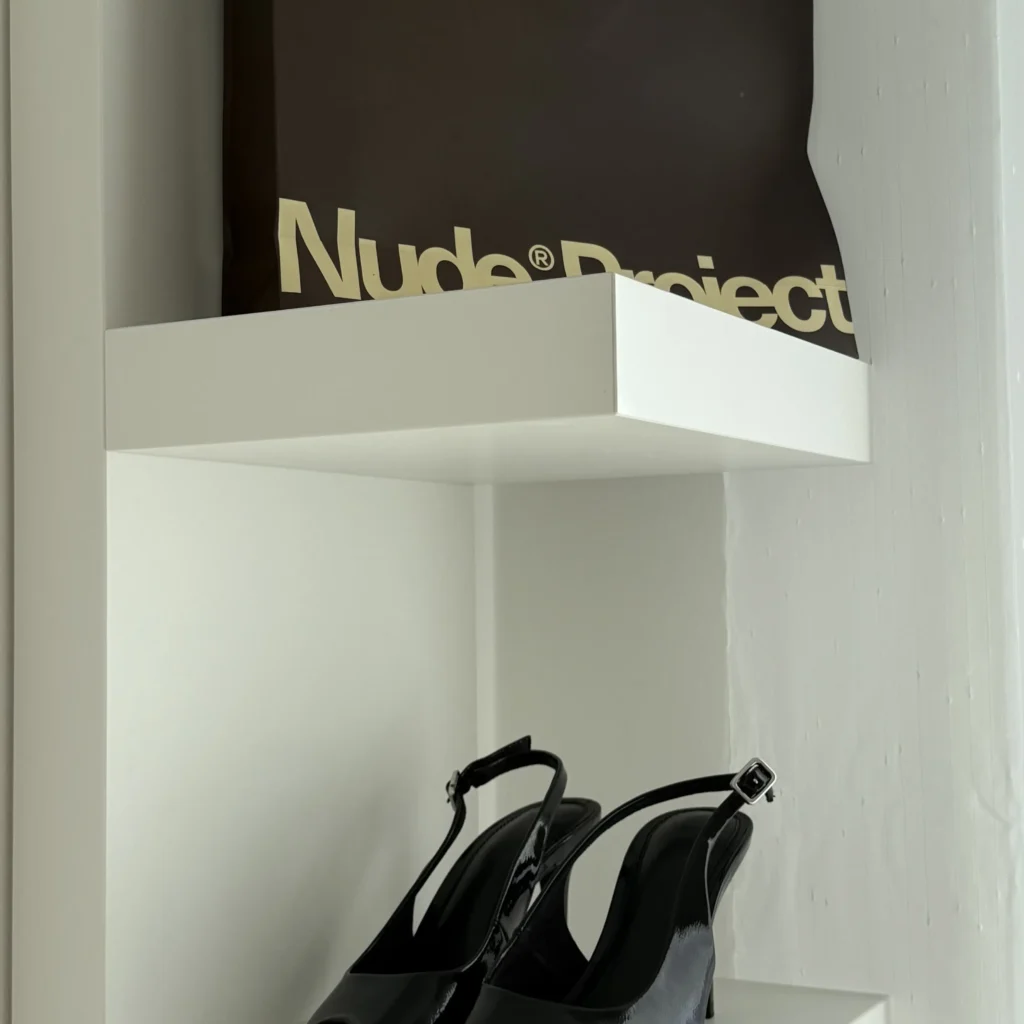
In very narrow entryways, floor furniture should be kept to an absolute minimum. Prioritise wall-mounted solutions and vertical storage to keep the walking path completely clear.
Best furniture choices:

credit: Yan Zhang
- Floating shelves or wall-mounted ledges
- Slim wall hooks or peg rails
- Tall mirrors with minimal frames
- Wall-mounted cabinets under 20 cm deep
PRO TIP: Avoid benches or consoles unless they are extremely shallow.
Entryways 80–100 cm (Narrow but Functional)

This is the most common narrow entryway width. Here, you can introduce one slim furniture piece while still maintaining comfortable movement.
Best furniture choices:
- Slim console tables (25–30 cm deep)
- Narrow benches with hidden storage
- Wall-mounted shoe storage
- Furniture with visible legs to keep the space open
PRO TIP: Keep decor minimal and surfaces mostly clear.
Entryways 100–120 cm (Small but Flexible)

At this width, you have more freedom while still needing to be mindful of scale. Furniture can be more functional, but should remain visually light.
Best furniture choices:
- Slim console tables with drawers
- Storage benches with seating
- Combination of floor furniture and vertical storage
- Larger mirrors or statement lighting
PRO TIP: This is the ideal range for balancing storage, seating, and styling without overcrowding the space.
General Rule for Narrow Entryway Furniture
No matter the width, always maintain a minimum clear walking path of 80–90 cm where possible. This ensures the entryway feels comfortable, functional, and easy to navigate.
When in doubt, choose furniture that:
- Is shallower rather than deeper
- Has legs instead of solid bases
- Can be wall-mounted or visually “float”
FAQ – Narrow Entryway Ideas
How can I instantly make my narrow entryway look wider?
Use mirrors—ideally full-length or wall-mounted—placed opposite light sources or at the end of the hallway. Mirrors reflect light and visually expand the space, making a narrow entryway feel much bigger
What should I put in a narrow entryway?
Stick to essentials only. A slim console or floating shelf for keys, wall hooks for coats, a mirror, and a narrow runner rug are usually enough to keep the space functional without clutter.
How do I decorate a narrow entryway without cluttering it?
Use minimal, purposeful decor. Choose one statement piece, limit accessories to two or three items, and prioritize vertical storage over floor furniture to keep the walkway clear.
How do I design a narrow entryway that feels intentional?
Start with layout and flow. Define a clear walking path, add lighting and mirrors first, then introduce slim furniture and vertical storage. Design should support daily habits, not just aesthetics.
What furniture works best in a narrow entryway?
Slim consoles, floating shelves, narrow benches with storage, and wall-mounted cabinets work best. Avoid bulky furniture that blocks movement or visually closes in the space.
How do I make a long narrow entryway feel less tunnel-like?
Break up the length visually. Use a runner rug, add wall sconces for rhythm, and repeat elements like mirrors or artwork to create balance and flow along the hallway.
What paint colors work best to open up a tight entryway?
Light, soft tones such as warm white, off-white, pale greige, or gentle pastels reflect light and make the space feel brighter and more open.
Should I use a runner rug in a narrow hallway?
Yes. A properly sized runner anchors the space and draws the eye forward. Subtle stripes or linear patterns can visually elongate the hallway.
How wide should an entryway be ideally?
Ideally, an entryway should be at least 36 inches (around 90 cm) wide for comfortable movement. Narrower entryways require slim furniture and vertical solutions to stay functional.
What’s the biggest mistake people make in narrow entryways?
Overfurnishing. Too much furniture, too many hooks, or excessive decor instantly makes a narrow entryway feel cramped and chaotic.
Final Thoughts: Small Space Entryway, Big Visual Impact
A narrow entryway may be small, but it has a powerful influence on how your home feels. With the right narrow entryway ideas, you can transform it into a space that feels open, organised, and intentionally designed.
By focusing on mirrors, lighting, slim furniture, and vertical solutions, you create an entryway that works hard without feeling crowded. Small changes, when done strategically, deliver the biggest results.
If you’re dealing with more than just a narrow entryway, these same space-expanding principles apply throughout your home. You might also find this helpful:
how to transform a narrow living room layout using smart design tricks that make small spaces feel bigger.