Citrus Decor: Beyond Lemons (Oranges, Limes, and Grapefruit Style Guide)
Citrus decor has become one of the most enduring home design themes — and for good reason. It’s flexible, affordable, and instantly cheerful.
But while lemons dominate Pinterest boards and interior mood boards alike, the broader citrus family opens up a far richer palette. Oranges bring warmth, limes offer modern freshness, grapefruits add a romantic blush, and blood oranges deliver sophisticated seasonality.
This complete guide walks you through each citrus type, how to use them by room, which combinations work best, and what to avoid.
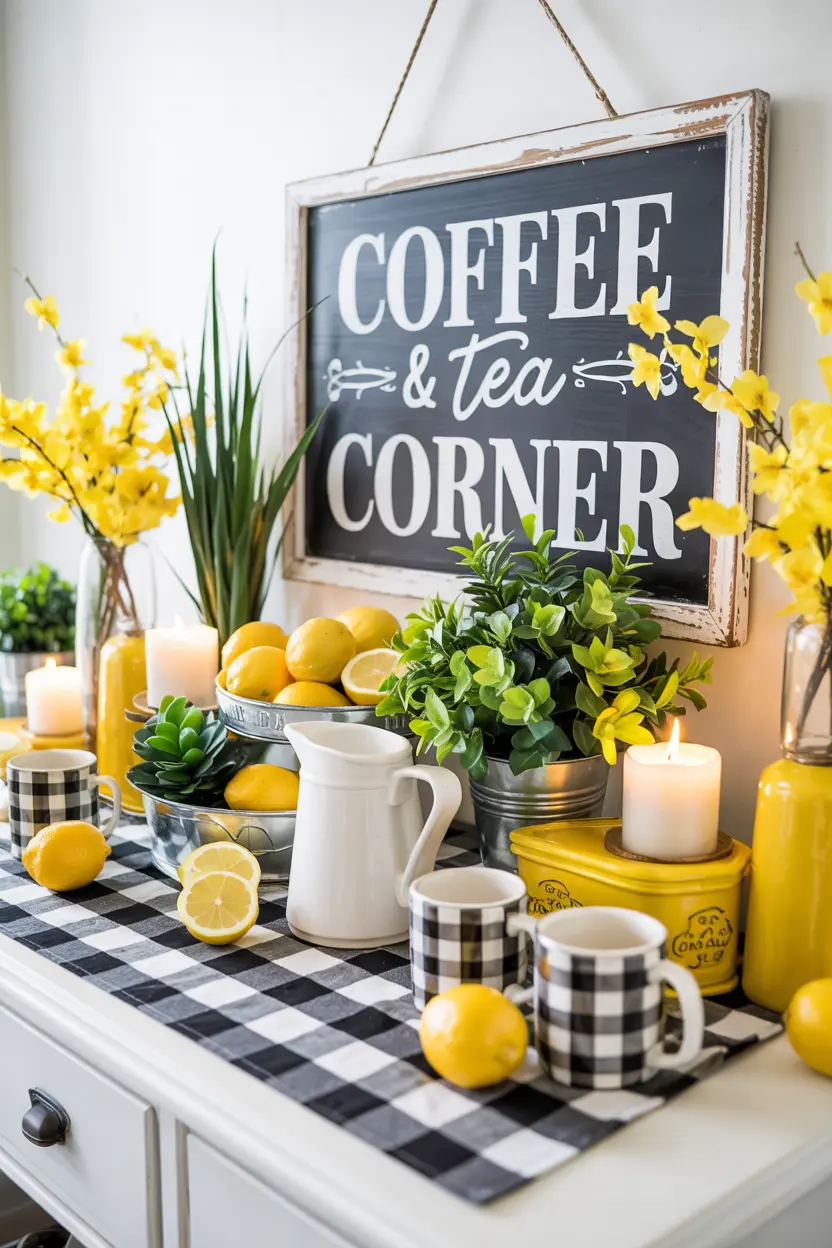
The 5 Citrus Types and Their Decor Personalities
Each citrus type carries a distinct visual mood. Understanding what each one communicates helps you make intentional choices rather than defaulting to whatever’s on hand. Here’s how the main citrus types read in a decor context.
Lemons (Yellow)
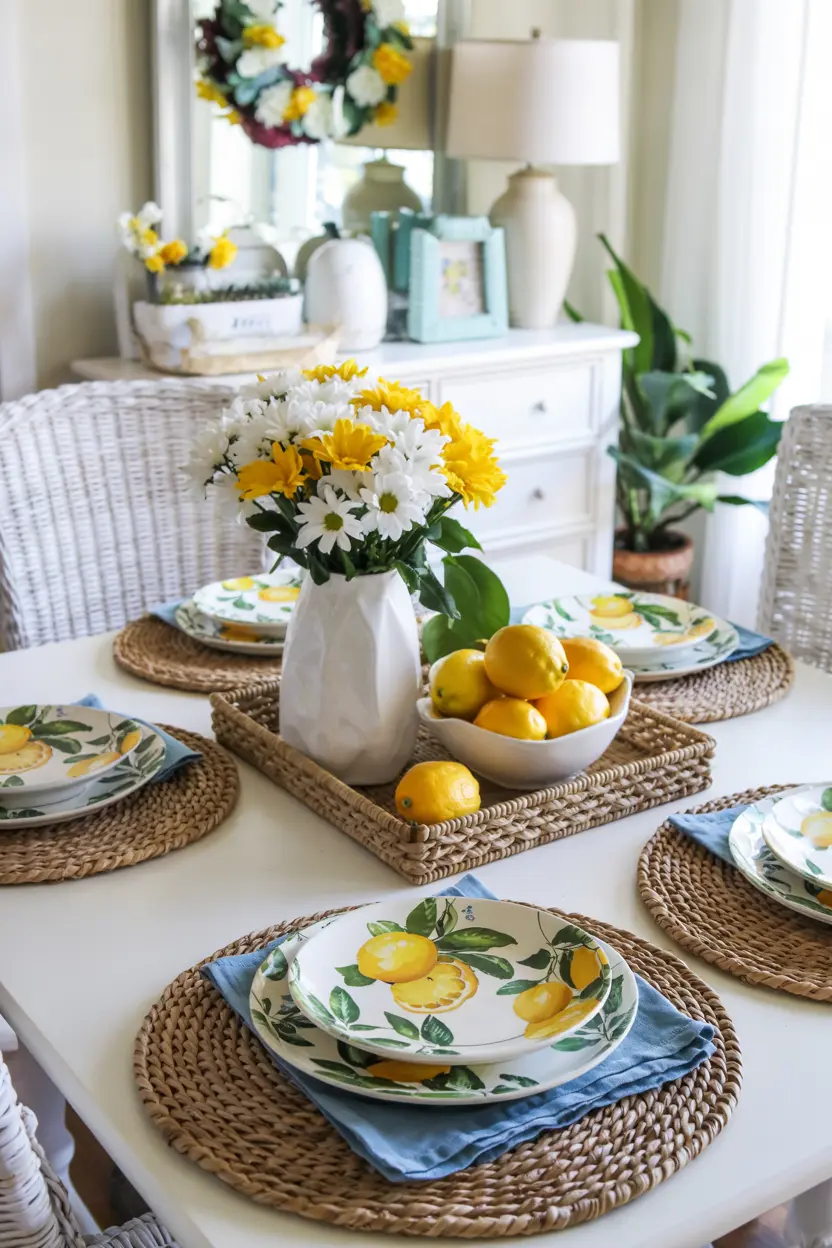
The most versatile citrus for decor. Lemons read Italian summer, Mediterranean freshness, and effortless femininity. They work in every season — brightest in spring and summer, but manageable with adjusted supporting colors in fall and winter.
Best in kitchens, dining rooms, bathrooms, and summer events. They pair beautifully with white, sage green, terracotta, navy, and brass.
Oranges
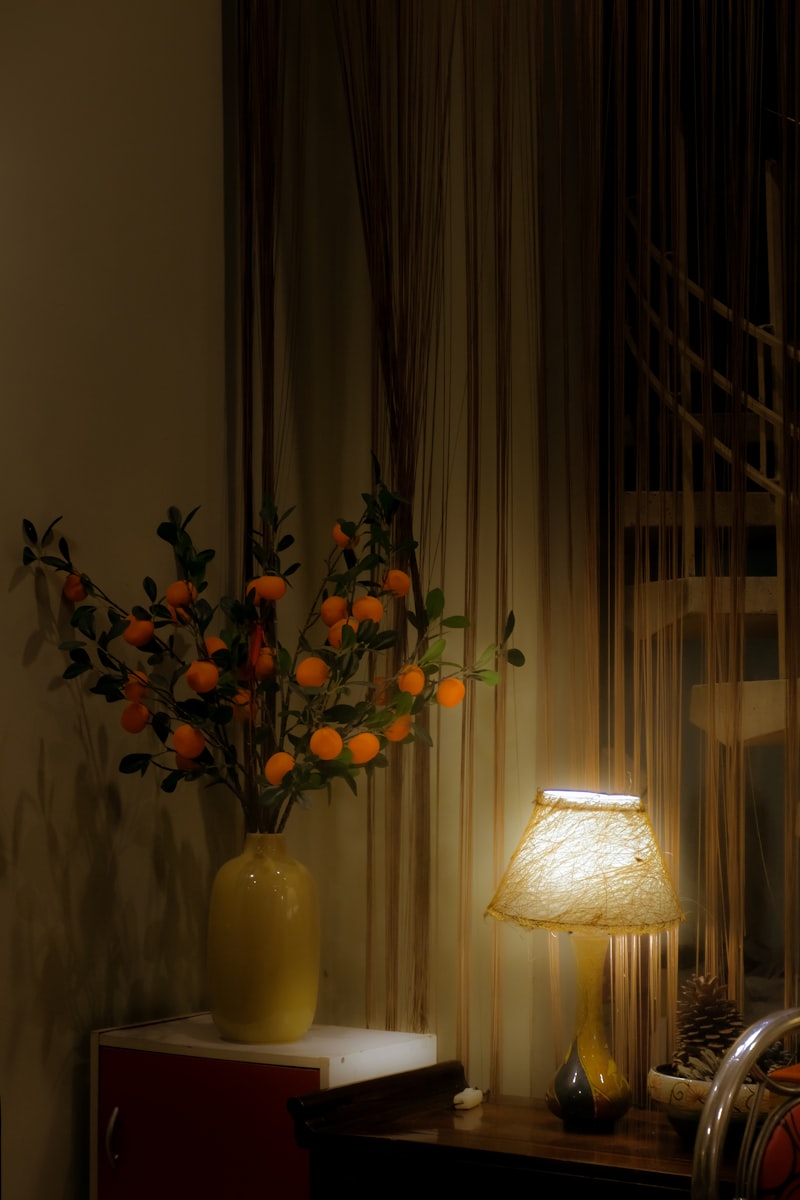
Oranges bring a warmer, deeper energy than lemons — think Spanish countryside, candlelit dinners, late harvest. They’re stronger visually, so you need fewer pieces to make an impact.
Best in living rooms, fall tablescapes, evening dinner parties, and vineyard or rustic interiors. They pair well with rust, burgundy, deep green, cream, and brass.
Limes (Green)
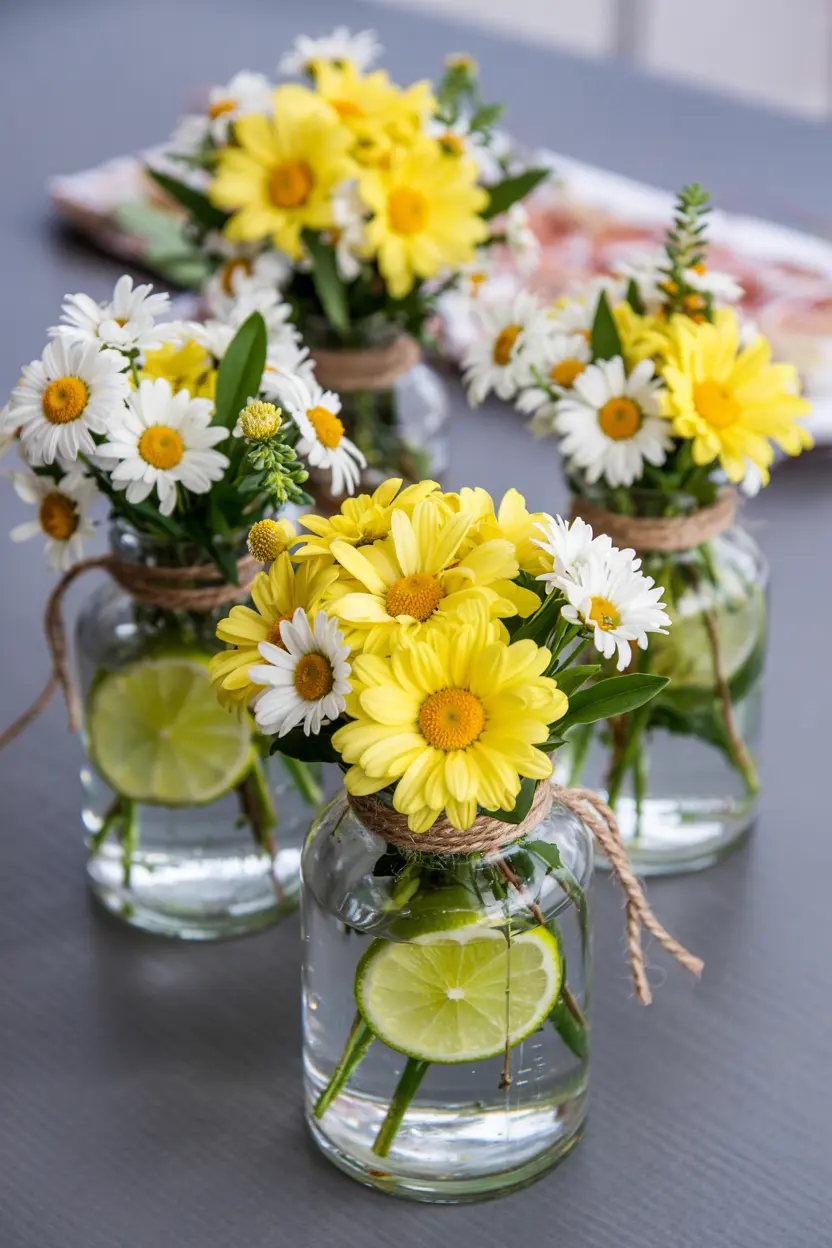
Fresh, modern, and unexpected. Limes read tropical and casual with a slight playfulness that lemons don’t have. They’re underused in home decor, and that rarity is part of their appeal — a bowl of limes in a white kitchen feels genuinely current.
Best in modern kitchens, cocktail areas, summer barbecues, and beach houses. Pair with white, navy, gold, fresh greens, and light wood.
Grapefruits (Pink-Red)
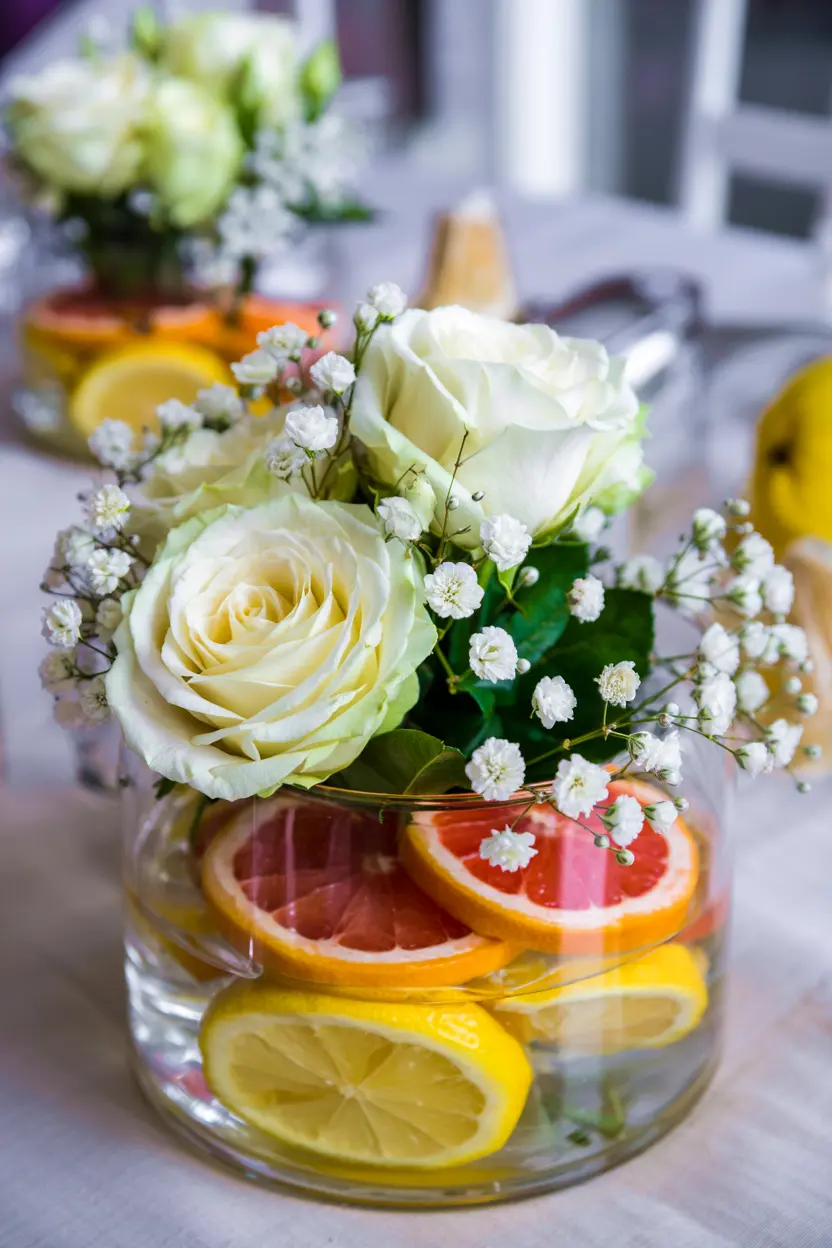
Soft, romantic, and underrepresented in most decor guides. Grapefruits read sunset, sophisticated, and distinctly feminine without being overdone.
Their blush-to-deep-rose tones work in spaces where you want warmth without full orange saturation. Best in feminine spaces, brunch areas, bedrooms, and late summer events. Pair with blush, rust, gold, deep green, and cream.
Blood Oranges and Kumquats
Distinctive and intentional. Blood oranges read sophisticated and seasonal — their deep red interior makes any arrangement look considered. Kumquats read playful and unique; their small scale adds texture without bulk.
Blood oranges are best in winter decor (in season November through March), modern cocktail displays, and design-forward spaces. Pair both with rust, deep green, brass, and cream.
Citrus Decor by Room
Kitchen
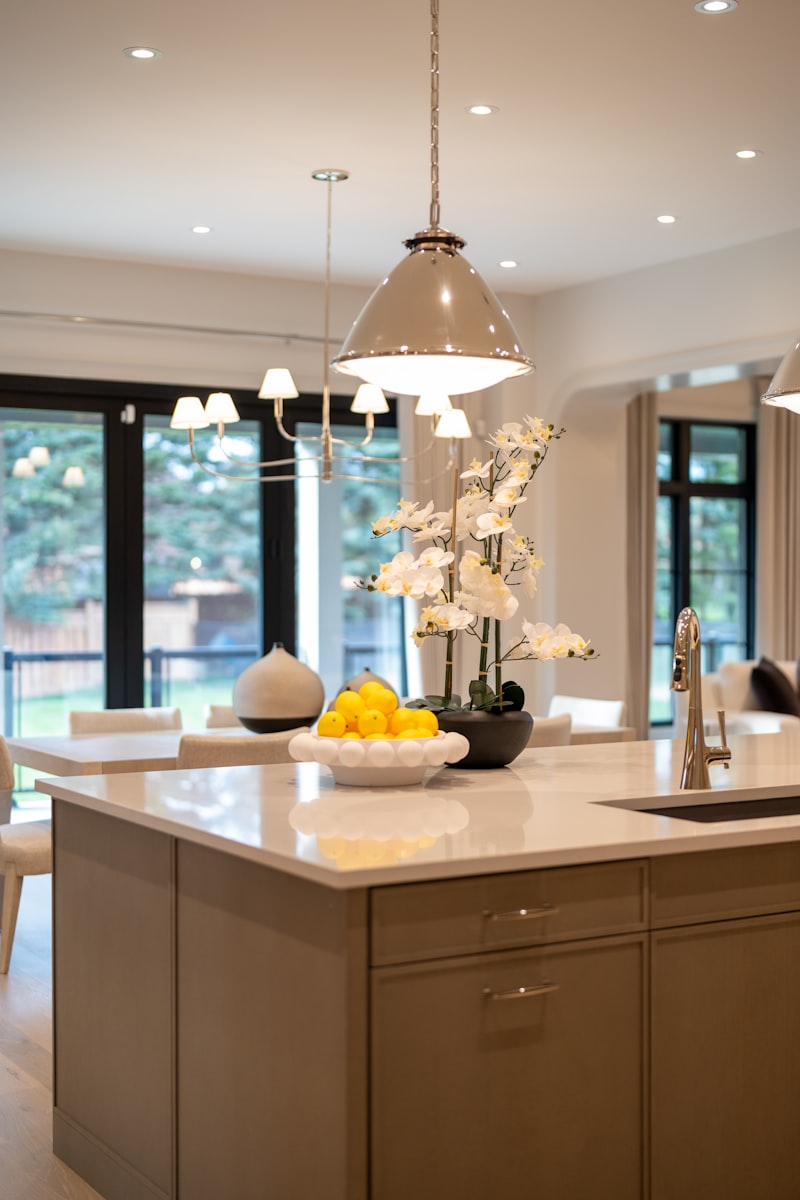
The kitchen is the most natural home for citrus decor. A bowl of fresh lemons or mixed citrus on the counter is the simplest and most effective centerpiece you can make.
Beyond fresh fruit: lemon-print kitchen towels, ceramic majolica bowls, faux lemon garlands above windows, citrus-themed canisters. Lemons dominate here; orange or lime accents add depth without competing for attention.
Dining Room
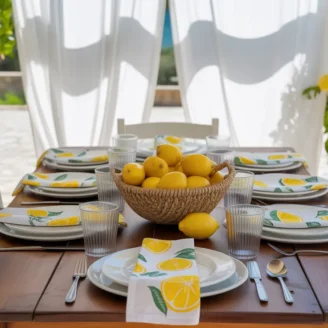
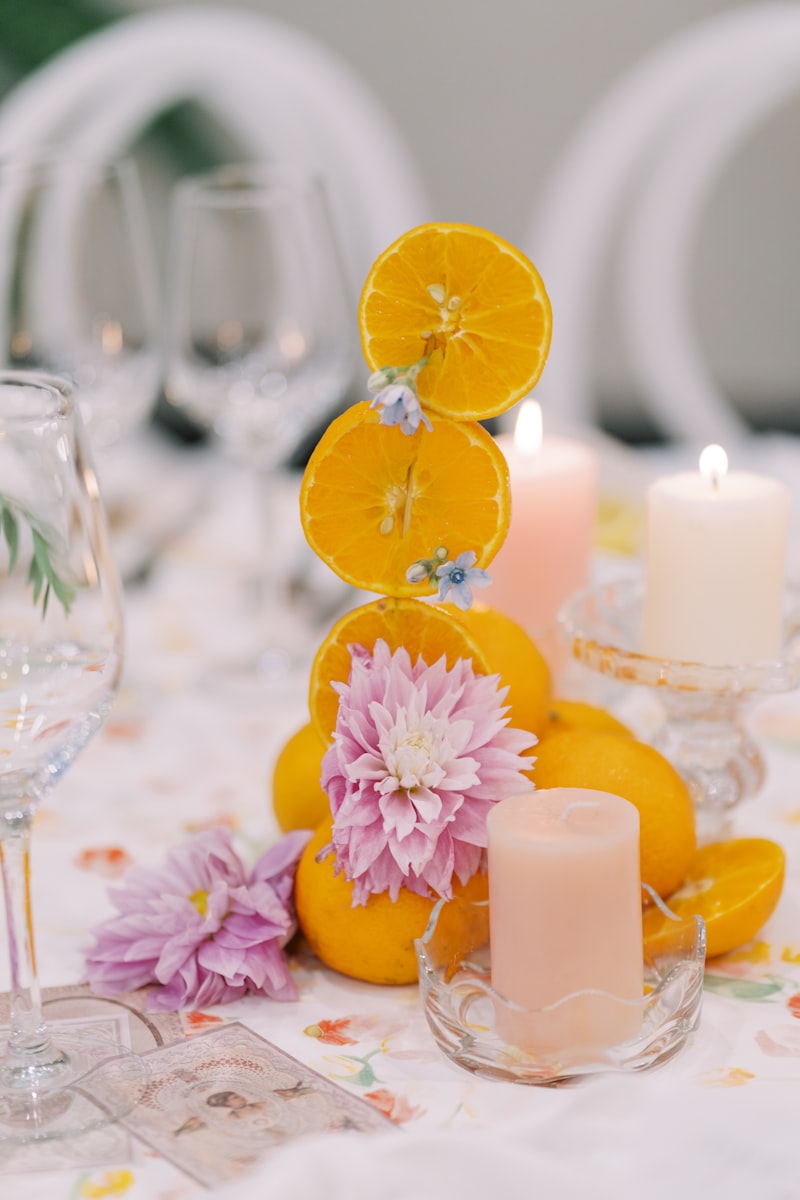
Citrus tablescapes are one of the most searched decor topics for good reason — they’re accessible, scalable, and photograph beautifully.
Lemons are the most popular choice; mixed citrus centerpieces work for more elaborate seasonal looks. Use real fruit for one-day events and faux for permanent centerpieces. A long runner of mixed citrus with greenery and candles creates impact for minimal cost.
Living Room

Citrus in the living room requires a lighter touch than in the kitchen or dining area. A few well-placed accents work; a themed approach usually doesn’t.
The most successful approaches: a small bowl of lemons on the coffee table, framed citrus art on a gallery wall, one or two citrus-printed throw pillows on a neutral sofa, a faux citrus arrangement on a console table, or a lemon-scented candle used as a styling element.
Keep it to three or four citrus touches maximum — any more and the room starts reading as themed rather than styled.
Bathroom
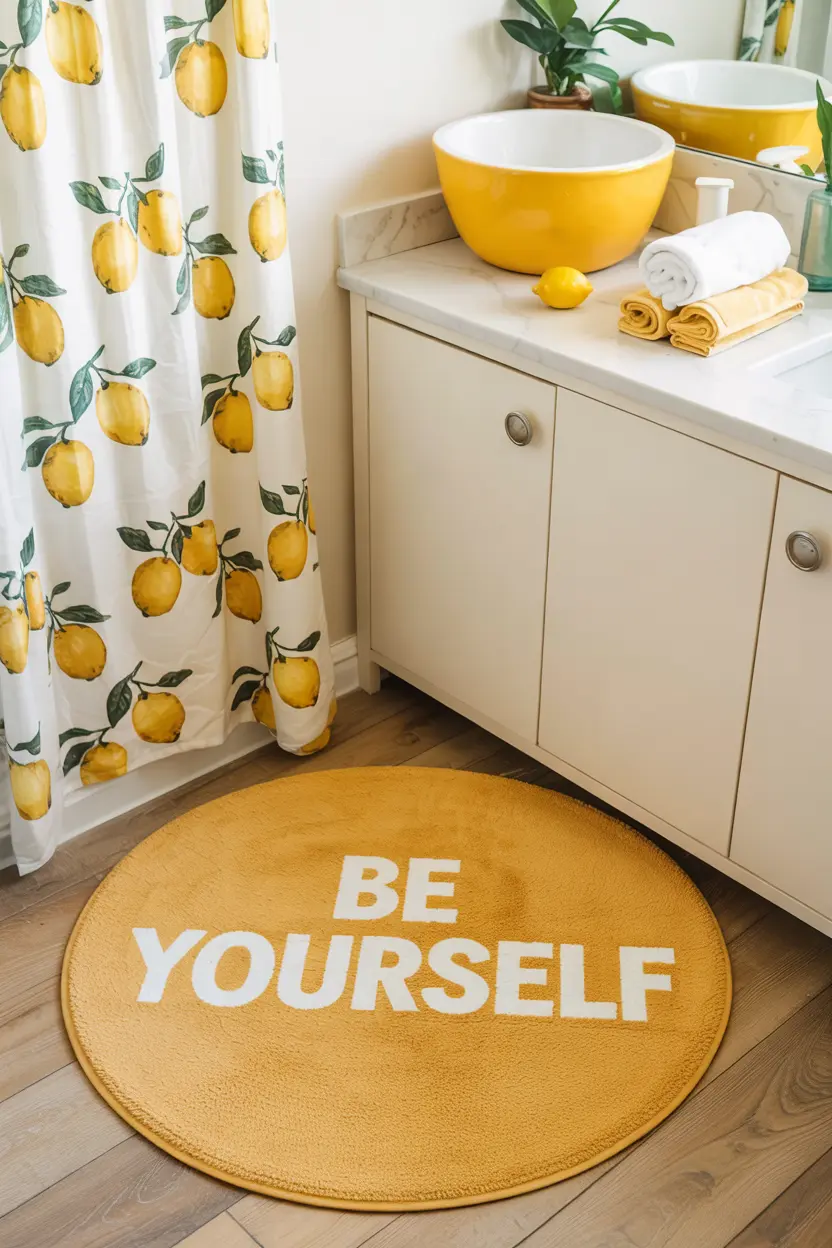
Bathrooms respond particularly well to citrus accents because they’re small, accessory-heavy spaces where individual pieces have outsized visual impact.
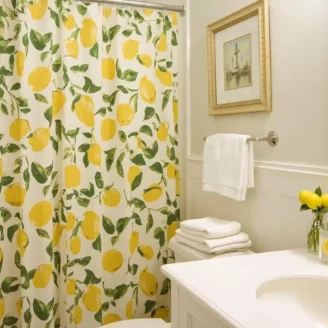
A citrus-print shower curtain, lemon-yellow towels, or a majolica soap dispenser can shift the entire feel of the room. Lemons are most popular here; orange or lime accents work well in beach house or modern bathrooms.
Keep scent consistent with visuals — lemon verbena or grapefruit soap reinforces the theme without any extra effort.
Bedroom
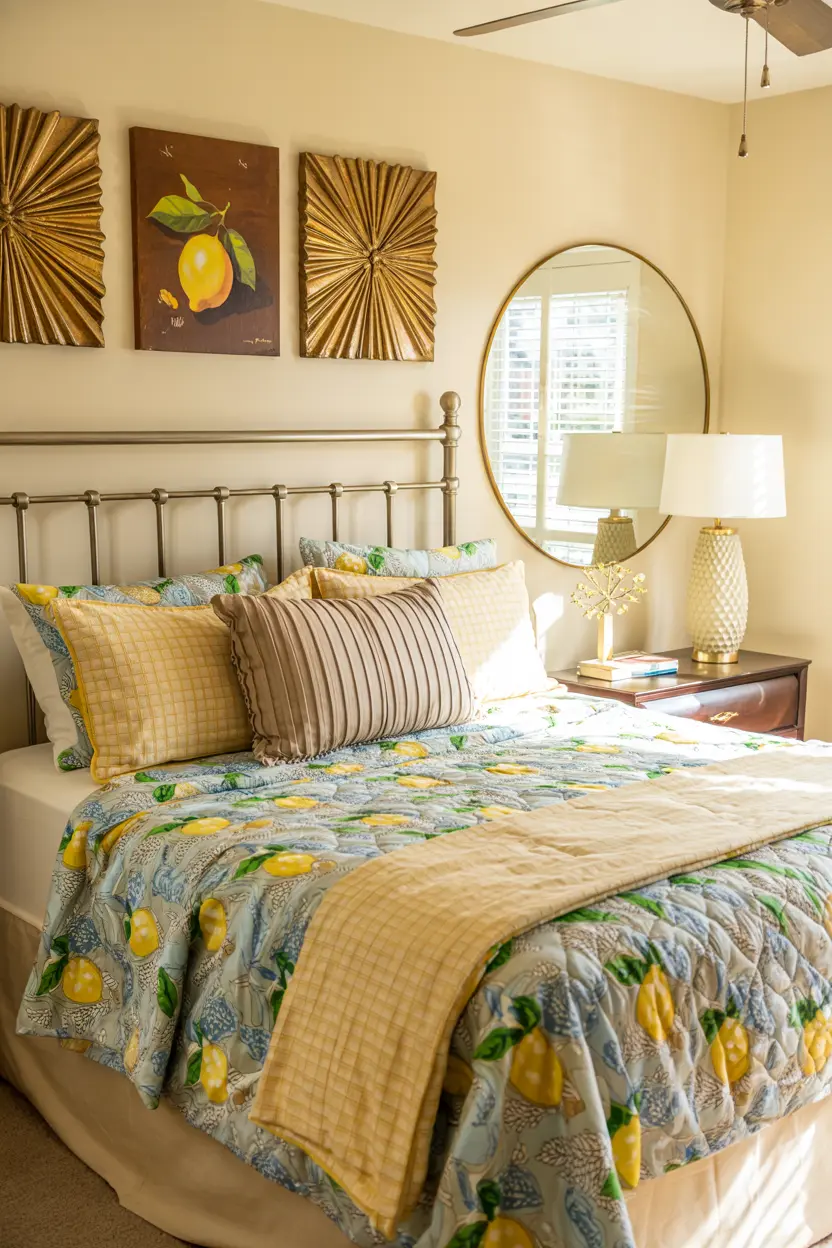
Citrus in the bedroom is less common and harder to execute well. The energy of citrus colors and patterns runs counter to the restfulness most bedrooms aim for.
If you want to try it, lean toward subtle: lemon-printed pillowcases on a neutral bedspread (not both), a single framed citrus print on the wall, a small bowl of lemons on a dresser as a styling element, or a lemon-scented diffuser.
Avoid heavy citrus prints on bedding or curtains — the visual weight is too energetic for a sleep space.
Outdoor and Patio
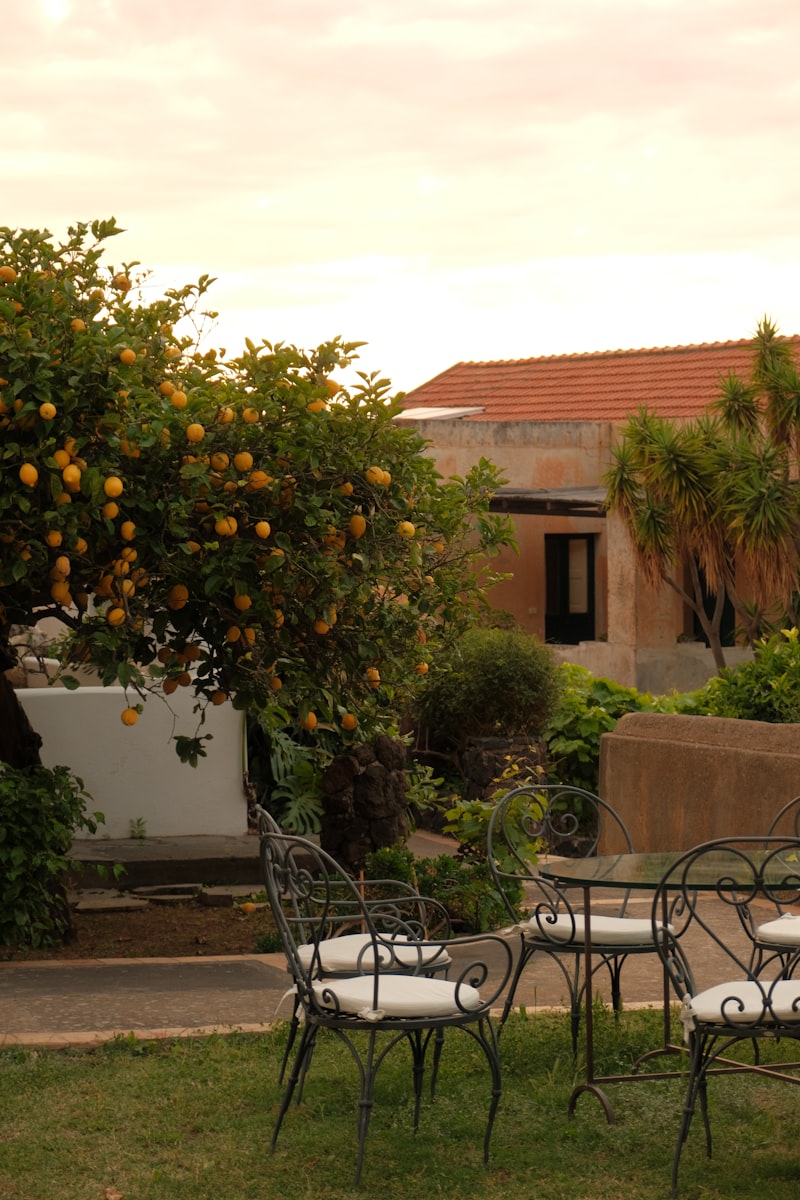
Outdoor spaces are the most permissive for citrus decor — both Mediterranean and tropical citrus styles translate beautifully to patios, terraces, and gardens.
Options include terracotta pots with herb plants or small lemon trees, citrus-print outdoor throw pillows, lemon-themed serving platters and pitchers for entertaining, and citrus garlands draped over pergolas or strung along a fence.
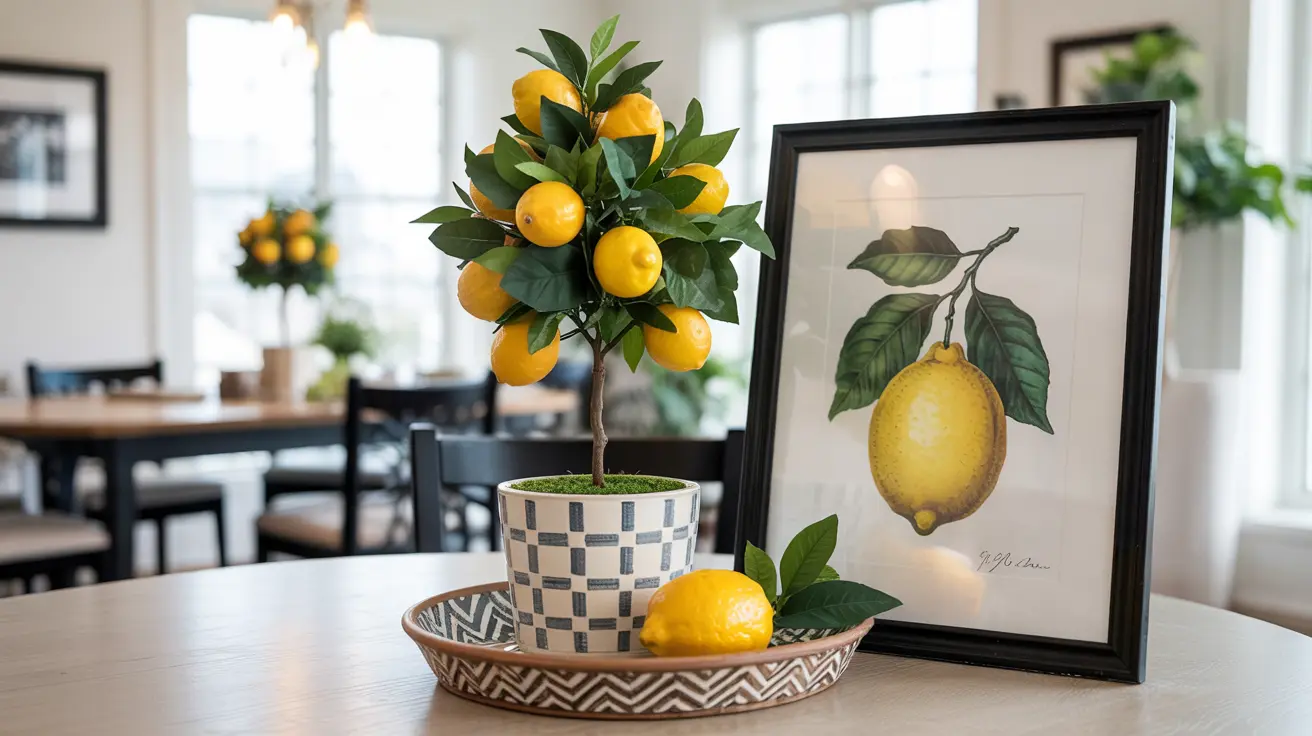
Real citrus trees in pots are a particularly strong move for Mediterranean-style outdoor spaces — they’re functional, beautiful, and deeply fragrant.
Citrus Color Palettes That Always Work
The right supporting palette makes or breaks citrus decor. Here are the combinations that reliably work across room types and aesthetics:
- Yellow + white + sage green — the lemon classic, works in any room, any season
- Orange + cream + rust — warm Mediterranean, strongest in fall and winter
- Lime + white + brass — modern fresh, strongest in spring and summer
- Mixed citrus + white + brass — full citrus mix, needs a strong neutral foundation
- Blood orange + cream + deep green — sophisticated winter palette
- Citrus + navy + white + brass — coastal, works particularly well in bathrooms and outdoor spaces
Avoid pairing citrus with bright pink, bright red, or bright purple — these clash rather than complement, and the result reads garish rather than cheerful.
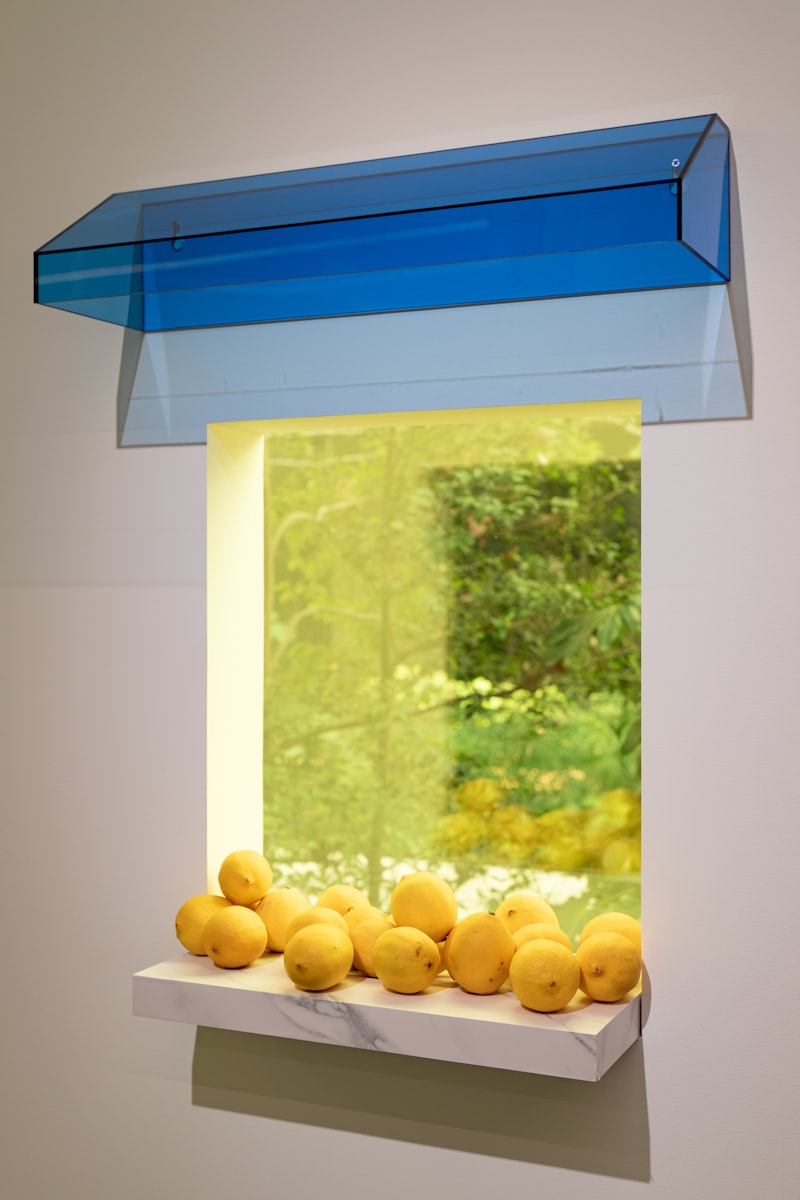
Mixed Citrus Decor: What Combinations Work
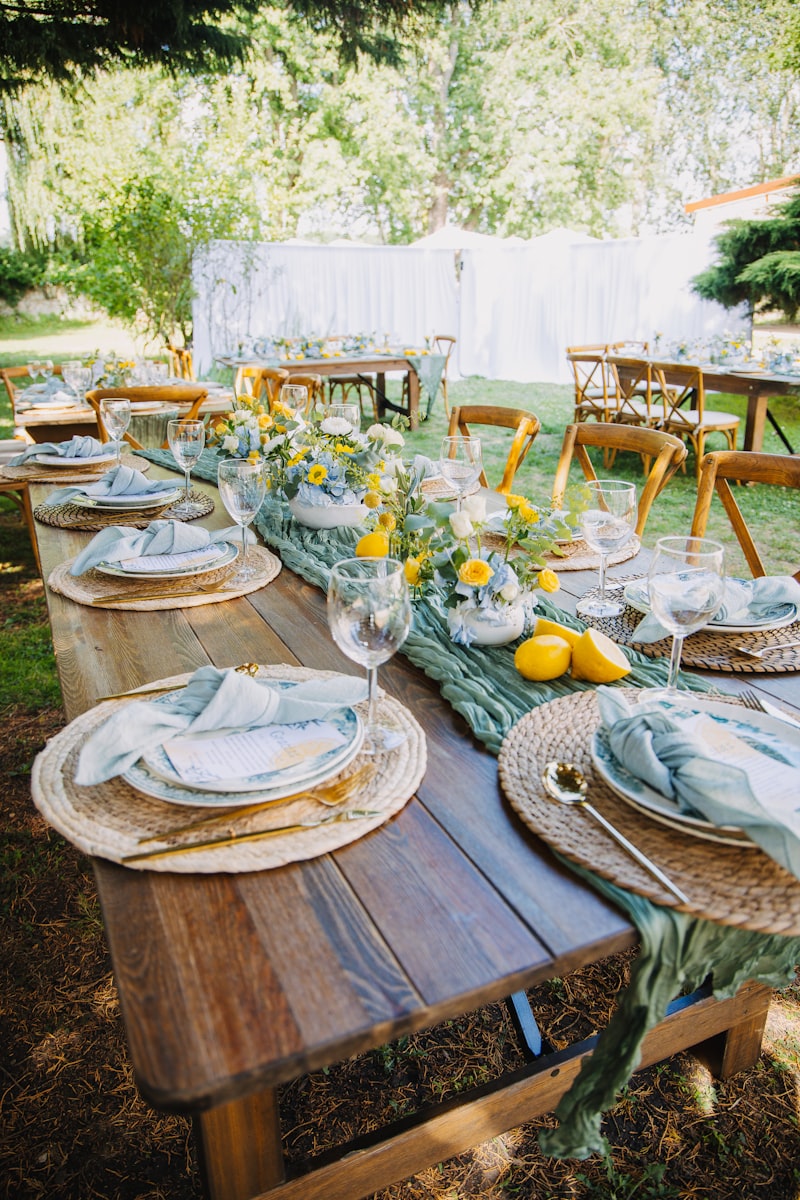
Combining multiple citrus types creates visual richness but requires more care than single-citrus arrangements. The most successful combinations:
- Lemons + Limes — fresh and modern. Yellow and green together photograph beautifully against white kitchen counters and pair naturally with brass hardware.
- Lemons + Oranges — warm Mediterranean. Yellow and orange together feel rich and inviting, particularly in dining rooms and evening settings.
- Oranges + Grapefruits — sunset palette. Orange and pink together feel romantic in late summer and fall settings, especially in dining rooms or on outdoor tables.
- Lemons + Limes + Oranges — full citrus mix. The most colorful and the hardest to execute well. It requires a strong neutral foundation (white or cream surfaces, natural wood, stone) and benefits from greenery to prevent the mix from reading as a fruit salad rather than a decor choice.
Citrus Decor Beyond Fresh Fruit
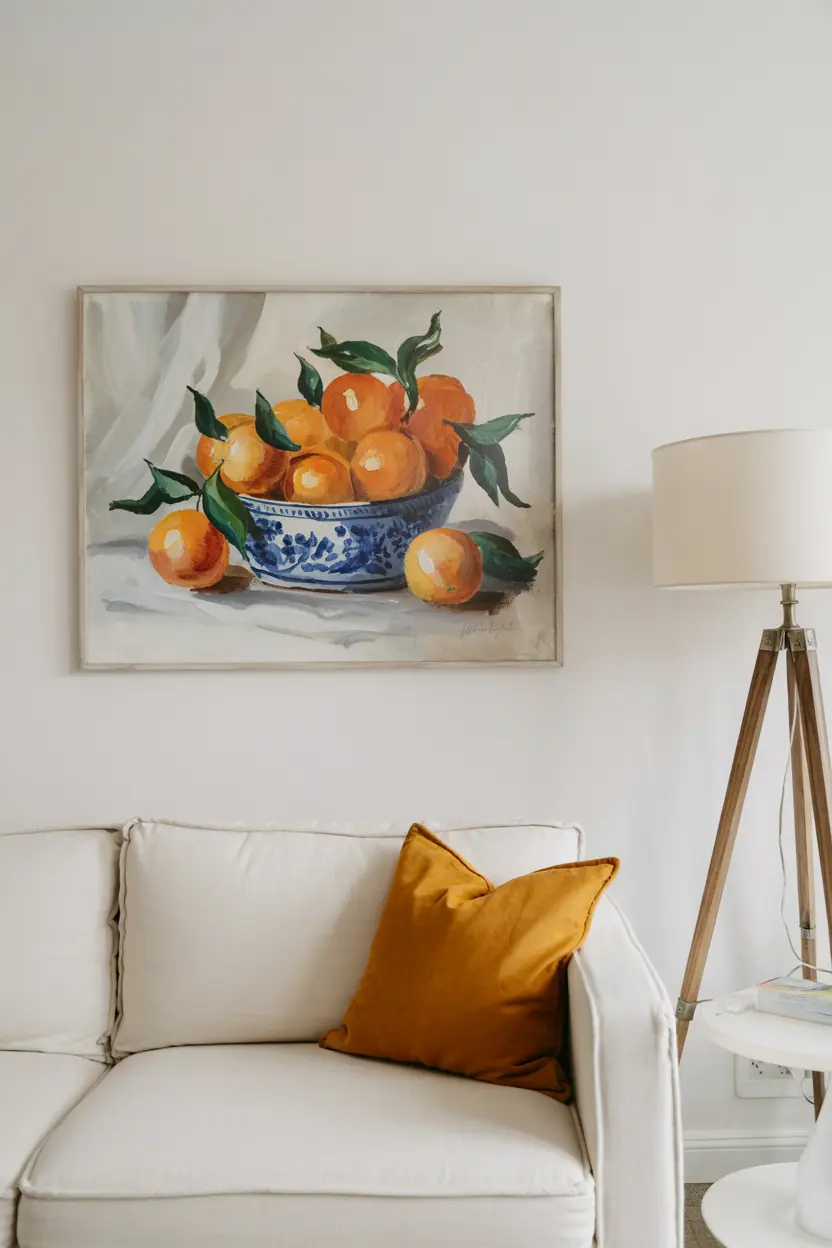
Real and faux citrus fruit are just the starting point. Citrus decor extends across a wide range of home objects and materials, each adding to the theme without requiring actual fruit in every corner.
Citrus art makes one of the most lasting investments in the category. Framed prints, watercolor paintings, illustrated posters, and photographic prints are available across price ranges — from $15 digital downloads on Etsy to $500+ original artwork.
Hanging two or three pieces together in a gallery arrangement creates impact. Look for work that has a consistent style rather than mixing vintage botanical with modern graphic prints.
Citrus textiles offer the fastest and most affordable way to refresh a room. Throw pillows, table runners, kitchen towels, bath towels, shower curtains, and aprons all come in citrus patterns.
Cotton and linen read most sophisticated; polyester prints tend to look less premium. One or two pieces in a room is the right amount — more starts competing with itself.
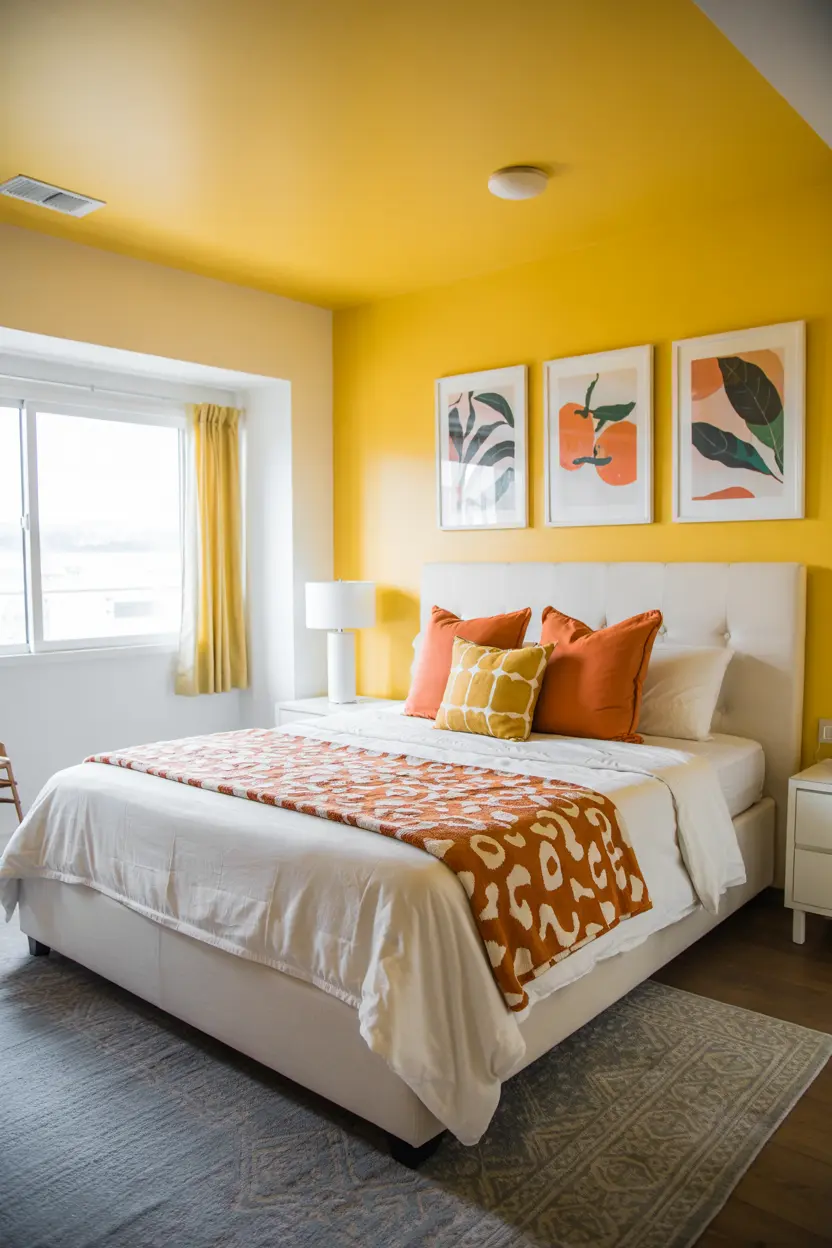
Citrus ceramics and pottery are among the most durable decor investments. Hand-painted Italian majolica with lemon and orange motifs, ceramic bowls, vases, and planters all hold up over years of use and improve with age.
Budget versions start around $15; artisan pieces from Italian or Portuguese makers run $150 to $300+.
Citrus scents reinforce visual decor with fragrance and make a space feel more complete. Candles, essential oil diffusers, and room sprays in lemon, lemon verbena, orange cedarwood, grapefruit, and lime are all widely available.
Premium brands like Diptyque and Jo Malone run $40 to $80; quality budget options exist in the $15 to $30 range.
5 Common Mistakes in Citrus Decor
- Going too monochromatic. Yellow on yellow on yellow reads juvenile. Always include white, green, or natural materials as a foundation — citrus works as an accent layer, not as the entire palette.
- Using cheap faux fruit. Hollow plastic citrus ruins the aesthetic of an otherwise carefully considered space. Spend on quality faux — the difference between $8 plastic lemons and $35 high-resin faux lemons is visible from across the room.
- Mixing visual registers. Realistic faux fruit combined with cartoonish prints combined with watercolor art creates visual chaos. Pick one style direction — realistic still life, modern graphic, or botanical illustration — and stay consistent.
- Overcrowding. More citrus elements doesn’t mean more impact — it means less. Three to four citrus touches per room is the right ceiling for most spaces. One strong focal point plus two to three supporting accents reads as styled; five or more reads as themed.
- Forgetting greenery. Citrus alone looks artificial and slightly flat. Greenery — eucalyptus, olive branches, fresh herbs, or simple grocery-store greenery — gives citrus displays the visual grounding they need to feel natural.
Frequently Asked Questions
Is citrus decor seasonal?
Each citrus type has a peak season, but quality citrus decor can work year-round with adjusted supporting elements. Lemons feel most natural in spring and summer; oranges shine in summer through fall; blood oranges are best in fall and winter when they’re in season.
The trick is shifting the secondary palette rather than removing the citrus — lemons with cedar and cream work in winter, lemons with white and sage green work in summer.
How much citrus is too much?
If you can identify five or more distinct citrus elements at a glance, you’ve crossed from styled into themed.
Aim for three to four elements per room: one clear focal point (a bowl, a large print, a statement textile) and two to three supporting accents. Let there be negative space between citrus elements so each one reads individually.
Can citrus decor work in modern homes?
Yes — particularly with limes and unexpected citrus types. Modern citrus decor uses graphic prints rather than vintage Tuscan styles, brass and matte black accents rather than warm terracotta.
Opt for minimal single-fruit displays rather than abundance arrangements. Choose one or two statement pieces rather than a fully themed approach.
What’s the most versatile citrus for decor?
Lemons, without question. They work in every season, every room, and every aesthetic from rustic farmhouse to modern minimalist. They’re also the easiest to source — a $5 bag of lemons from any grocery store is the lowest-barrier citrus decor move you can make, and it works immediately.
How do I avoid looking dated with citrus decor?
Use citrus as accent (20 to 30% of visual weight), not as a theme (60%+). Mix with neutral foundations — white, cream, natural wood.
Choose modern interpretations of classic motifs: graphic prints over ornate Tuscan styles, clean ceramic shapes over heavily embellished pottery. Add contemporary grounding elements like brass hardware or matte black fixtures to anchor the warmth.
And always pair citrus with greenery — it immediately shifts the arrangement from decorative cliché to something that looks genuinely intentional.
Where to Start
The best entry point depends on your room and your style. For kitchens, start with a bowl of lemons on the counter — it’s the easiest, most natural fit and requires no commitment.
For dining rooms, start with a mixed citrus centerpiece for your next gathering and see how you feel about it before investing in permanent pieces.
For living rooms, start with framed citrus art — a single print is low-cost and reversible. For bathrooms, a citrus-print shower curtain or set of towels can transform the room for under $50.
The consistent principle across all rooms: let one strong element anchor the space, pair it with neutrals and greenery, and resist the impulse to add more.
Related Articles
The Ultimate Guide to Lemon Decor — kitchen, table, wedding, and DIY lemon decor overview.
Lemon Kitchen Decor — complete kitchen styling guide with product recommendations.
Lemon Table Decor — full dining table styling guide for everyday and special occasions.
Lemon Wedding Decor — wedding-specific citrus styling guide.
Citrus Wedding Theme — multi-citrus wedding styling beyond just lemons.