Cheap Wedding Venues 2026: Beautiful Spaces That Won’t Break Your Budget
Cheap wedding venues in 2026 don’t have to look cheap — and the best ones never do. The secret is finding spaces that already have beauty built in, so you spend less money trying to manufacture an atmosphere that should have been there from the start.
This guide covers every category of affordable wedding venue worth knowing about: the ones that are genuinely free, the ones that cost a few hundred dollars, and the ones that look like they cost ten times what you actually paid. Real price ranges, real trade-offs, and the questions you need to ask before you sign anything.
Disclosure: This post contains affiliate links. If you purchase through one of my links, I may earn a small commission at no extra cost to you. I only recommend products I genuinely love and think you’ll find useful.
Why Your Venue Choice Is the Most Important Budget Decision You’ll Make
credit: Bethanya Sousa
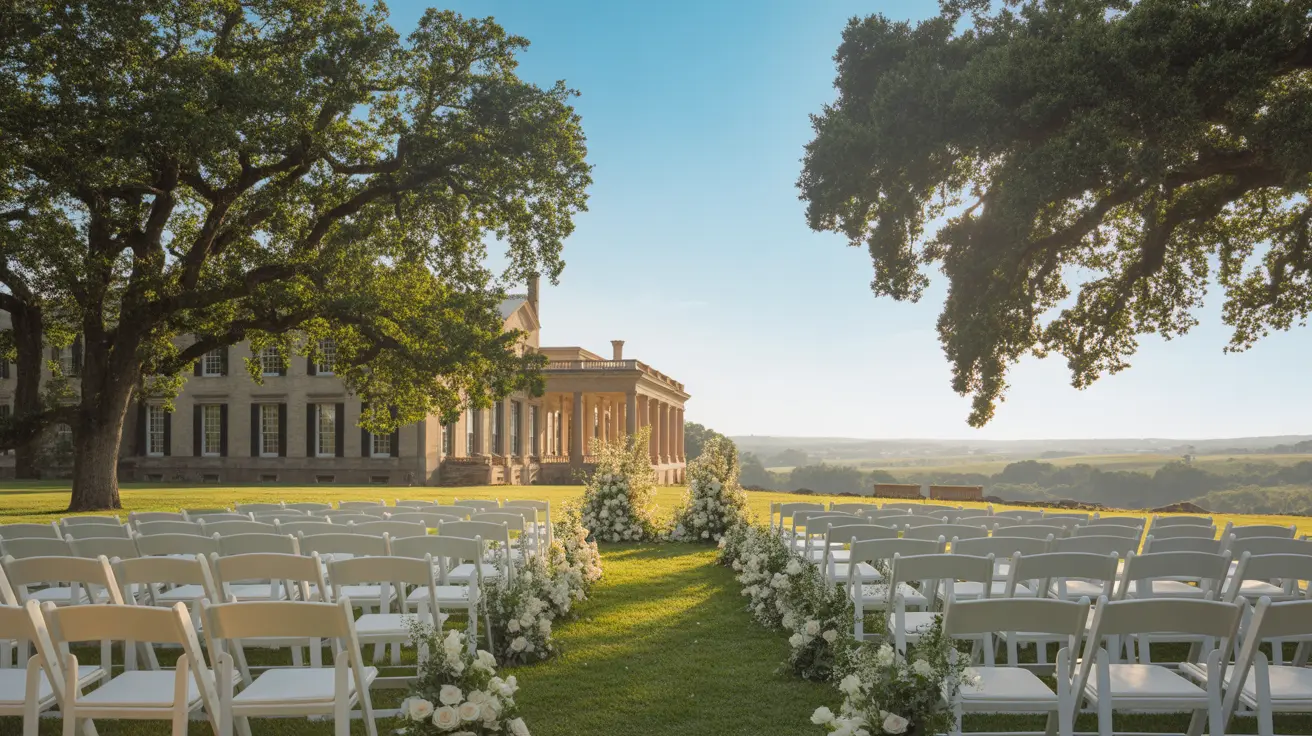
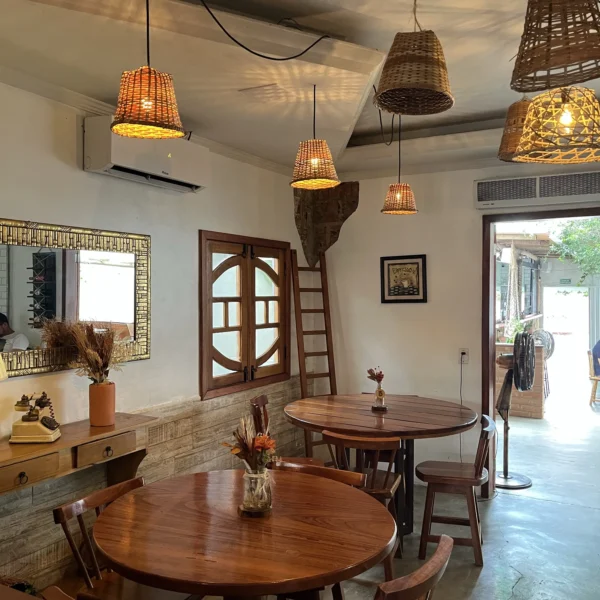
Your venue choice sets the ceiling for everything else. Choose a venue with inherent character – exposed brick, vaulted ceilings, a garden backdrop, a water view — and your decor budget shrinks dramatically. Choose a blank white box, and you’ll spend thousands trying to make it feel like somewhere.
Venue costs typically represent 30-40% of a total wedding budget. On a $15,000 budget, that’s $4,500-$6,000. On a $10,000 budget, it’s $3,000-$4,000. That means the single most impactful thing you can do for your overall budget is find a venue that costs less than expected — without looking like it does.
For the full picture of how venue fits into your overall spend, start with our complete guide to budget wedding planning in 2026.
Public Parks and Gardens: The Most Underrated Cheap Wedding Venues in 2026
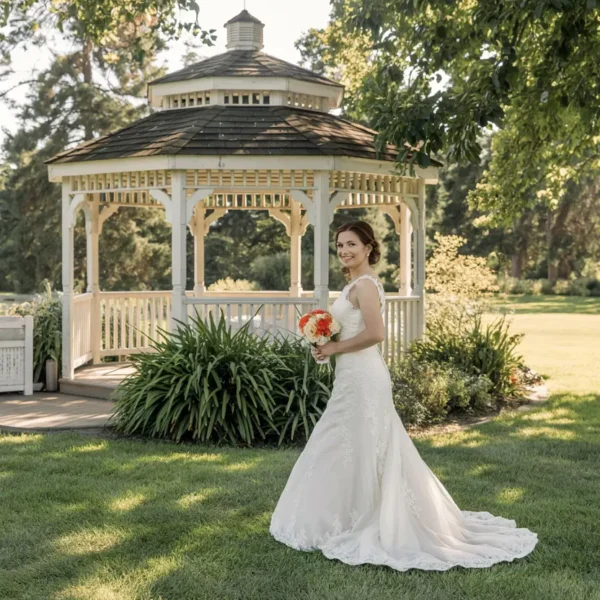
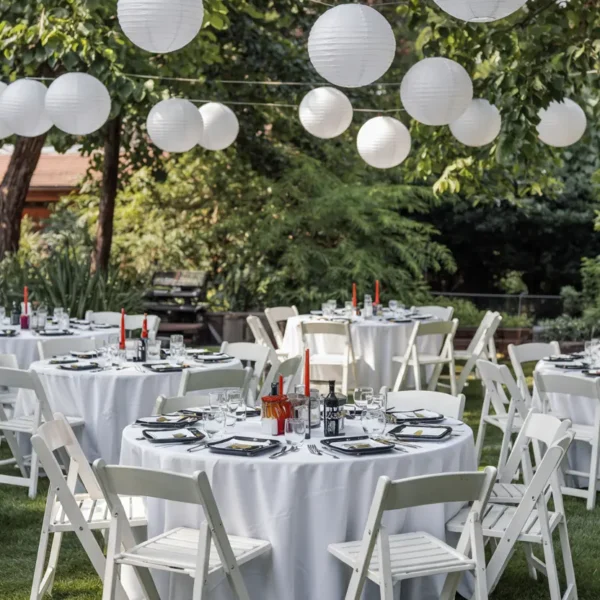
Public parks and botanical gardens are among the best cheap wedding venues 2026 has to offer — and most couples overlook them entirely. A permit for a ceremony in a city park typically costs $100-$500 depending on your location and guest count. Some parks charge nothing at all for small gatherings.
What you get for that price is often extraordinary: mature trees, manicured lawns, ornamental gardens, water features, stone pathways, and natural light that no indoor venue can replicate. These are spaces that took decades to grow and cost millions to maintain — and you’re accessing them for the price of a permit fee.
What to check before booking a park or garden:
- Permit requirements – most parks require a special event permit for groups over 25-50 people
- Noise restrictions – amplified music is prohibited in many public spaces
- Alcohol rules – some parks prohibit alcohol entirely; others allow it with an additional permit
- Backup plan – public outdoor venues have no weather contingency unless you arrange a tent rental
- Vendor access – some parks restrict caterers, require licensed vendors, or prohibit open flames
- Parking – check whether your guests can realistically get there and where they’ll park
Botanical gardens often operate as semi-private event venues with dedicated event staff and higher fees ($1,000-$5,000 for the space), but they’re still typically far cheaper than traditional wedding venues and require far less decor spend to look beautiful.
Best for: Couples who want natural beauty, don’t need amplified music, and are comfortable with an outdoor-only setup.
Backyard Weddings: Free (If You Know What You’re Getting Into)
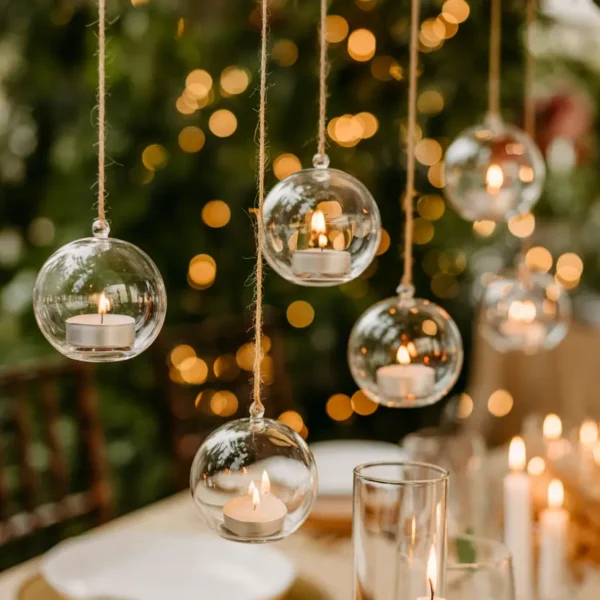
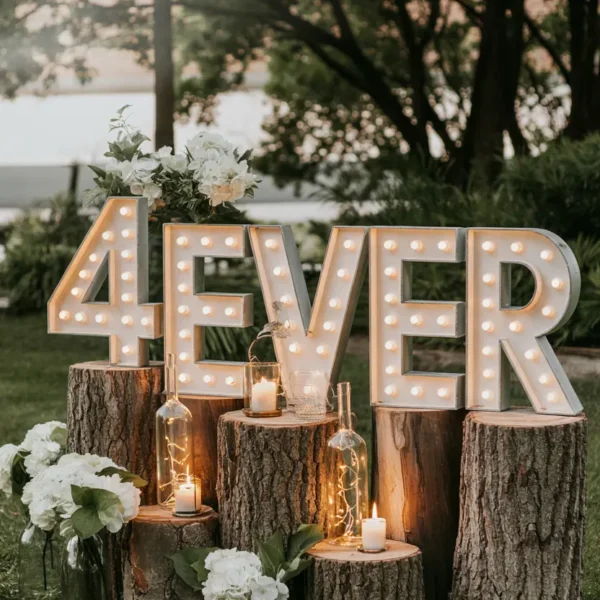
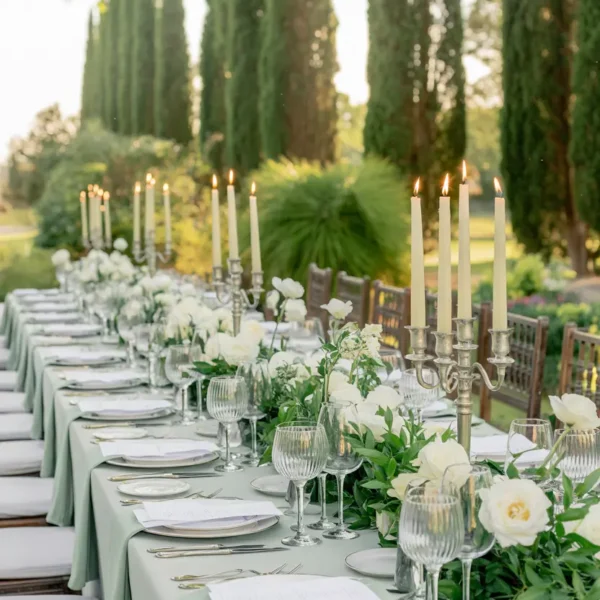
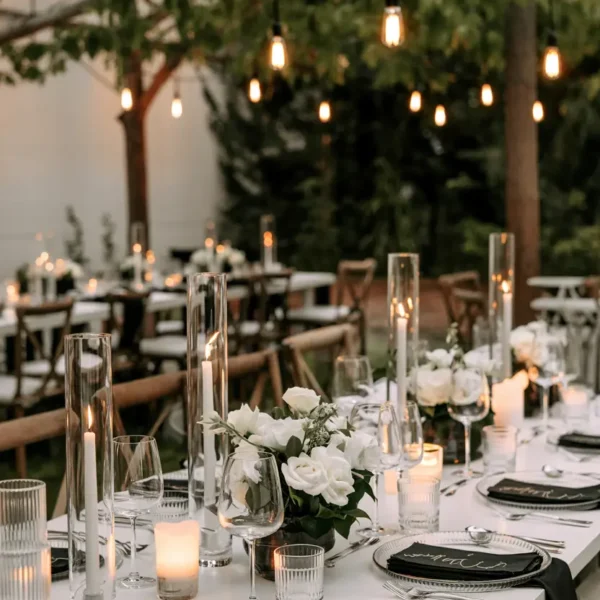
A backyard wedding – yours, a family member’s, or a generous friend’s – is technically free, which makes it one of the most appealing cheap wedding venues 2026 couples reach for. The reality is more nuanced, but with proper planning it absolutely can be done beautifully and for far less than any traditional venue.
What backyard weddings actually cost:
- Tent rental: $500-$2,500 depending on size and style. Essential unless the weather is guaranteed — and it never is.
- Table and chair rentals: $8-$15 per guest for a basic folding setup; $20-$40 per guest for farm tables and cross-back chairs. Budget $800-$2,000 for 50-80 guests.
- Portable restrooms: $200-$800 depending on quality and quantity. Non-negotiable for guest counts over 30 unless the home has multiple bathrooms.
- Generator or power access: If you need power for catering equipment, lighting, or music, budget $150-$400 for a generator rental.
- Landscaping prep: Lawn mowing, weeding, pressure washing — allow $100-$400 if the space needs work.
- Trash removal and cleanup: Budget $100-$200 for professional cleanup after the event.
Add those up and a “free” backyard wedding can easily run $2,000-$5,000 in logistics costs before you’ve bought a single flower. That’s still cheaper than most traditional venues, but it’s important to go in with accurate numbers.
Best for: Couples with access to a beautiful property, a patient host, and the organizational bandwidth to manage the logistics themselves.
Restaurant Private Dining Rooms: The All-In-One Cheap Wedding Venue
credit: Bekah Backman
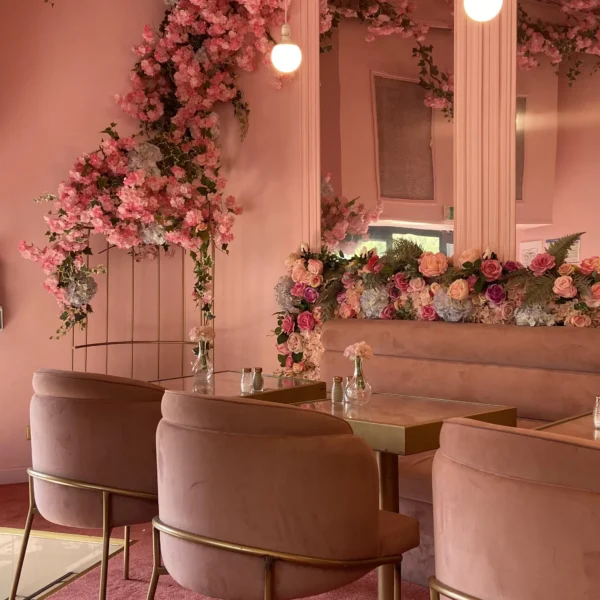
Restaurant private dining rooms are one of the most underused cheap wedding venues for 2026 couples and one of the smartest. When you book a private dining room for a wedding, you’re often getting venue, catering, service staff, tables, chairs, linens, and sometimes even florals bundled into a single per-head price.
What to expect price-wise:
- Most restaurants charge a food and beverage minimum: typically $2,000-$8,000 depending on the restaurant and city
- Per-head pricing for a seated dinner: $65-$150 per person including service
- For 40-60 guests, total all-in spend: $5,000-$9,000 including food, drink, and service
- Room hire fees on top: $0-$1,500 depending on the establishment
Best for: Couples who want to consolidate vendors, love good food, and prefer an intimate dinner-party atmosphere over a traditional reception format.
Community Halls, Historic Buildings, and Civic Spaces
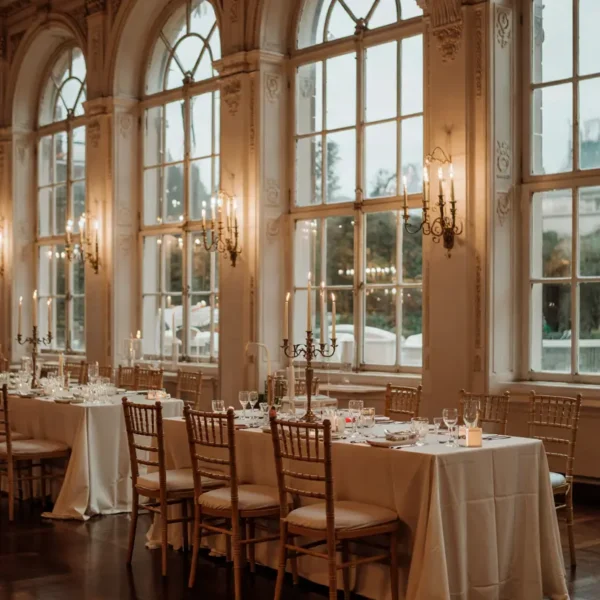
Some of the most beautiful cheap wedding venues in 2026 are sitting in plain sight: civic auditoriums, historic town halls, Elks lodges, VFW posts, library event rooms, and community arts spaces. These venues charge a fraction of traditional wedding venue rates – often $300-$1,500 for a full day – and many have architectural character that event-specific venues charge a premium to replicate.
Things to verify before booking:
- Kitchen facilities – do they have a caterer’s kitchen, or will your caterer need to bring equipment?
- Alcohol licensing – some civic spaces cannot serve alcohol or require a licensed bartender and additional insurance
- Setup and breakdown windows – some community spaces have tight turnovers between events
- Parking – civic spaces in town centers can have limited parking
- HVAC – older buildings sometimes have unreliable heating or cooling
- Insurance requirements – many civic spaces require event liability insurance ($100-$200 from a provider like WedSafe or Markel)
Best for: Couples who want a distinctive, characterful space and want maximum budget control.
Wineries, Breweries, and Distilleries: Character Built In
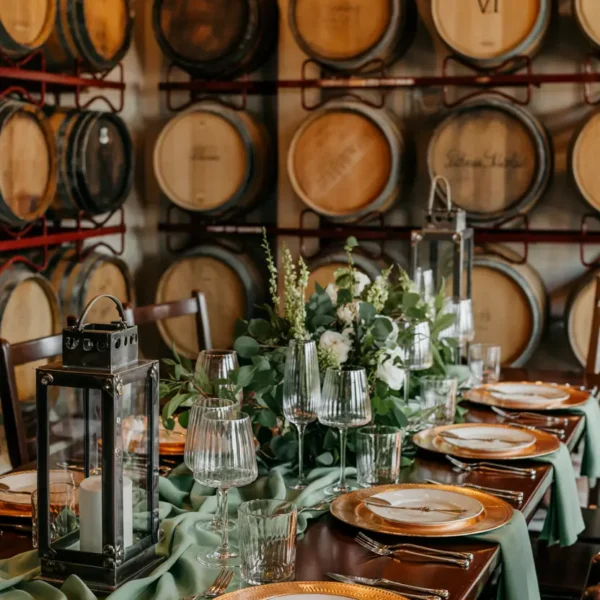
Wineries, breweries, and distilleries offer built-in aesthetic character (barrels, stonework, copper tanks, vaulted cellars), an on-site bar program, and often a catering kitchen. Many actively court wedding bookings as a revenue stream and are priced competitively against traditional venues.
Typical pricing:
- Small local wineries or craft breweries: $1,500-$4,000 venue fee
- Larger established wineries with event infrastructure: $3,000-$8,000
- Beverage minimums often apply – typically $1,000-$3,000 on-site alcohol spend
- Some venues include tables, chairs, and basic linens; others require rentals
Best for: Couples who love the aesthetic, want an on-site bar, and are looking for a venue with personality that requires minimal decoration investment.
Airbnb and Vacation Rental Properties: The Hidden Gem Category
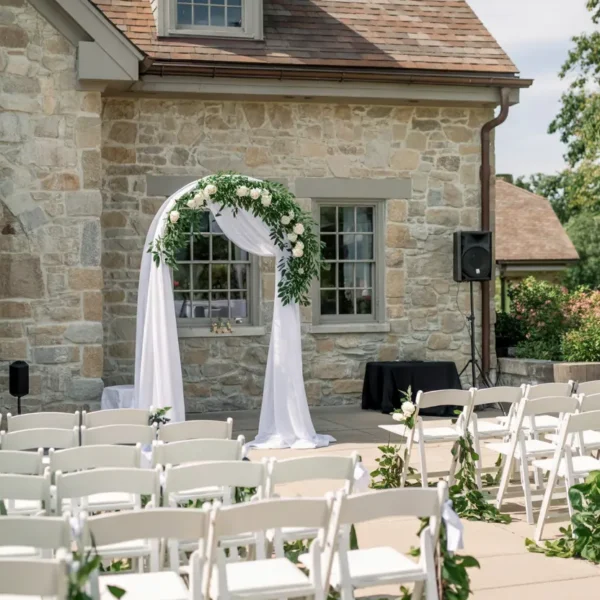
Platforms like Airbnb, Hipcamp, and Peerspace list properties that explicitly allow events — and some of them are extraordinary.
How to make this work:
- Always confirm event approval with the host before booking
- Read the fine print on guest limits, noise policies, and check-in/check-out times carefully
- Book for multiple nights if possible — having the property from the night before through the night after removes enormous logistical pressure
- Factor in cleaning fees, which can be significant ($200-$500) for large properties
- Check whether your wedding insurance policy covers events at rental properties
Best for: Couples who want something visually distinctive and a venue that doubles as accommodation for the wedding night.
Questions to Ask Every Venue Before You Book
On inclusions:
- What furniture is included — tables, chairs, linens?
- Is there a getting-ready space available?
- Does the venue have its own sound system, or will you need to hire one?
- Is there an indoor backup option in case of rain?
On vendor policies:
- Are you required to use in-house or preferred vendors?
- If you bring outside vendors, is there a fee?
- Can you bring your own alcohol? Is there a corkage fee?
On logistics:
- What are the setup and breakdown windows?
- What time does the music need to end?
- Is parking on-site and how many spaces are available?
- Is event liability insurance required?
On costs:
- What is the overtime rate if the event runs long?
- Is there a cleaning fee?
- Is the deposit refundable, and what is the cancellation policy?
- Does the venue require a day-of coordinator, and if so, can you hire your own?
Get every answer in writing. Verbal assurances don’t hold up when there’s a dispute over a deposit or an unexpected charge on your final invoice.
How to Decorate a Cheap Venue So It Looks Expensive
The goal is to enhance what’s already there, not wallpaper over it.
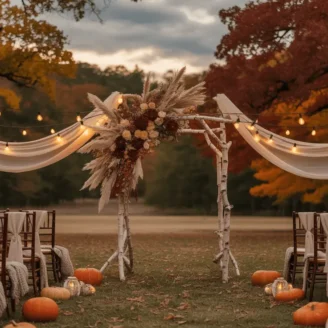
- For outdoor spaces: Let the natural setting do most of the work. A simple arch at the ceremony focal point is enough. Add candles and bud vases for the reception tables. String lights in the trees if you’re there at dusk.
- For rustic or industrial spaces: Lean into the texture. Exposed brick and raw wood look best with warm candlelight, simple greenery, and natural linen. Eucalyptus garlands along tables, pillar candles in varying heights, and mismatched bud vases are all you need.
- For historic or civic spaces: Simple white florals look elegant against period details. Let the room’s proportions guide your approach.
The most cost-effective single investment for any venue is lighting. Bringing in battery-powered LED uplights to wash the walls in a warm amber tone costs $80-$150 and transforms the entire atmosphere. Browse battery-powered LED uplights on Amazon — sets of 4-6 are available for $50-$120 and can be reused or resold after the wedding.
Off-Peak Dates and Times: The Easiest Way to Halve Your Venue Cost
The cheapest wedding venues in 2026 aren’t always different places — sometimes they’re the same venues at different times. Saturdays in May through October are the most expensive. Everything else is negotiable.
How much you can save by timing your wedding differently:
- Friday evening: 15-25% cheaper than Saturday at the same venue
- Sunday afternoon: 20-30% cheaper than Saturday
- January, February, or March: 20-40% cheaper than peak season — vendors often discount their rates too
- Daytime ceremony and lunch reception: Many venues charge lower rates for daytime events, and a lunch or brunch reception costs significantly less per head than dinner
- Holiday weekends (excluding major holidays): Some venues offer lower rates on the Friday or Sunday of a holiday weekend
Off-peak timing doesn’t just save money on the venue — it creates a ripple effect across your entire budget. A Friday evening wedding in February can easily save $3,000-$6,000 compared to a Saturday in June at the same quality level across all vendors.
Frequently Asked Questions About Cheap Wedding Venues in 2026
What is the cheapest type of wedding venue?
Public parks and gardens are typically the cheapest — permit fees run $100-$500. Backyard venues are technically free but carry logistics costs ($2,000-$5,000). Community halls and civic spaces are the cheapest indoor option, often $300-$1,500 for a full day.
How do I find hidden gem wedding venues in my area?
Search beyond traditional wedding venue directories. Look at your city’s parks department website, search Peerspace and Airbnb for event-friendly properties, contact your local historical society about civic buildings, and ask your caterer — they work in venues regularly and often know spaces not actively marketed for weddings.
What should I look for in a cheap wedding venue?
Built-in beauty that reduces your decor spend, flexible vendor policies, clear inclusions (tables, chairs, linens), a reasonable noise and time policy, and a cancellation policy you can live with. The cheapest venue on paper isn’t always the cheapest in practice once you factor in all the add-ons.
Can I get married at a national park?
Yes — many national parks allow small wedding ceremonies with a permit. The National Park Service fees are typically very low ($50-$200 for a ceremony permit). Guest count limits apply, amplified music is usually prohibited, and no permanent fixtures can be installed.
How much should I budget for a wedding venue in 2026?
A realistic budget for a ceremony and reception venue combined is 25-35% of your total wedding budget. On a $12,000 budget, that’s $3,000-$4,200. On a $20,000 budget, it’s $5,000-$7,000. If your venue falls significantly below these numbers, redirect the savings to photography and catering.
Are restaurant venues cheaper than traditional wedding venues?
Often yes, when you factor in the all-in pricing. A restaurant private dining room bundles food, service, furniture, and space into a single per-head cost. For 40-60 guests, a restaurant venue can come in $2,000-$4,000 cheaper than a comparable traditional venue once everything is tallied.
What is the best day of the week to get married to save money?
Sunday is consistently the most cost-effective day — most venues offer 20-30% off Saturday rates, and most vendors do too. Friday evenings are a close second. Weekday weddings offer the deepest discounts but require guests to take time off work.
Do I need event insurance for a cheap wedding venue?
Many venues — especially civic spaces, historic buildings, and rental properties — require event liability insurance. A basic wedding liability policy covering $1M in general liability costs $100-$200 from providers like WedSafe, Markel, or Travelers.
Can I use a winery or brewery as a wedding venue on a small budget?
Yes, especially smaller local wineries and craft breweries that are actively building their event business. Search for wineries and breweries that have event pages but aren’t heavily featured on major wedding venue directories — they’re more likely to negotiate.
What questions should I always ask a venue before booking?
Ask about what furniture and linens are included, whether you can bring outside vendors, the alcohol policy and any corkage fees, the setup and breakdown windows, the noise and curfew policy, whether event insurance is required, the overtime rate, and the refund policy on your deposit. Get every answer in writing before you sign.
The Right Cheap Wedding Venue Is Out There — You Just Have to Know Where to Look
Cheap wedding venues in 2026 don’t announce themselves. They’re not on the first page of wedding venue directories, they don’t have polished promotional packages, and they don’t come with a dedicated sales coordinator. Finding them takes a bit more digging — but the reward is a space with real character, real savings, and a story that’s genuinely yours.
Once you’ve found your venue, these guides will help you make it look extraordinary for less: