Elegant Halloween Decor Ideas That Look Expensive
| This post contains affiliate links, which means I may earn a small commission if you buy something through them — at no extra cost to you. |
Elegant Halloween decor doesn’t have to be expensive. Most Halloween decor costs under $30 and looks like it cost under $30. Material is the giveaway: molded plastic and printed polyester look disposable from fifteen feet away.
The fix for cheap-looking, elegant Halloween decor isn’t spending more. I did my whole first floor last October for about $140, and the heavy lifting came from a $12 bunch of dried grass and a set of matte black tapers.
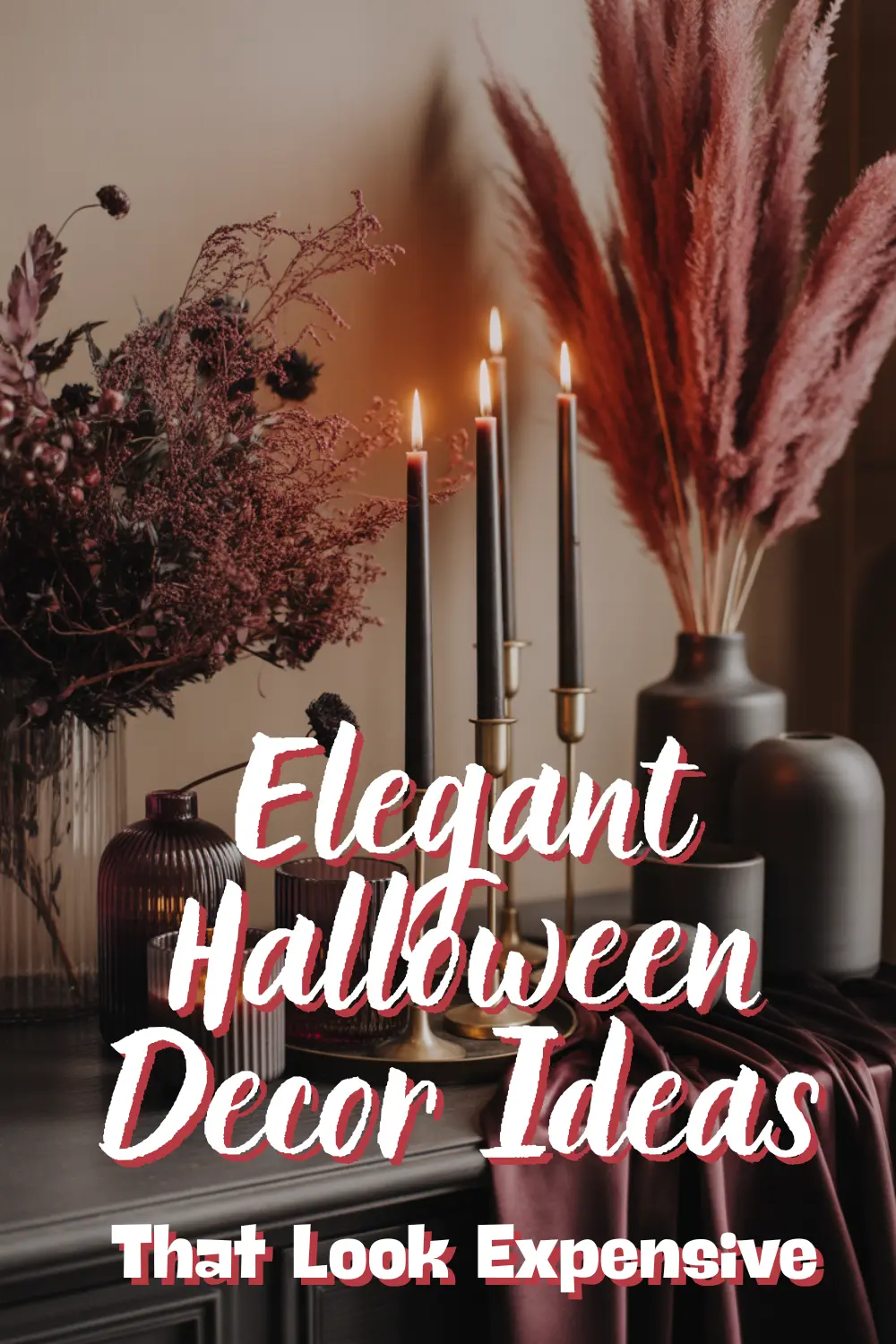
This is the indoor version: palette, materials, room by room. The porch runs on different weather rules, so it lives in what I do with the front steps, and the dining table has its own guide in how I set a grown-up dinner table.
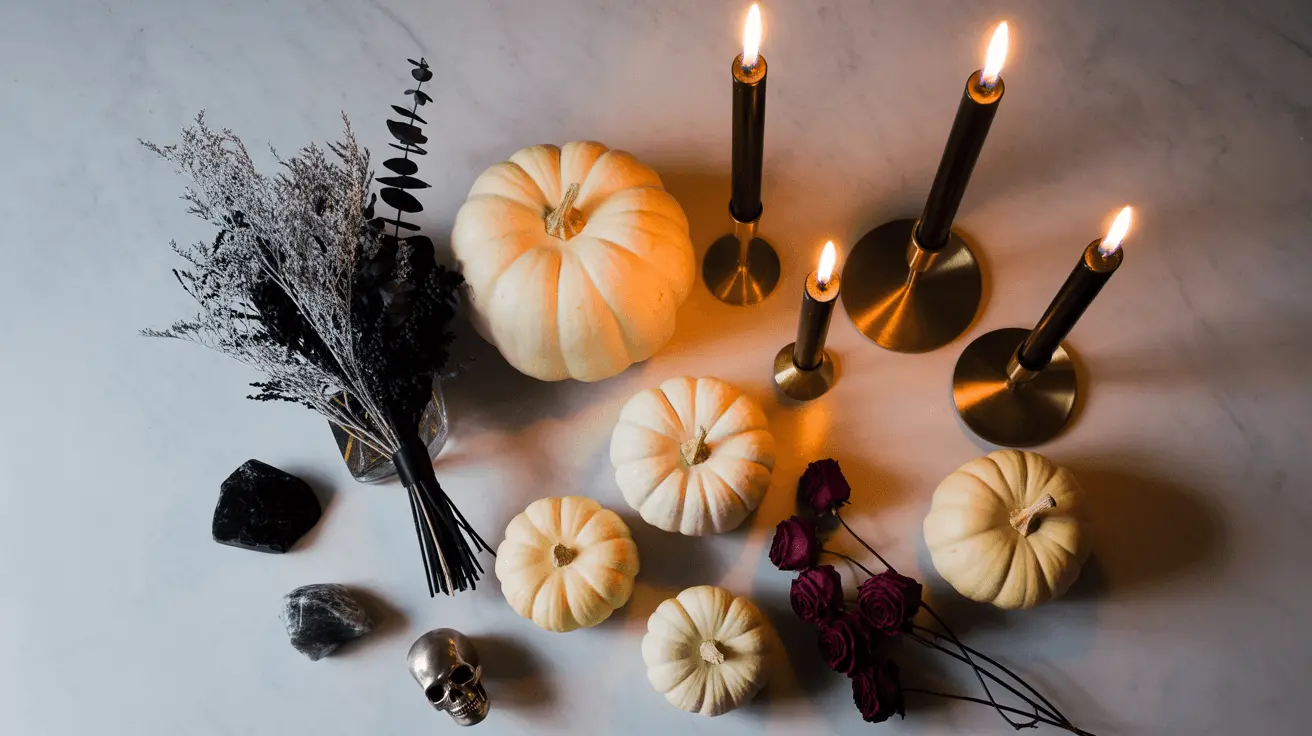
The 2026 direction is what Pinterest calls Vamp Romantic: more Victorian parlor than haunted house. Deep plum, oxblood, black, antique brass, smoked glass, dried florals.
| QUICK ANSWER Limit yourself to three colors (deep plum, oxblood, black) plus one metal, usually antique brass. Skip orange plastic. Use real materials: smoked glass, velvet, dried florals, matte ceramic. Style three to five objects per surface at varying heights instead of covering every surface. Budget $100 to $150 for a first floor. |
The Palette Does 80% of the Work Before You Buy Anything
Elegant Halloween decor gets identified by color first, and so does the cheap kind. Safety orange and electric purple against true black is a specific combination, and your eye has filed it under party-store since childhood.
Swap the orange for oxblood and the purple for deep plum and the same shapes look intentional. A black bat is tacky. A matte black bat beside a plum velvet pumpkin and a brass candlestick is a scheme.
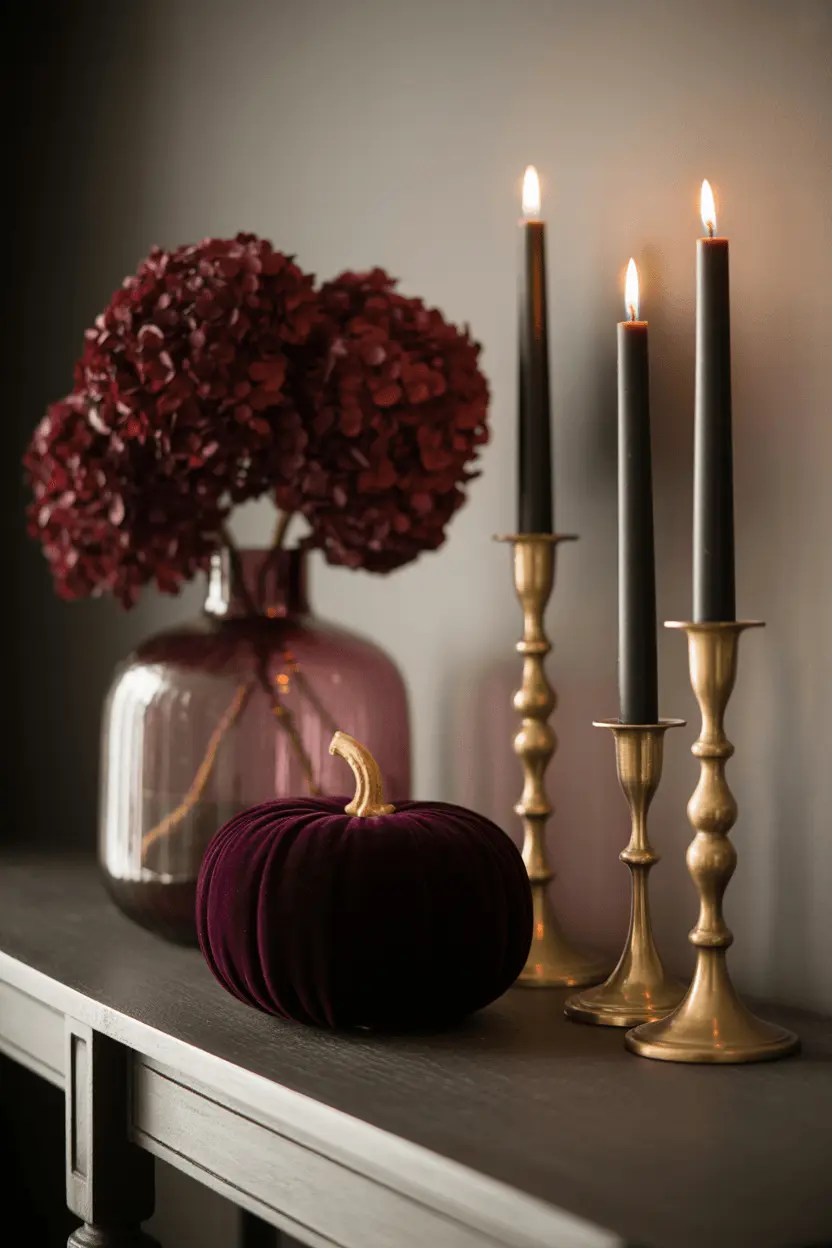
I stole the 60-30-10 rule off every interior design book I’ve opened, and it works here too: 60% neutral, 30% deep color, 10% metal. On a console, the surface and wall stay neutral. Candles, dried stems and one textile carry the plum and oxblood.
Three colors is the ceiling. I’ve tried four; the room just looks busy. (The fourth one was always green, at my place. Every time.)
Paint-chip targets so pieces from three stores agree: plum near Benjamin Moore Shadow 2117-30, oxblood near Sherwin-Williams Fired Brick SW 6335, a soft black like Farrow & Ball Off-Black.
Material Beats Motif Every Single Time
A plastic skull costs $4 and looks like $4. A matte ceramic skull costs $18 and looks like $60. Identical shape, different surface.
So stop shopping for spooky objects and start shopping for good materials in dark colors. Five that carry the look:
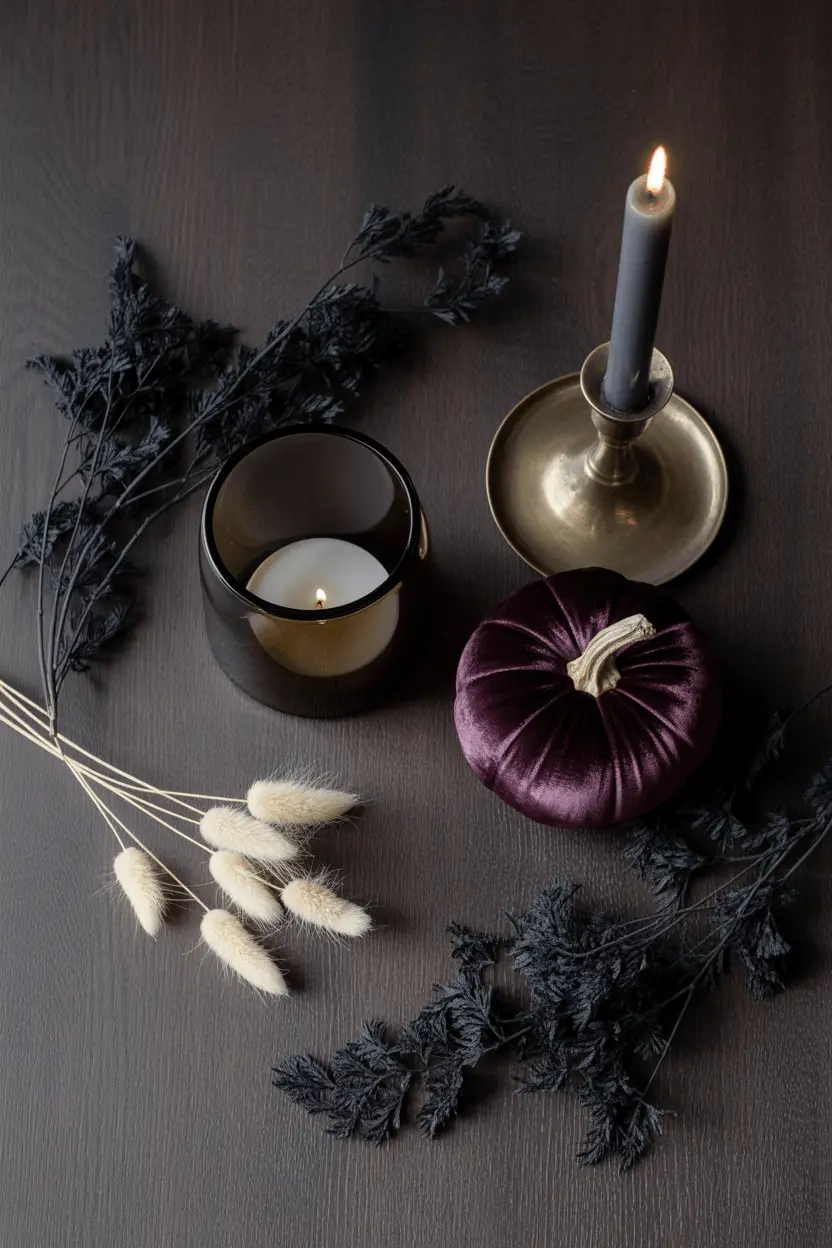
- Smoked glass. Gray-brown hurricanes, bud vases, votives. A 6-inch hurricane runs $8 to $15. I own four and they come back out in December. (Two of mine came from a March clearance shelf, the wrong month and the right price.)
- Velvet. A plum velvet pumpkin, 5 to 7 inches, is $10 to $22. Lumbar covers in 12×20 inches run about $14.
- Dried florals. Bunny tail grass, black-dyed ruscus, preserved eucalyptus, dried hydrangea. A $12 bunch of bunny tails gives 30-plus stems, enough for three vases.
- Antique brass. Not shiny gold, the warm dulled finish. Thrifted candlesticks are $2 to $6 and better than new.
- Matte ceramic. Anything chalky looks expensive, because glossy plastic doesn’t.
Leave on the shelf: glitter, printed faces, orange plastic, foam gravestones.
| STYLICIA TIP Spray one cheap plastic object with matte black primer and let it cure 24 hours. The matte finish kills the sheen your eye was reading as cheap. Works on skulls, candlesticks, crows, dollar-store frames. I did six pieces in an afternoon with a $6 can. |
The Entryway Sets the Rule for the Rest of the House
The first six feet inside the door tells the rest of the house what register you’re in. Subtle entry, and a bolder living room looks deliberate. Loud entry, and everything after is more of the same.
Most entry consoles are 36 to 48 inches wide, and that surface fits one arrangement: a tray, a tall thing, a mid thing, a low thing.
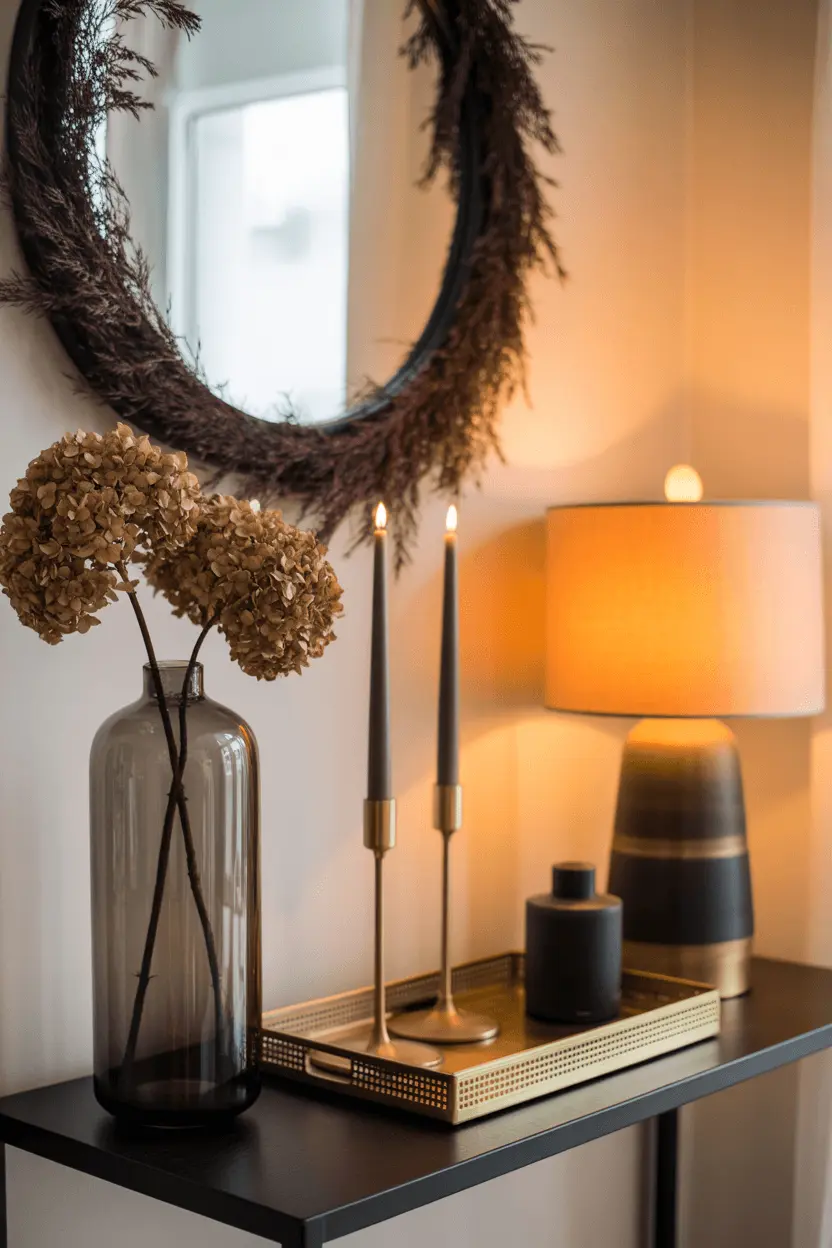
The tray corrals it: 12×18 inches in black metal or dark wood, $18 to $30. Inside: a 14- to 18-inch dried arrangement in a smoked glass vase, two brass candlesticks at different heights, one velvet pumpkin.
Four to five objects on a 42-inch console. It will feel too sparse, so leave it a day. And don’t be afraid to leave it at four. The version where you added three more things almost never wins.
If there’s a mirror above, drape a 6-foot length of black-dyed ruscus along the top edge, tails down each side, under $20. Then swap the bulb. A 2200K amber bulb in the entry lamp beats any object you can buy.
The Living Room Needs Three Zones, Not Thirty Objects
The usual living room mistake is spreading a little Halloween across every surface. Twelve small touches look like clutter. Three built-out moments look styled.
Pick three zones. Usually the coffee table, one shelf and the sofa textiles.
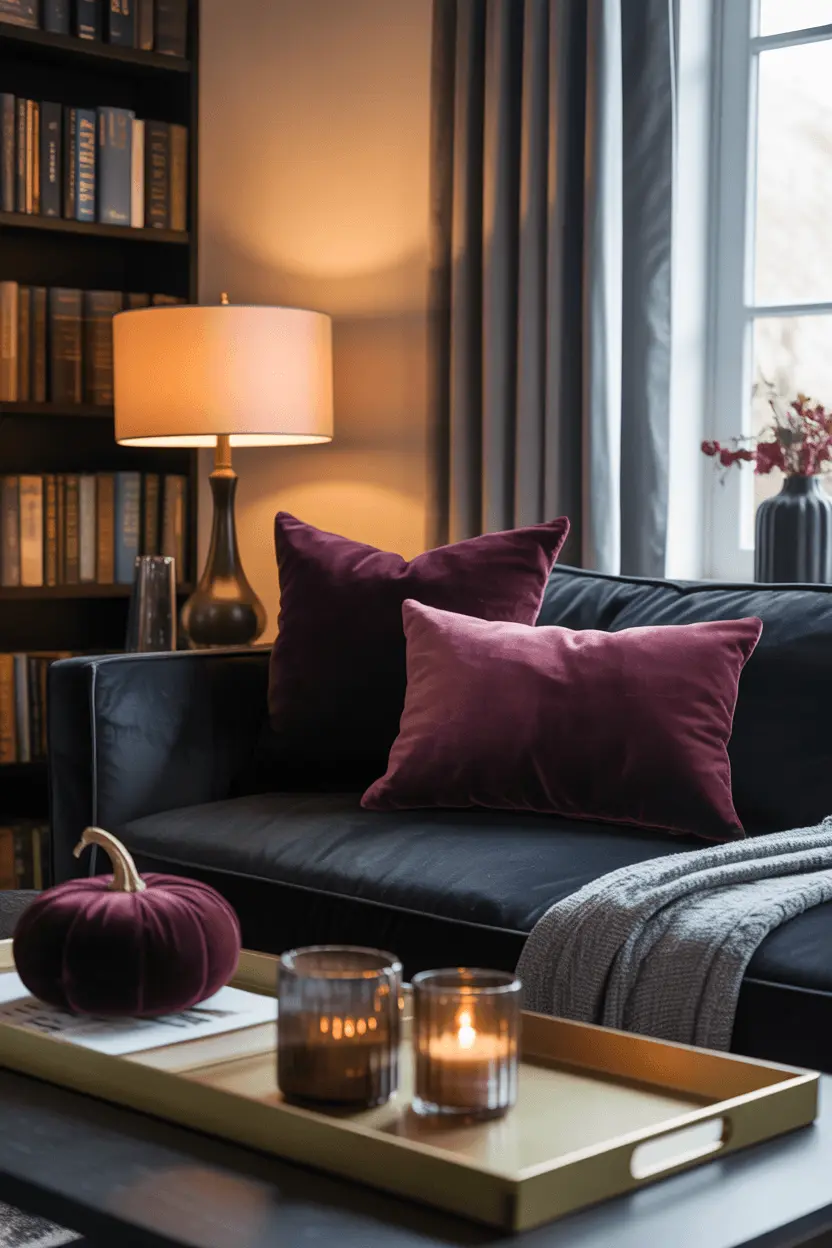
Coffee table. One tray, one cluster of five: two stacked dark hardcovers, a smoked glass votive, a 5-inch velvet pumpkin, one small brass object. Keep the group under 12 inches so it doesn’t block the sightline.
One shelf. Not the whole bookcase. Pick a shelf at eye level and clear it to four items. Turn a row of books spine-in so the bone-colored pages face out. Free, and it gives you a neutral block behind the dark objects.
Sofa textiles. Two lumbar pillows in plum or oxblood velvet, plus a 50×60-inch throw in charcoal folded in thirds over one arm.
Empty surfaces are the contrast that makes the styled ones look expensive. I got this wrong my first year: something on every surface, windowsills included, until my friend Kata asked kindly whether I was mid-move.
Mantels Look Cluttered Because People Make Them Symmetrical
Matching pairs on either end with something centered between them is the default, and it’s why most Halloween mantels look like a store display.
Asymmetry is what looks styled. On a 60-inch mantel I weight about 70% of the objects to one side and leave the other nearly empty except for one tall element.
Height variation does the rest. Three taper heights (10-inch, 12-inch, 18-inch) in holders of three different heights give you six height points in one cluster, and nothing in it looks lined up.
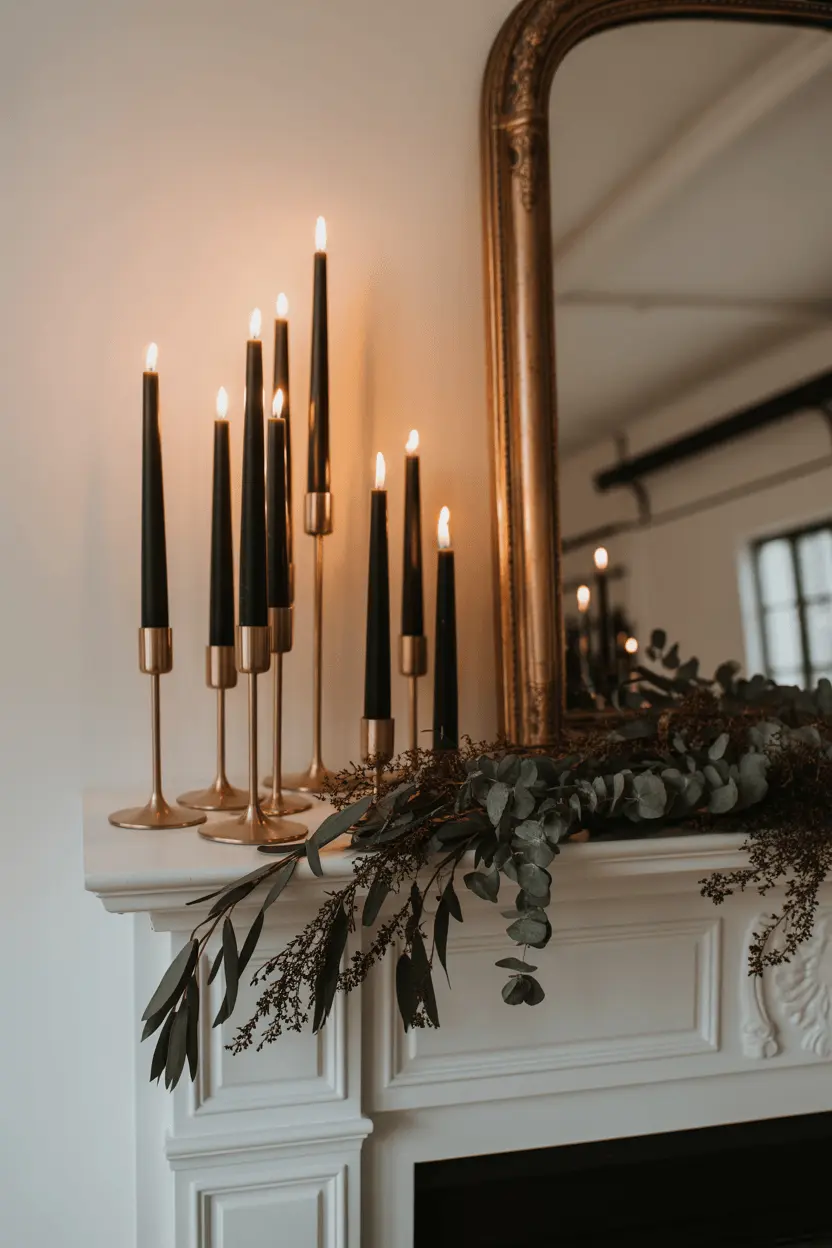
Lean something behind it. A dark botanical print in a thrifted frame, or an old mirror propped against the wall, hides the mantel’s flatness. Frames sprayed matte black run $3 to $8.
Then one horizontal element to break the verticals: a 4- to 6-foot dried garland, low point about 8 inches below the mantel edge, one longer tail on the heavy side.
Eight to eleven pieces total. Past that you lose the negative space doing the work.
Bedrooms and Bathrooms Get the Quietest Version
These rooms need about a quarter of what the living room gets. Two objects on a nightstand is a full commitment: one brass candlestick with a matte black taper, one small vase in smoked glass with three or four dried stems. More than that and you’re sleeping in a set. (I had four things on that nightstand one year and kept knocking the vase over at 6 a.m.)
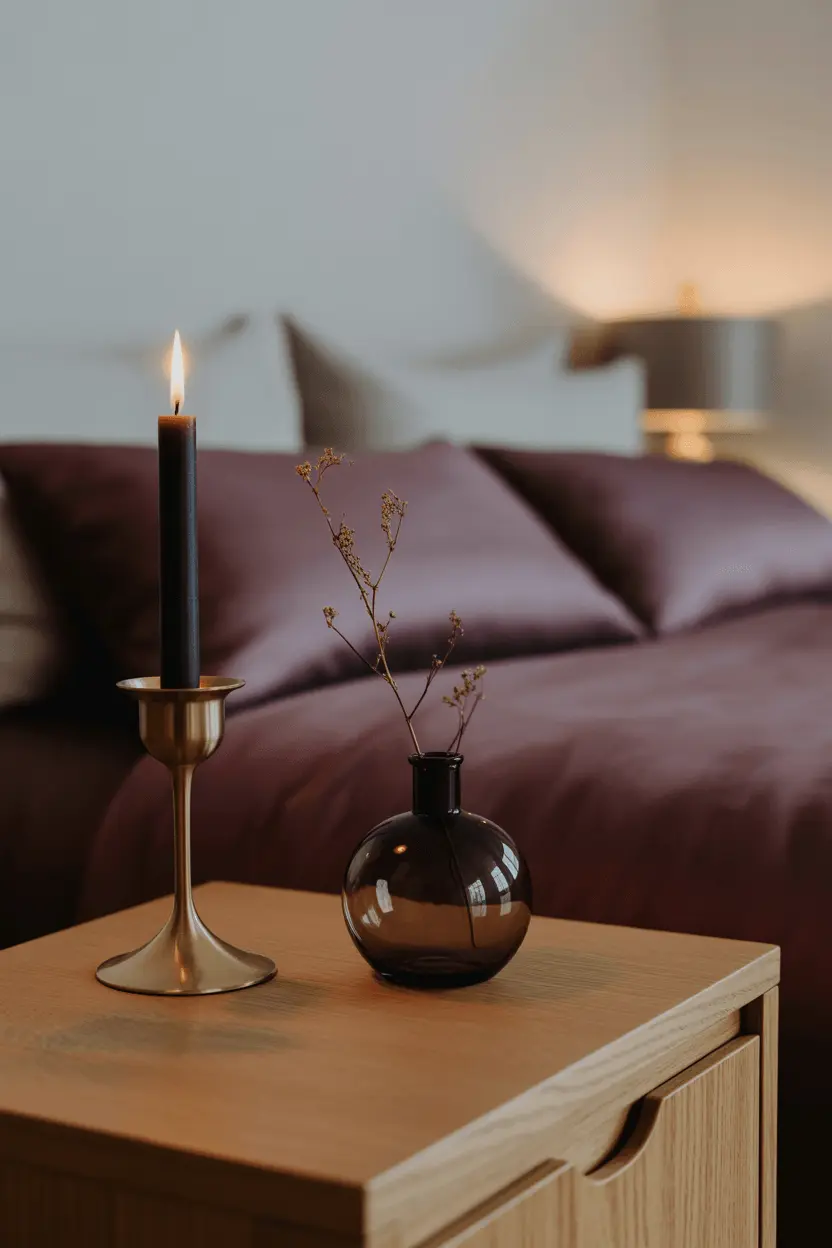
The bedding does more than anything you can put on the nightstand, and it doesn’t have to be Halloween at all. I bought a plum cotton sateen duvet cover for $52 three Octobers ago and didn’t take it off until February. Queen covers run $40 to $70. It’s the only thing on this list I’d call an investment.
Bathrooms take three swaps, about $30: hand towels in black or deep wine ($8 to $14 per pair), one amber glass votive, a smoked glass soap dispenser. Guests register all three; a bathroom is small enough that everything counts.
Skip the shower curtain with bats on it. That’s the single item that undoes the whole room.
Lighting Is the Difference Between Moody and Just Dark
You can own every correct object here and still have a flat room, because the overhead light is 4000K, blasting everything evenly.
Three numbers. Color temperature: 2200K to 2700K. Above 3000K, plum turns gray-brown.
Brightness: three to five sources at 400 to 800 lumens each, not one ceiling fixture at 1600. Lamps at different heights make shadow, and shadow is what this look runs on.
Candle count: five to nine in a single sightline. Below five looks accidental. Above nine starts looking like a séance.
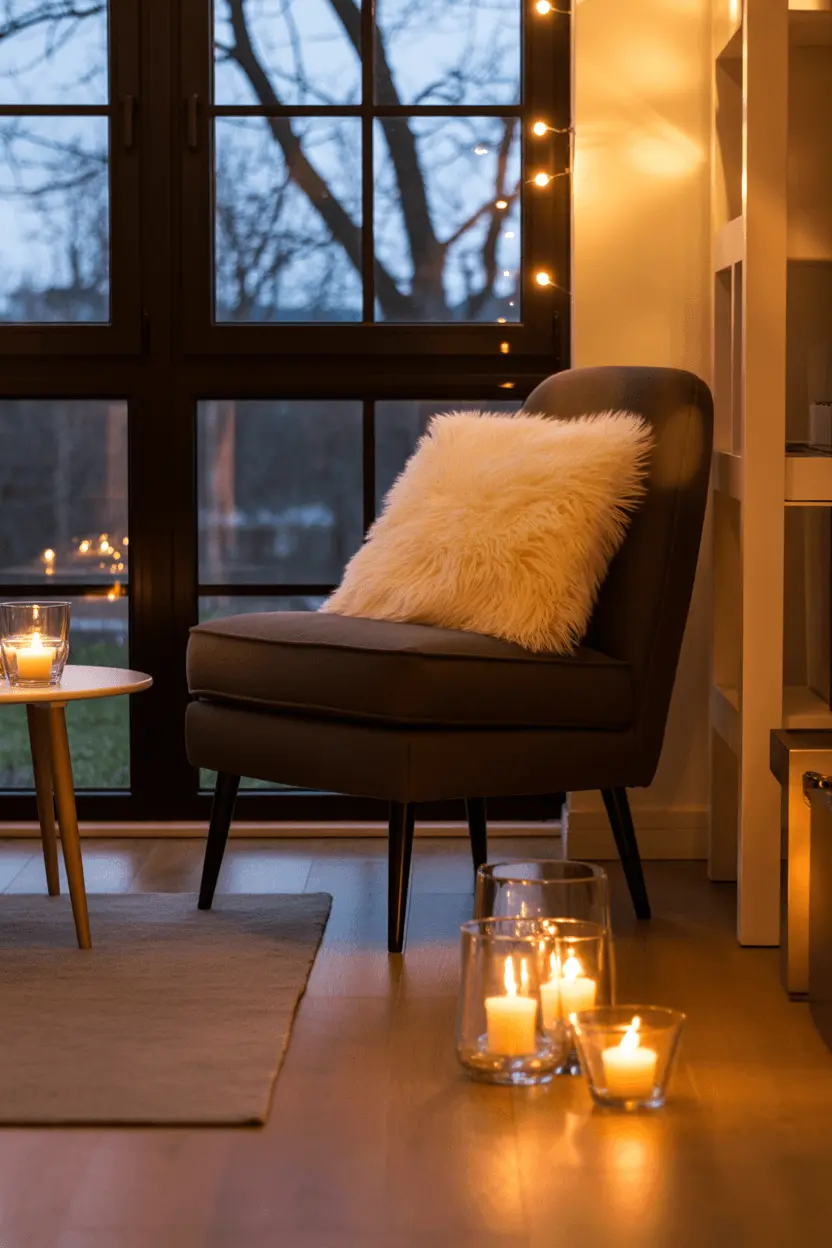
Real tapers are $2 to $4 each and burn 6 to 8 hours. Flameless ones with a 5-hour timer run $18 to $30 per six-pack. Get the wavy, uneven wax tops; flat-topped ones look fake.
A dimmer switch is about $12 and takes fifteen minutes. (Which I put off for three years because I assumed it needed an electrician. It didn’t.) That one change did more for my living room than anything else here.
Spend on Three Things and Save on Everything Else
Not every item deserves the same dollar. Pieces that carry texture or catch light are worth real money; background shapes are not. How I split a $150 first-floor budget:
| Item | Spend or save | Price | Why |
| Velvet pumpkins (3–4) | Spend | $10–$22 each | Texture reads across the room |
| Dried florals (3 bunches) | Spend | $12–$20 per bunch | Biggest payoff per dollar |
| Throw + 2 pillow covers | Spend | $50–$80 total | Used daily through February |
| Smoked glass vessels (4–6) | Save | $8–$15 each | Discount stores carry good ones |
| Brass candlesticks (5–8) | Save | $2–$6 thrifted | Better patina than new |
| Taper candles (12–18) | Save | $2–$4 each | Consumable; buy multipacks |
| Ceramic or resin objects | Save | $4–$18 each | Matte black spray fixes most |
| Garland (6–8 feet) | Save | $15–$25 | Faux works if the color is right |
That lands around $130 to $160, and roughly 60% of it (the glass, the brass, the textiles) reappears in your Thanksgiving and Christmas styling.
Feel free to stop after two surfaces. Two finished beat six half-done.
The paint, patina, and dry-brush techniques that turn $1 objects into expensive-looking ones live in my dollar-store makeover projects.
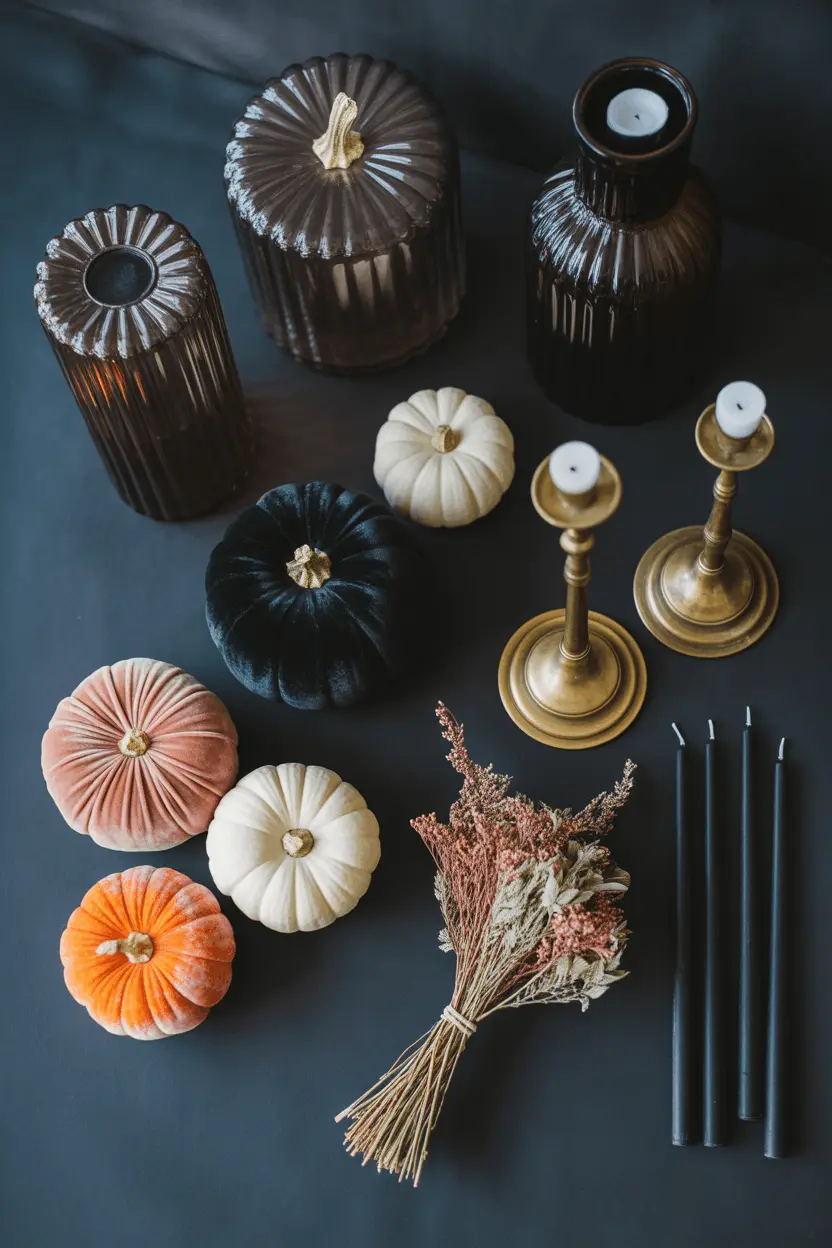
| BUDGET PICK Thrifted brass candlesticks. I have eleven and paid $1.50 to $6 each. Mismatched heights are the point. A matched set of four looks like a wedding registry; eleven mismatched ones look inherited. Check housewares, not the decor aisle. |
Real Pumpkins Beat Fake Ones If You Choose the Right Varieties
Grocery-store orange fights the palette. But there are varieties in exactly the right colors at $3 to $9 each.
Ask for these by name: Jarrahdale (blue-gray), Baby Boo (bone white, 3 to 4 inches), Black Futsu (green-black, warty), Fairytale (tan-bronze). Any decent farm stand has three of the four by early October. (My farm stand charges $4 for a Baby Boo; the supermarket wanted $7 the same week.)
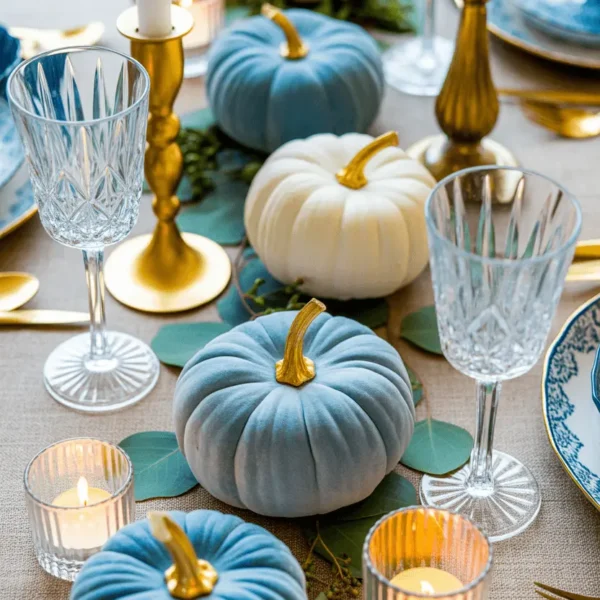
Group them in odd numbers and three distinct sizes. A 10-inch Jarrahdale, a 6-inch Fairytale and two 3-inch Baby Boos looks composed. Five same-size pumpkins in a row looks like inventory.
Uncarved and away from heat, they last 6 to 10 weeks indoors. Carved, 5 to 10 days. Wipe them with a 1-to-10 bleach-water mix first and they last longer. Mold prevention, not superstition.
Mix in two or three velvet ones at different scales and by candlelight nobody can tell which is which.
Common Mistakes That Make Halloween Decor Look Cheap
I’ve made all six. Four of them in the same October, in the same living room.
Buying a themed set. The coordinated eight-piece kit is one plastic, and the room looks like one purchase. Fix: buy from three different sources in one palette.
Everything at the same height. Flat arrangements look like shelving. Fix: three distinct heights minimum per cluster, tallest roughly twice the shortest.
Too many small objects. Fifteen 3-inch things is clutter no matter how nice each one is. Fix: swap five smalls for one piece over 14 inches.
Glitter. It signals cheap immediately and migrates through the house until March. Fix: matte finishes only, or matte black primer over it.
Cool-white lighting. 4000K makes plum muddy and dark objects look dusty. Fix: 2700K or lower, overhead off.
Decorating every surface. Fix: three zones per room, the rest empty. Free, and the biggest single improvement available.
The Whole Scheme Should Convert to Thanksgiving in Under an Hour
I skipped this part for two years and every November 1st felt like a chore.
Build the October version so 70% of it stays put. Everything neutral, all the glass, all the brass, every textile: none of that moves.
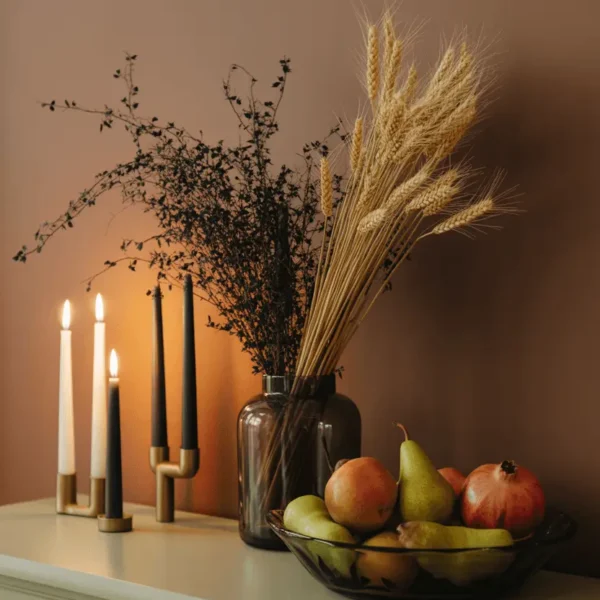
What comes out on November 1st is anything with a Halloween silhouette. Bats, skulls, spiders, black cats. In a well-built scheme that’s six to ten objects for the whole house, or one shoebox.
What goes in is warmer and more organic. Black-dyed ruscus out, dried wheat in. Add pears, pomegranates, a bowl of unshelled walnuts. Trade two black tapers per cluster for ivory or bronze, but keep some black; it grounds the warmer colors.
The plum and oxblood carry straight through. They’re autumn colors before they’re Halloween colors, which is the argument for this palette. I timed the swap one year: 45 minutes, $22 for the pears and wheat.
For the softer end of that shift I lean on these ten warm fall styling ideas, and once the calendar turns, my cozy Thanksgiving decorating setup picks up where this leaves off.
When You Want to Push It Further
Change one variable at a time and live with the room a full evening before touching anything else.
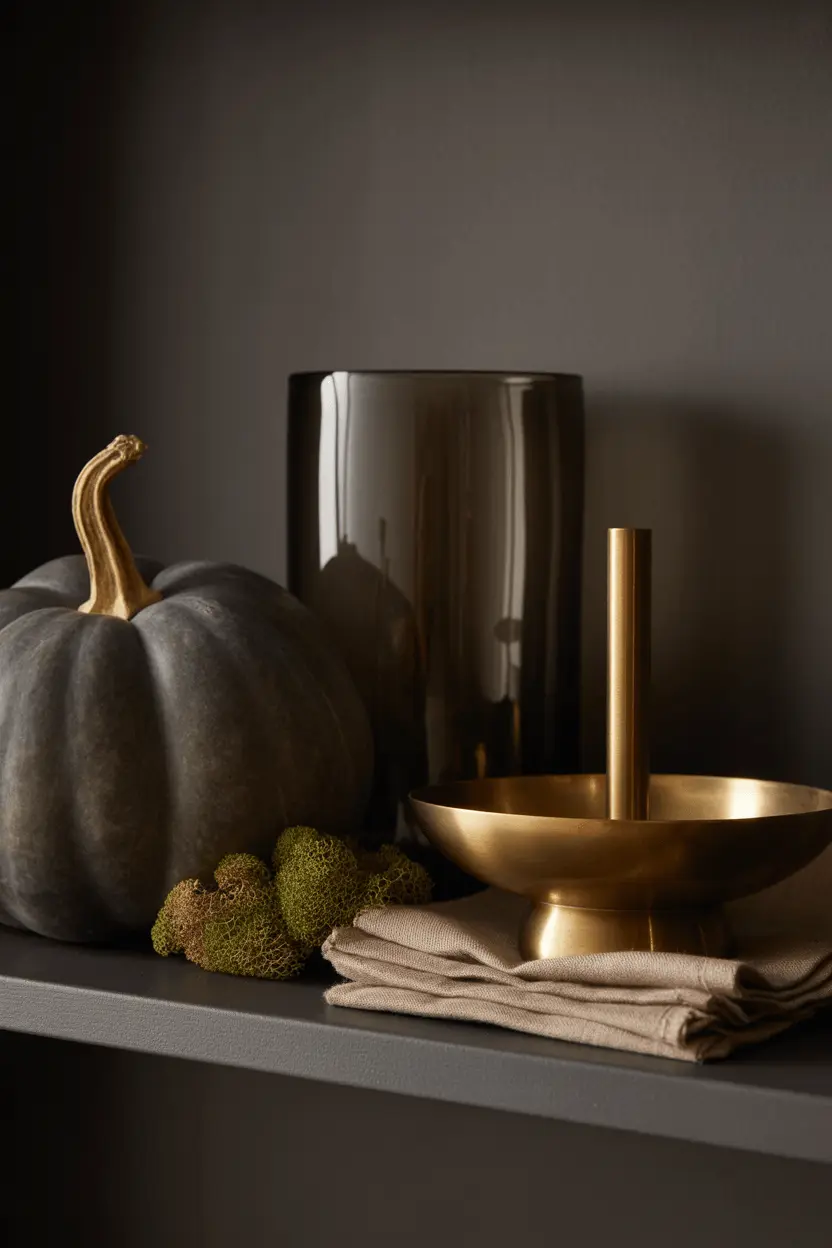
Scale. Replace your tallest element with something 50% taller, so a 12-inch arrangement becomes 18. Go bigger than feels comfortable. It usually looks better.
Texture contrast. Add one rough thing to a smooth grouping, or the reverse. A warty Black Futsu next to smoked glass. Raw linen under brass.
One odd color. A single 3- to 5-inch object in mossy green, faded gold or dusty rose. It makes the plum-and-black look chosen rather than default. There’s no correct color to break it with.
Negative space. Pull three objects off your most crowded surface and wait a day. If you don’t miss them, they were noise.
The same logic runs past the house. It’s the basis for this year’s moody nail colors, and the drinks in these grown-up non-alcoholic pours sit in the same smoke-and-oxblood register.
| OUR PICK A 6-inch smoked glass hurricane, the most-used object in my October kit, and at $8 to $15 the cheapest thing here that never looks cheap. Buy four. You’ll use them again at Christmas. |
Frequently Asked Questions
What colors make Halloween decor look expensive instead of tacky?
Deep plum, oxblood, true black, bone white, and antique brass. What looks cheap is safety orange plus electric purple against black, so swapping those two brights for deeper cousins fixes most of it.
How much does it cost to decorate a house for Halloween elegantly?
I spent about $140 on my first floor the first year and roughly $35 the year after, because the glass and the brass never went back in the box. Budget $100 to $150 to start; after that it’s basically candles and one bunch of dried stems.
When should I put up Halloween decorations?
I start the first week of October indoors. Because this palette is autumnal rather than spooky, I put out about 80% of it in the last week of September and add the skulls and black cats on October 1st.
Can I use real pumpkins for an elegant Halloween look?
Yes, with the right varieties. Jarrahdale, Baby Boo, Black Futsu, and Fairytale come in blue-gray, bone, or bronze instead of bright orange. Uncarved and away from heat, they last 6 to 10 weeks indoors.
Why does my Halloween decor look cluttered?
Usually too many objects under 5 inches, or everything at the same height. Pull five small pieces off the surface, add one item over 14 inches, and the same collection suddenly looks arranged.
How do I do this with kids or pets in the house?
Use flameless tapers with a 5-hour timer, $18 to $30 per six-pack, and keep glass above 40 inches. Velvet pumpkins and dried grasses are the most kid-tolerant pieces in the scheme.
How do I store it so it survives to next year?
My dried florals lie flat in one lidded 30-quart bin, stems one direction, nothing on top. I wrap the glass in the pillow covers I’m already storing anyway. Velvet crushes permanently, so the pumpkins go on top; the year I forgot, I lost three.
What’s the difference between Halloween decor and fall decor?
Halloween decor has a silhouette: bats, skulls, spiders, cats. Fall decor is color and material only. This is fall decor with six to ten silhouettes added, and that’s why it converts back in under an hour.
Shop the Look
A few of the pieces I keep reaching for to build this palette. As an Amazon Associate I earn from qualifying purchases, at no extra cost to you.
- Smoked grey glass hurricanes — the workhorse of my October kit, and they carry straight through to Christmas.
- Wine-red velvet pumpkins — assorted sizes in an oxblood tone that reads across the room.
- Black-dyed eucalyptus stems — the dark dried foliage that anchors the whole scheme.
- Brass taper candlesticks (set of 6) — mismatched heights, exactly the inherited-not-bought look.
- Black dripless taper candles — the matte black tapers that do the shadow work.
- 2200K amber Edison bulbs — swap one into the entry lamp and the whole surface warms up.
It comes down to three colors, real materials, and the discipline to leave surfaces empty.
If you do one thing this week, do the entry console: a tray, one tall dried arrangement, two mismatched brass candlesticks, one velvet pumpkin, and a 2200K bulb in the nearest lamp. Under $50, about 20 minutes. Once you see that surface at night, you’ll know what to do with the mantel.
The details are what make it. Not the budget.